This page has 26 body parts in Arabic, with the vowel marks, a way to say each one and a button to hear it. It also gives two things most lists leave out: whether each word is masculine or feminine, and the special form Arabic uses when you have two of something, like two eyes or two hands. At the end are the parts of the body the Quran names in the verse of wudu, 26 picture cards, and a free printable PDF with no sign-up.
Body in Arabic is جِسْم (jism). Seven to start with: head رَأْس (ra’s), eye عَيْن (‘ayn), ear أُذُن (udhun), nose أَنْف (anf), mouth فَم (fam), hand يَد (yad) and foot قَدَم (qadam).
Body parts in Arabic with pictures
Here are all 26 on one chart, the face on one side and the whole body on the other. A child who cannot read yet can point to the part first and learn the word from you or from the play buttons further down.

Parts of the face in Arabic
Twelve words for the face, from the hair down to the tongue. Tap the play button beside any word to hear it said. The last column is the form for two, for the parts a child has two of.
| Arabic | English, and how to say it | Masculine or feminine | Two of them |
|---|---|---|---|
| وَجْه | face (wajh) | masculine | |
| شَعْر | hair (sha’r) | masculine | |
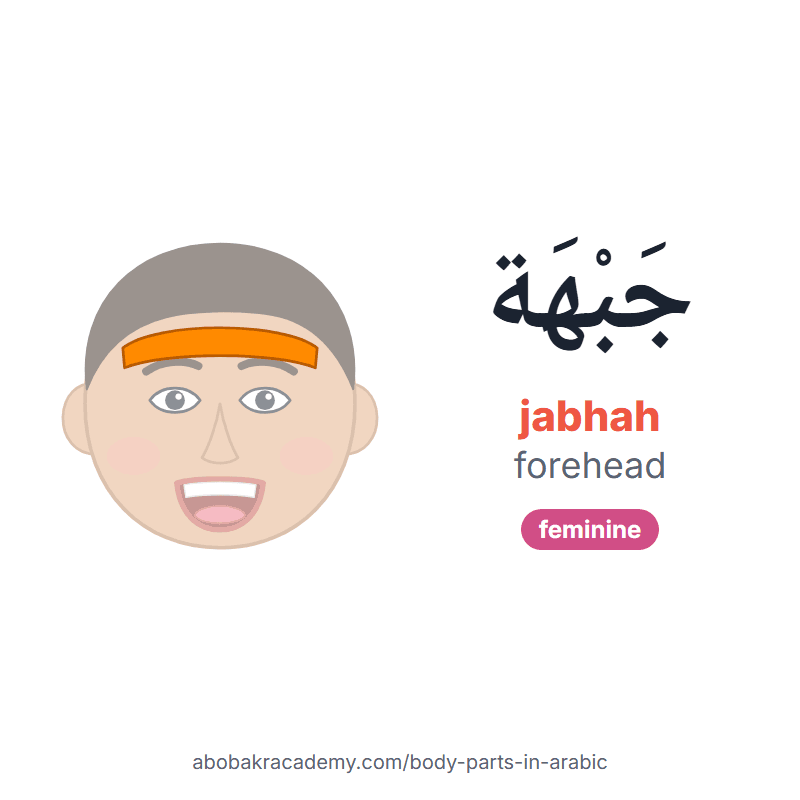
| جَبْهَة | forehead (jabhah) | feminine | |
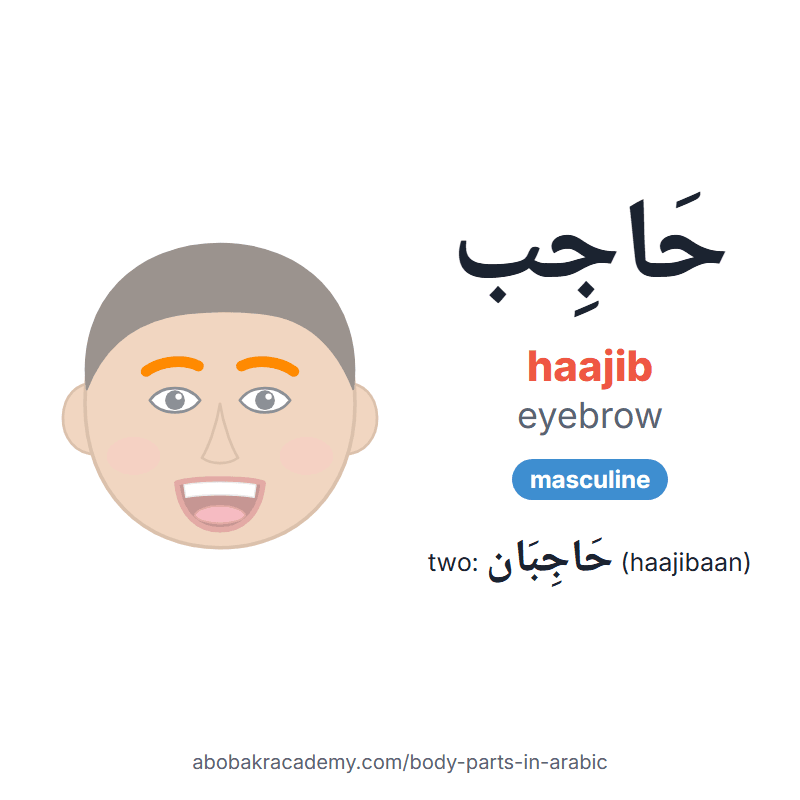
| حَاجِب | eyebrow (haajib) | masculine | حَاجِبَان (haajibaan) |
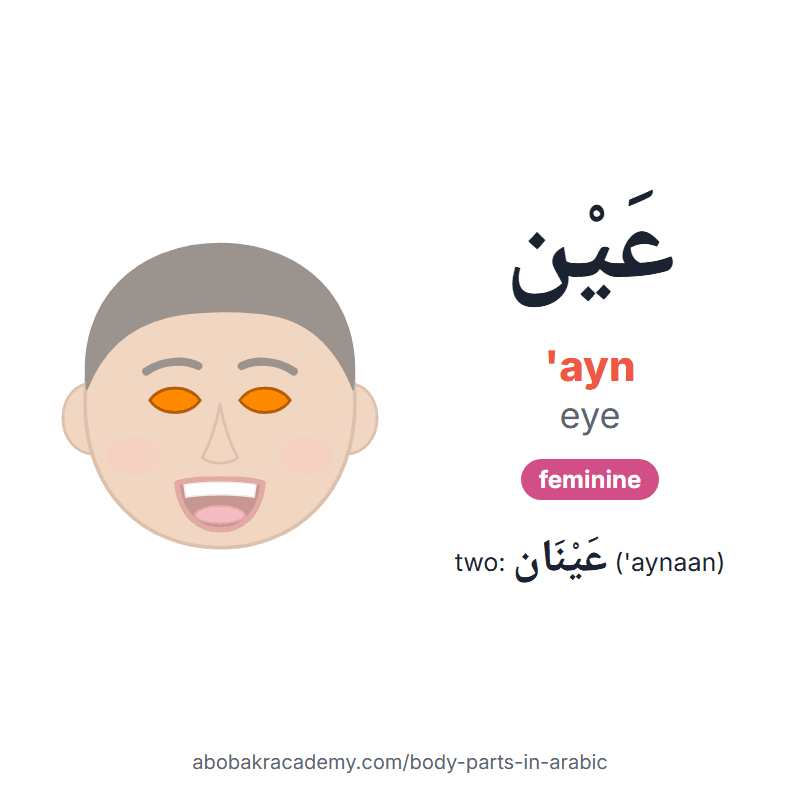
| عَيْن | eye (‘ayn) | feminine | عَيْنَان (‘aynaan) |
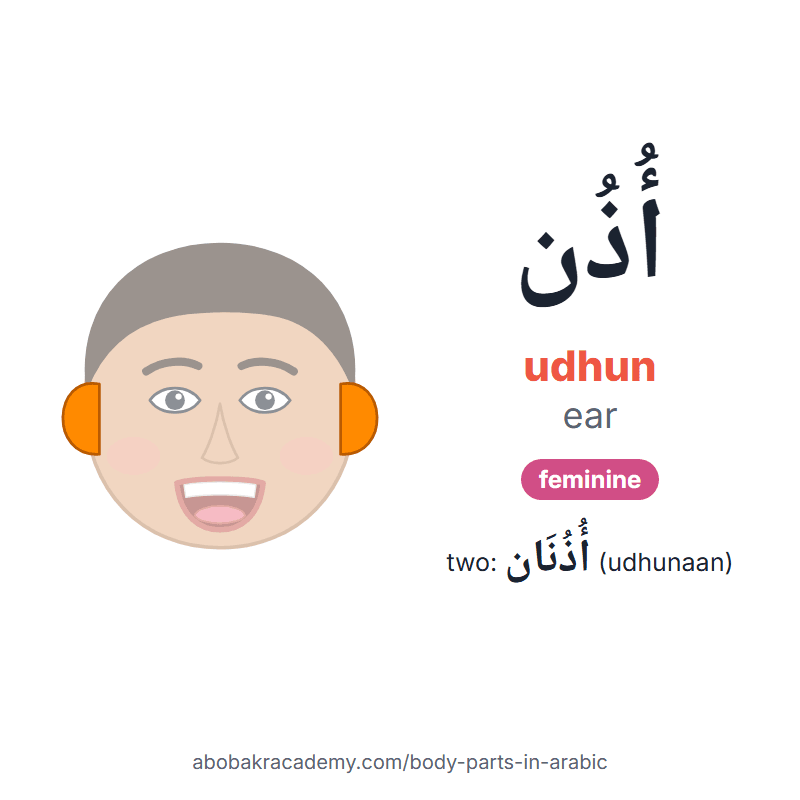
| أُذُن | ear (udhun) | feminine | أُذُنَان (udhunaan) |
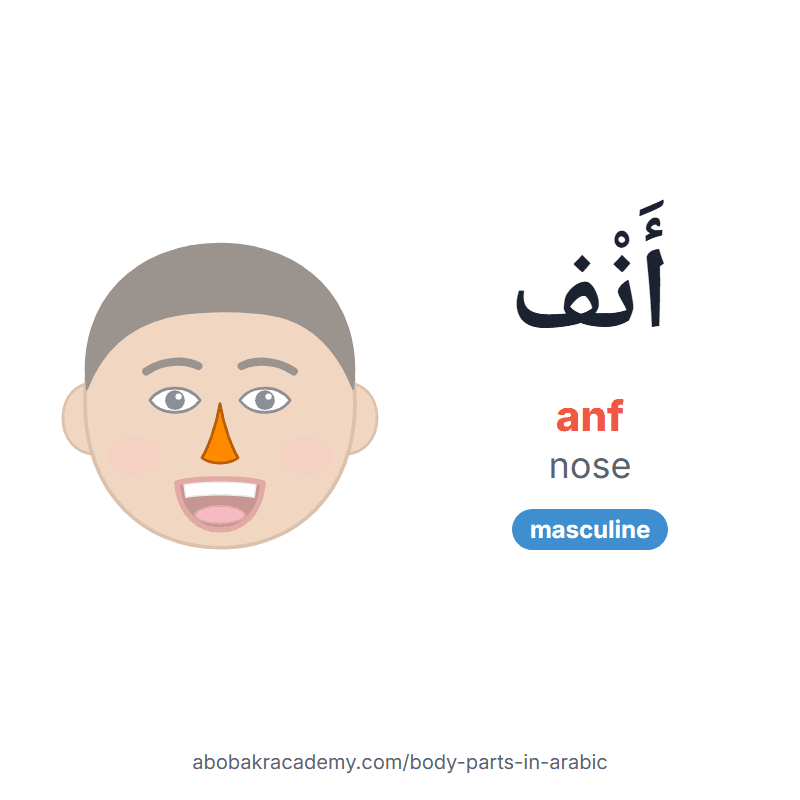
| أَنْف | nose (anf) | masculine | |
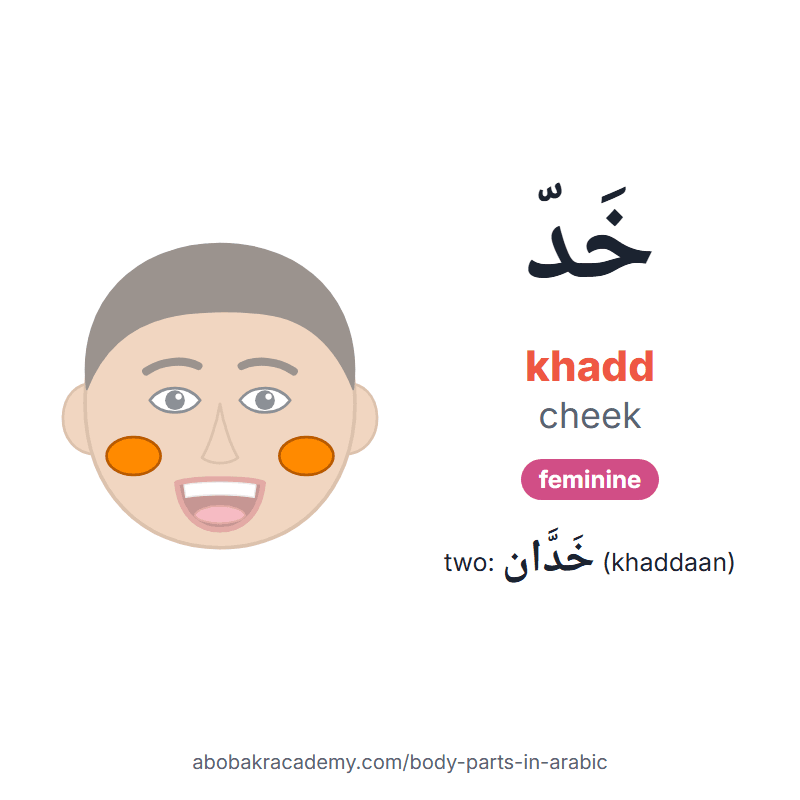
| خَدّ | cheek (khadd) | feminine | خَدَّان (khaddaan) |
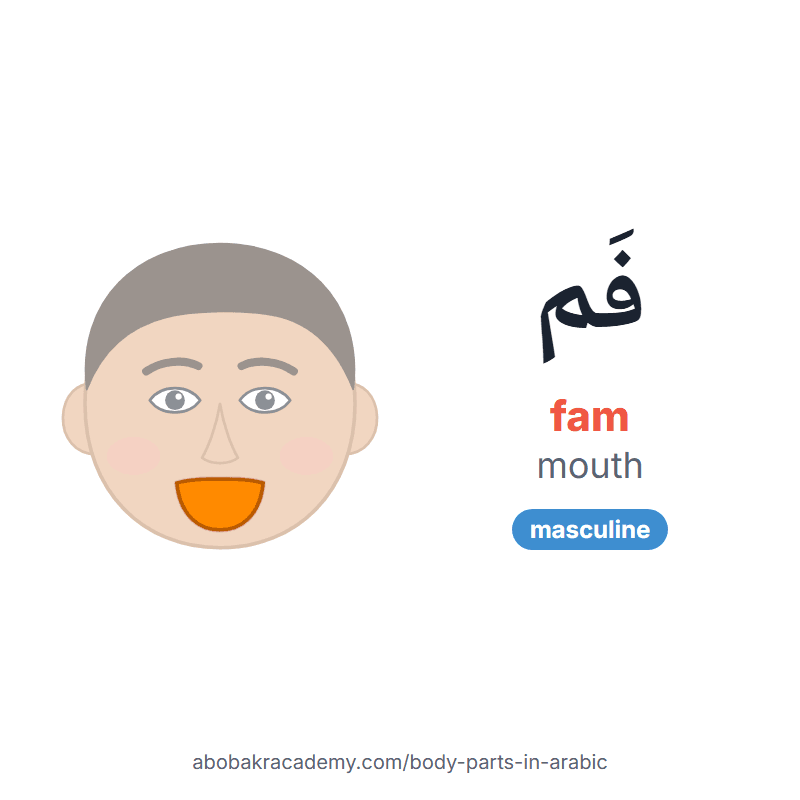
| فَم | mouth (fam) | masculine | |
| شَفَة | lip (shafah) | feminine | شَفَتَان (shafataan) |
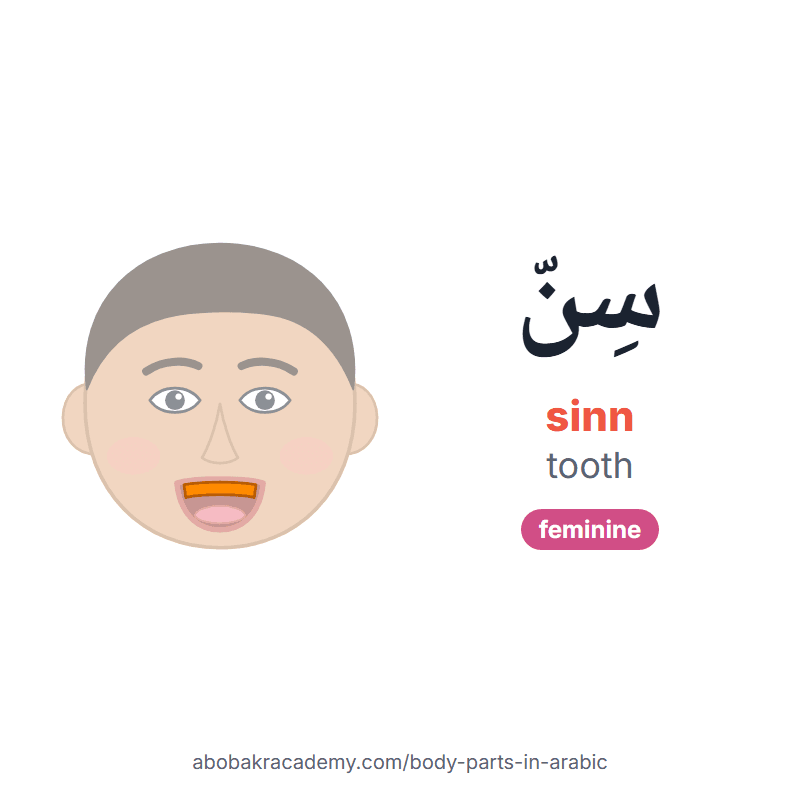
| سِنّ | tooth (sinn) | feminine | |
| لِسَان | tongue (lisaan) | either |
Parts of the body, arms and legs in Arabic
Fourteen more, from the head to the ankles. The word for leg, رِجْل (rijl), is also used for the foot, which is how the Quran uses it in the verse of wudu below.
| Arabic | English, and how to say it | Masculine or feminine | Two of them |
|---|---|---|---|
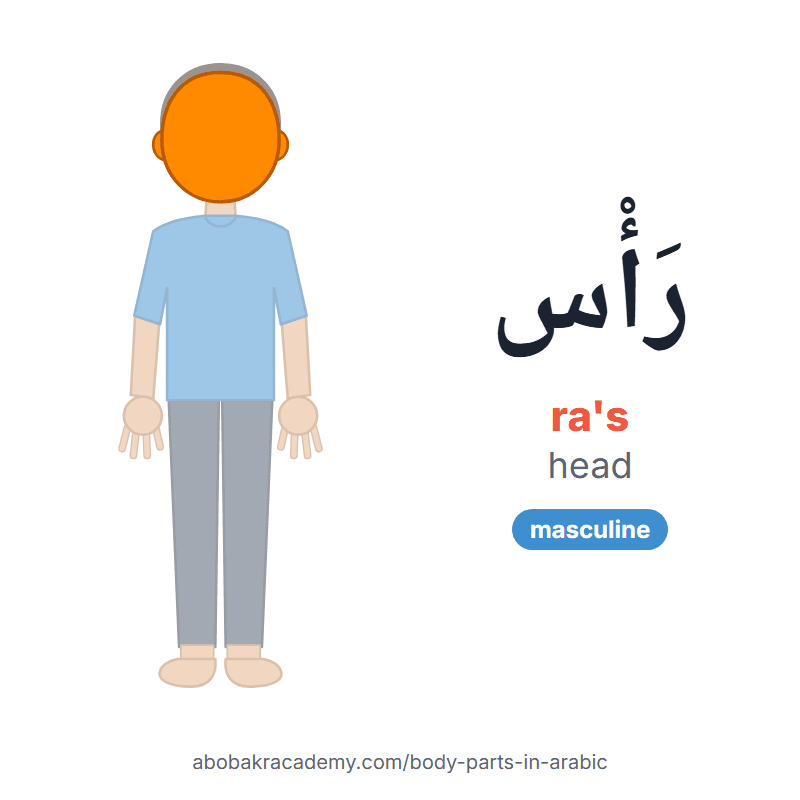
| رَأْس | head (ra’s) | masculine | |
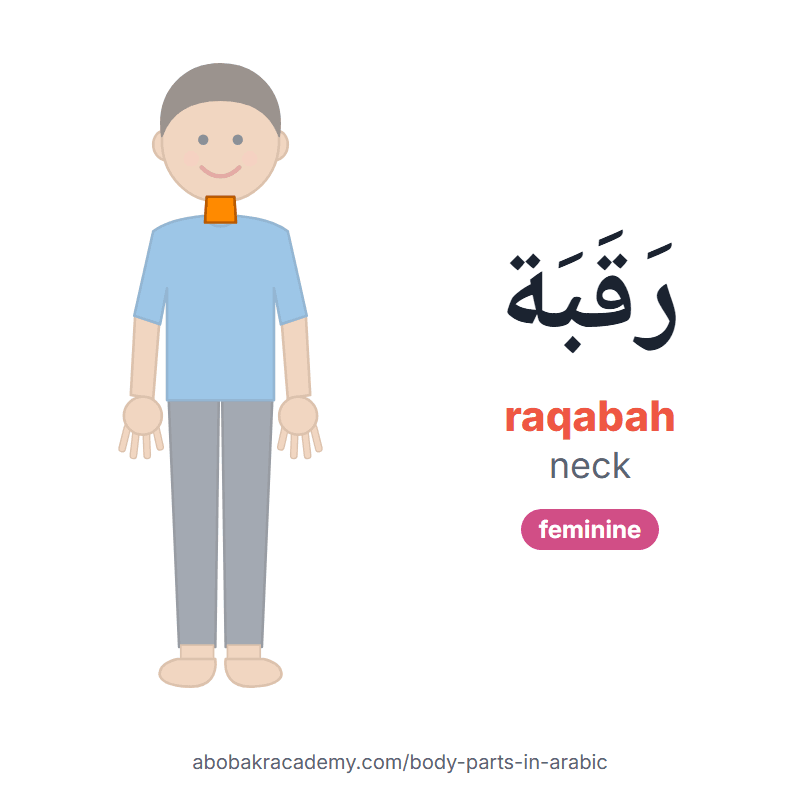
| رَقَبَة | neck (raqabah) | feminine | |
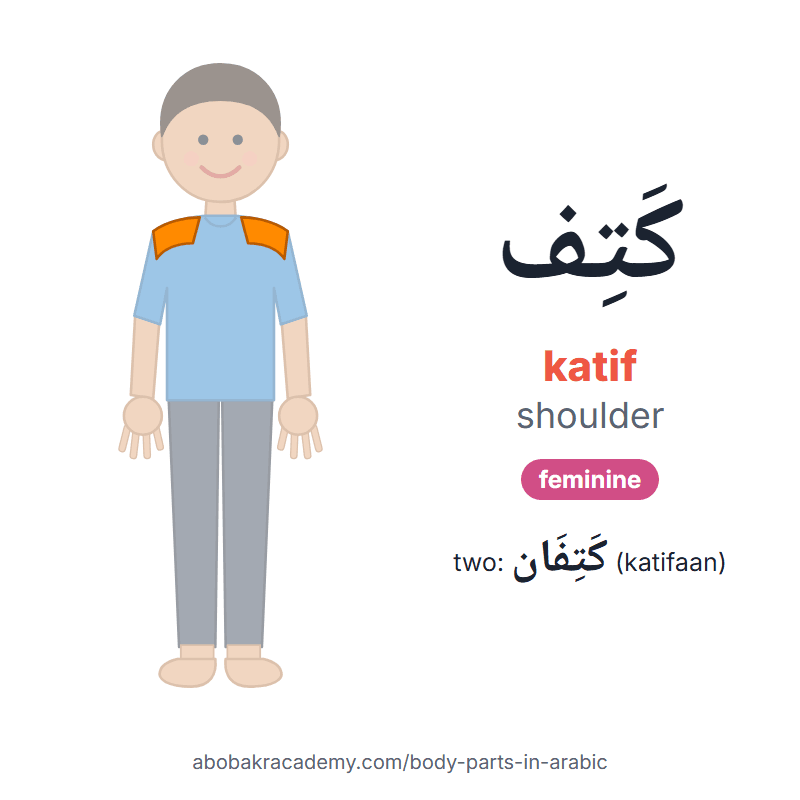
| كَتِف | shoulder (katif) | feminine | كَتِفَان (katifaan) |
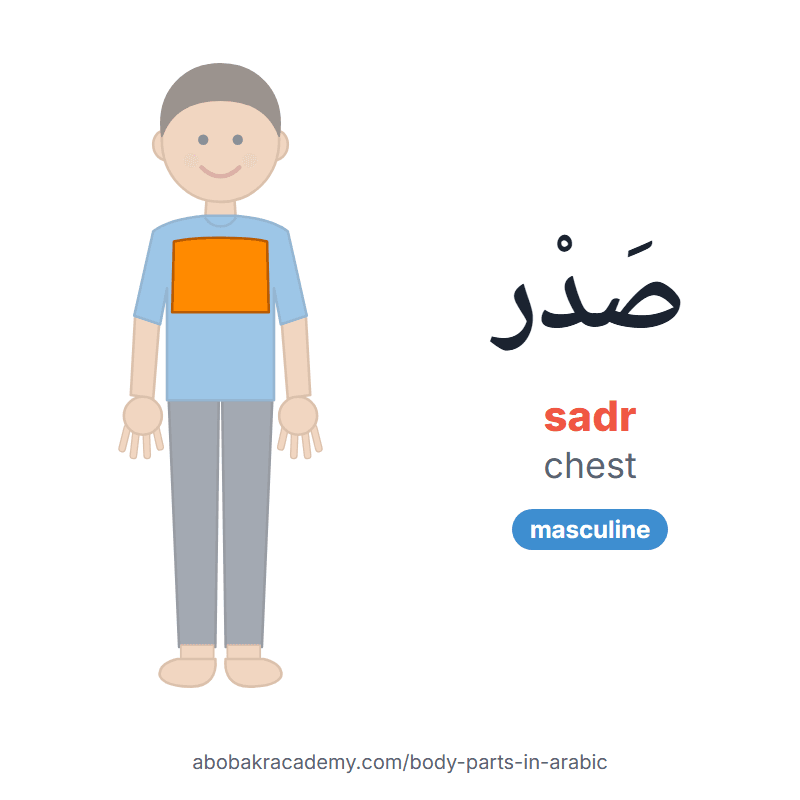
| صَدْر | chest (sadr) | masculine | |
| بَطْن | tummy (batn) | either | |
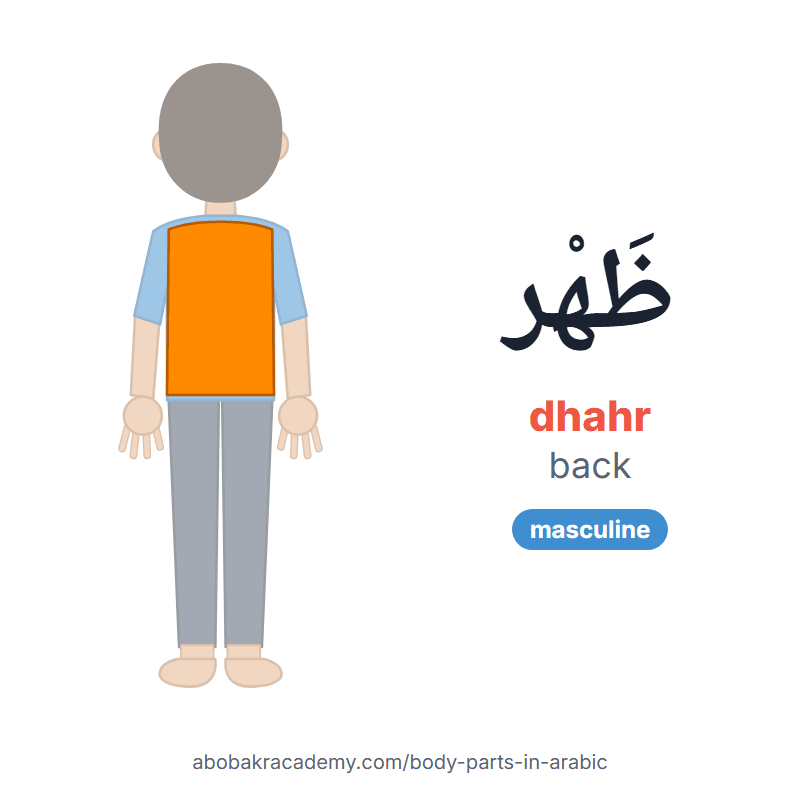
| ظَهْر | back (dhahr) | masculine | |
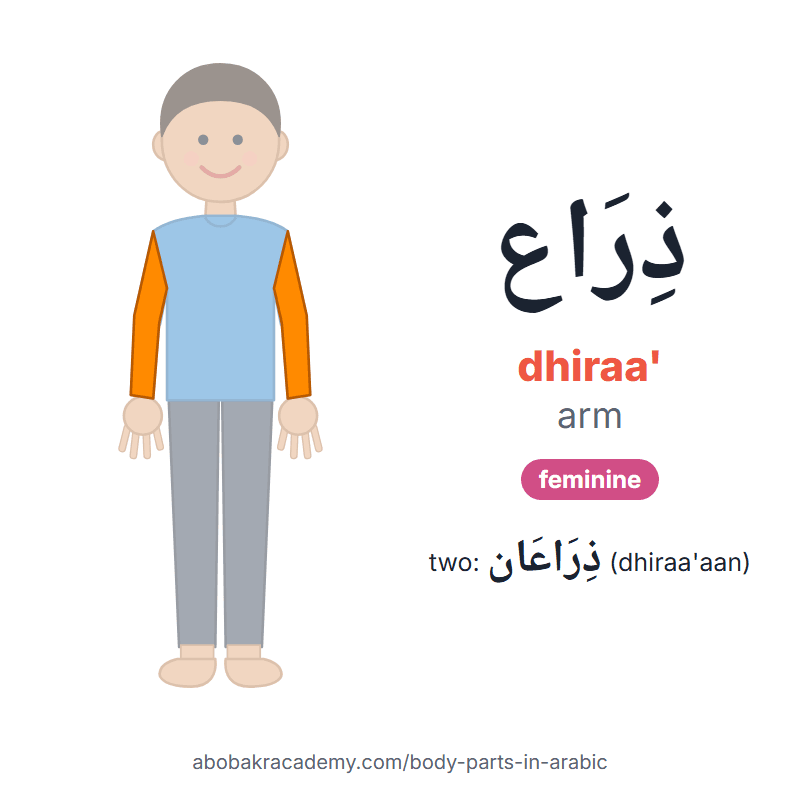
| ذِرَاع | arm (dhiraa’) | feminine | ذِرَاعَان (dhiraa’aan) |
| مِرْفَق | elbow (mirfaq) | masculine | مِرْفَقَان (mirfaqaan) |
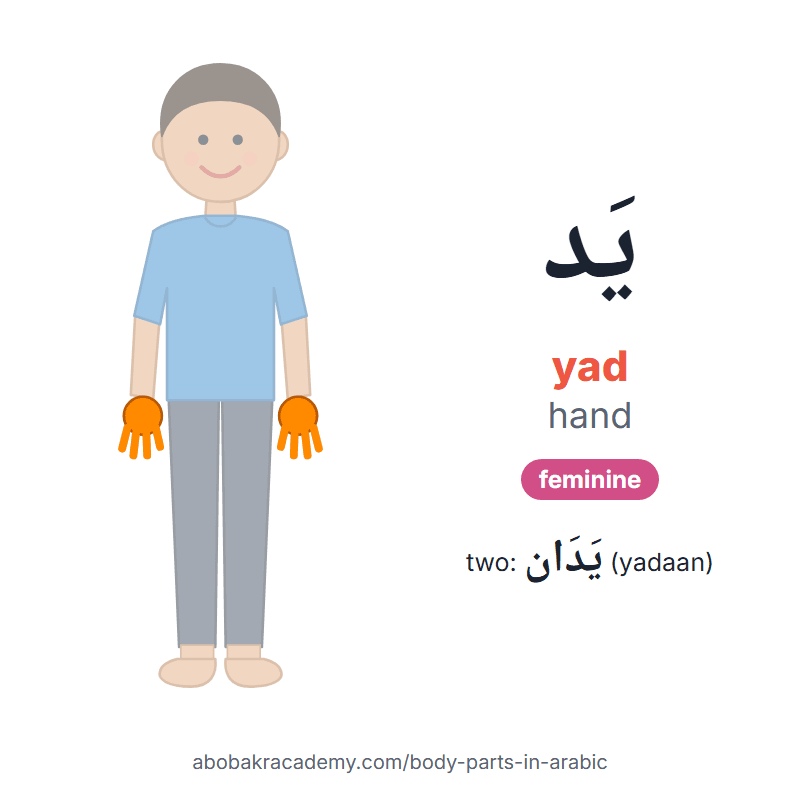
| يَد | hand (yad) | feminine | يَدَان (yadaan) |
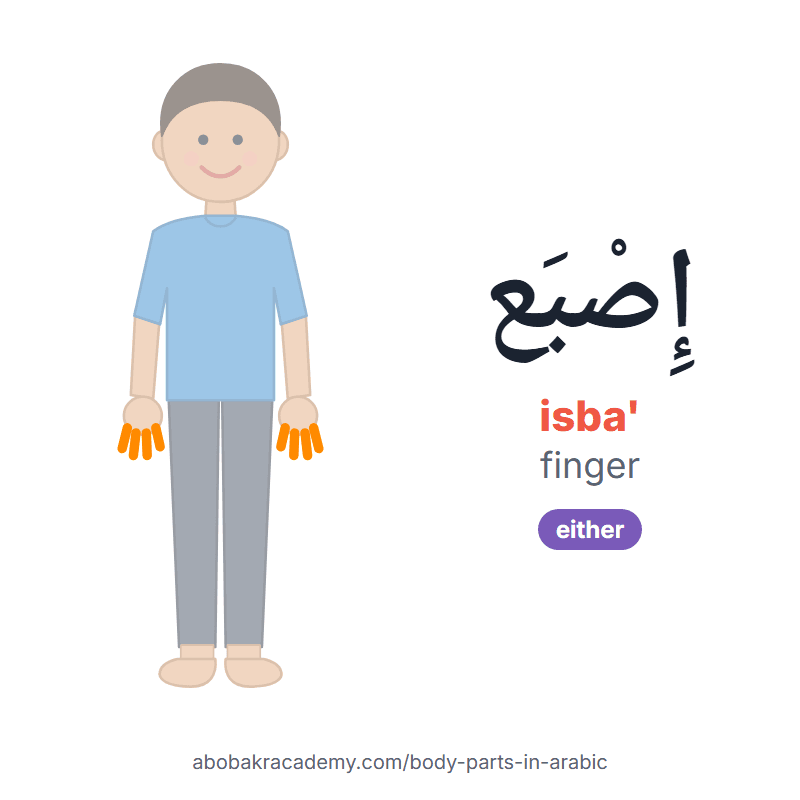
| إِصْبَع | finger (isba’) | either | |
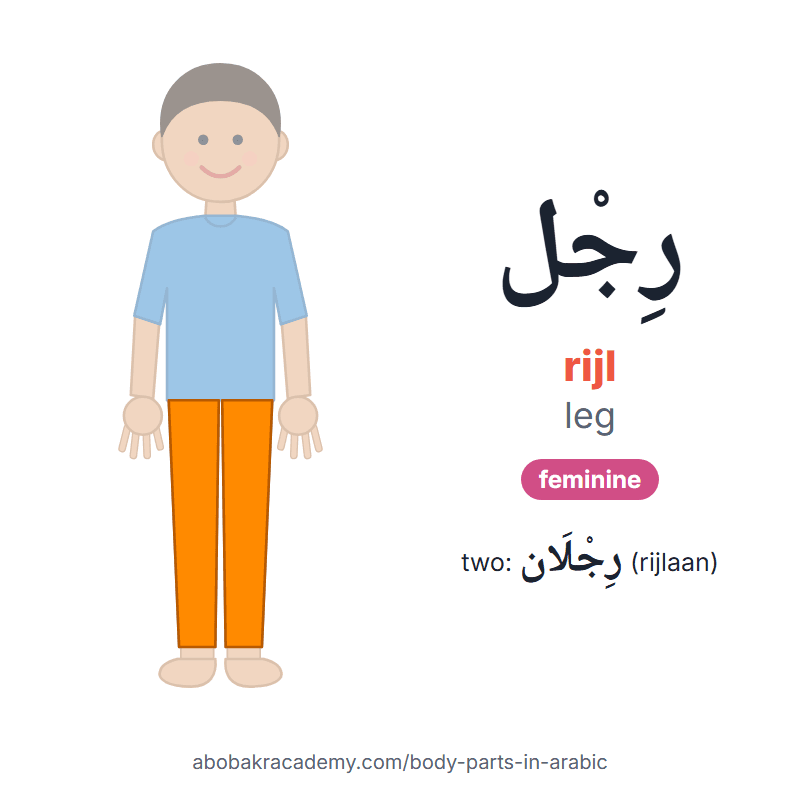
| رِجْل | leg (rijl) | feminine | رِجْلَان (rijlaan) |
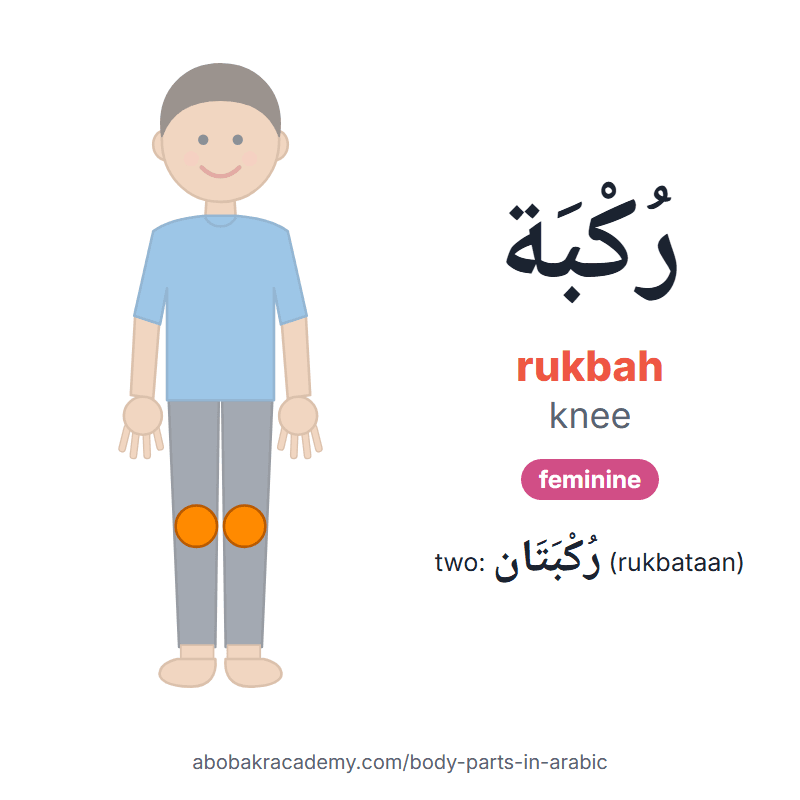
| رُكْبَة | knee (rukbah) | feminine | رُكْبَتَان (rukbataan) |
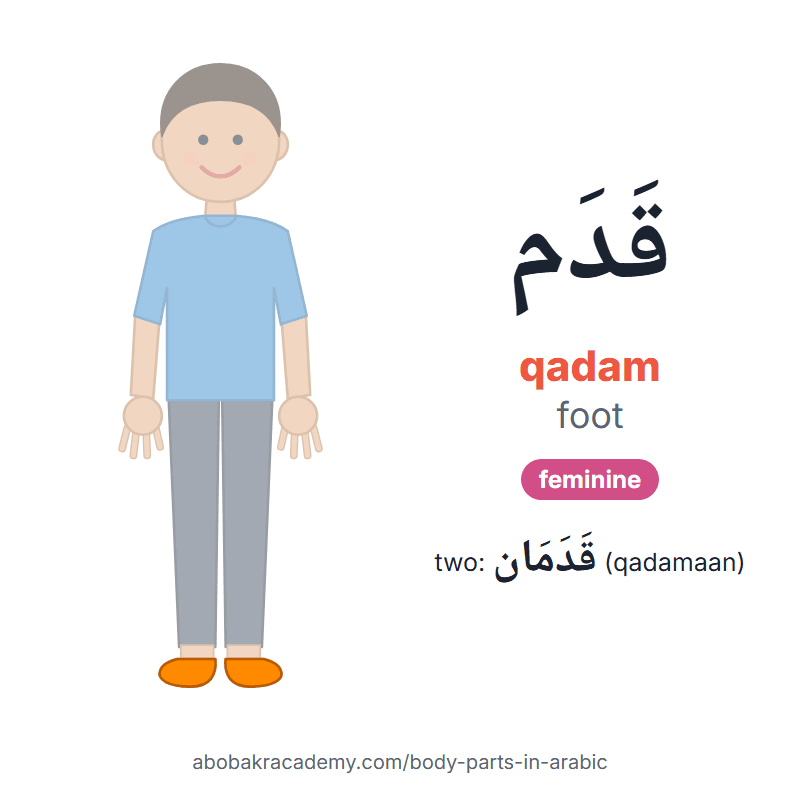
| قَدَم | foot (qadam) | feminine | قَدَمَان (qadamaan) |
| كَعْب | ankle (ka’b) | masculine | كَعْبَان (ka’baan) |
Are body parts masculine or feminine in Arabic?
Every Arabic noun is masculine or feminine, and body parts follow a pattern that is easy to remember with one warning attached. Most parts that come in pairs are feminine: eye عَيْن, ear أُذُن, cheek خَدّ, lip شَفَة, shoulder كَتِف, arm ذِرَاع, hand يَد, leg رِجْل, knee رُكْبَة and foot قَدَم. That is 10 of the 13 paired parts on this page.
The warning is that the rule is not complete. eyebrow حَاجِب, elbow مِرْفَق and ankle كَعْب come in pairs and are still masculine. Most parts we have only one of are masculine, but forehead جَبْهَة, tooth سِنّ and neck رَقَبَة are feminine even so, and tongue لِسَان, tummy بَطْن and finger إِصْبَع can be used either way.
It matters because any word that describes a body part has to match it, in the same way a colour changes to match the thing it describes. There is more on that on our page of colours in Arabic.
Two eyes, two hands: saying two in Arabic
Arabic has a form just for two of something, called the dual. For most words you add -aan to the end, so عَيْن (‘ayn) becomes عَيْنَان (‘aynaan) and يَد (yad) becomes يَدَان (yadaan). A word ending in -ah changes that ending to -at first, so رُكْبَة (rukbah) becomes رُكْبَتَان (rukbataan). The tables above give the dual for all 13 parts that come in pairs.
You will meet a second ending, -ayn, in the Quran. It is the same dual, used when the word is the object of the sentence, as in the verses below.
Body parts in the Quran
The verse of wudu
Before prayer, the Quran tells the believers what to wash. The verse in Surah Al-Ma’idah names the face, the hands and arms up to the elbows, the head, which is wiped, and the feet up to the ankles: وُجُوهَكُمْ (your faces), أَيْدِيَكُمْ (your hands and arms), الْمَرَافِقِ (the elbows), بِرُءُوسِكُمْ (your heads), أَرْجُلَكُمْ (your feet) and الْكَعْبَيْنِ (the two ankles). A child who knows these words can follow the steps of wudu in Arabic, and they are the first body parts many Muslim children learn.
Two eyes, a tongue and two lips
In Surah Al-Balad, Allah asks: have We not given him two eyes, and a tongue, and two lips? Both pairs are in the dual, with the -ayn ending. The table shows every body part word as it stands in these verses. The Quran words are not read aloud on this page. To hear them recited, follow the link to each verse.
| Word in the verse | Meaning | Our word | Where |
|---|---|---|---|
| وُجُوهَكُمْ | your faces | face وَجْه | Al-Ma’idah 5:6 |
| أَيْدِيَكُمْ | your hands and arms | hand يَد | Al-Ma’idah 5:6 |
| الْمَرَافِقِ | the elbows | elbow مِرْفَق | Al-Ma’idah 5:6 |
| بِرُءُوسِكُمْ | your heads | head رَأْس | Al-Ma’idah 5:6 |
| أَرْجُلَكُمْ | your feet | leg رِجْل | Al-Ma’idah 5:6 |
| الْكَعْبَيْنِ | the two ankles | ankle كَعْب | Al-Ma’idah 5:6 |
| عَيْنَيْنِ | two eyes | eye عَيْن | Al-Balad 90:8 |
| لِسَانًا | a tongue | tongue لِسَان | Al-Balad 90:9 |
| شَفَتَيْنِ | two lips | lip شَفَة | Al-Balad 90:9 |
26 body parts picture cards
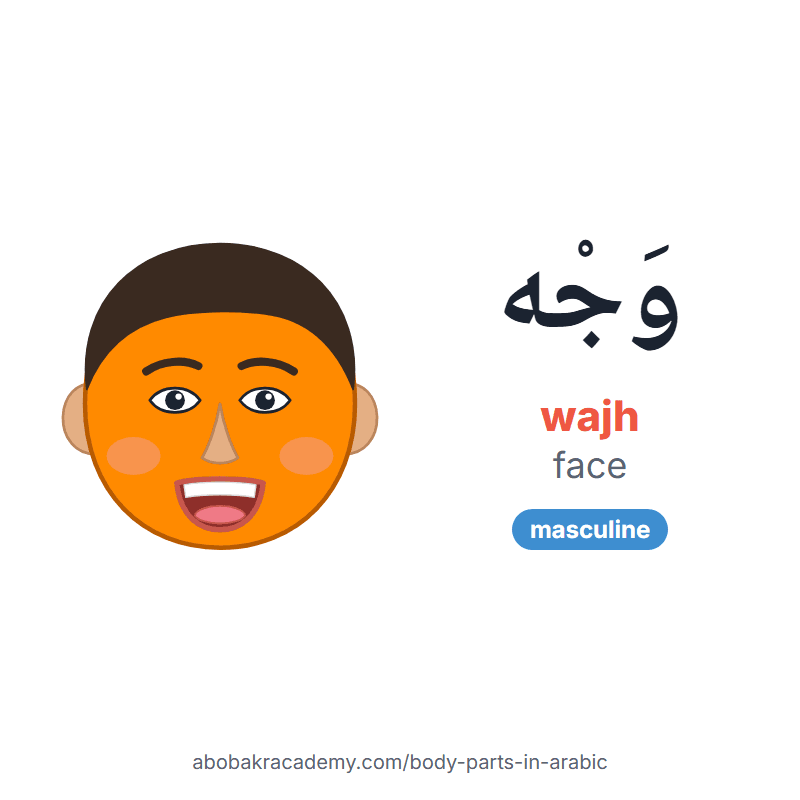
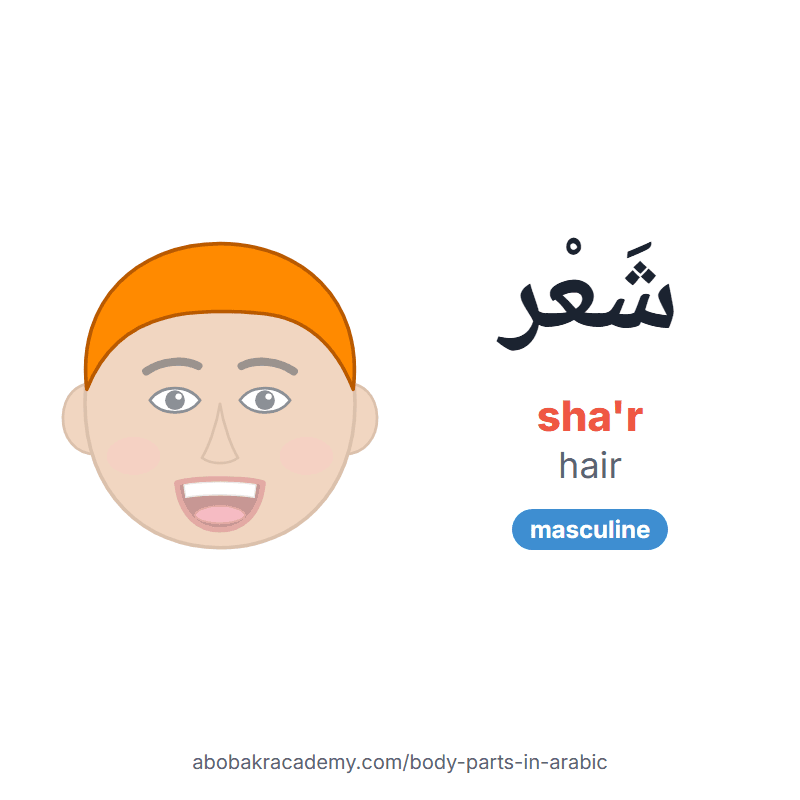
One card for every word, with the part coloured in on the same child, the word with its vowel marks, how to say it, and whether it is masculine or feminine. All 26 are in the printable.





How to teach body parts when you do not read Arabic
Body parts are the easiest words to teach without reading Arabic yourself, because the answer is always on your child. Tap a play button, and your child touches the part before you do. Then swap: you touch your nose, and your child finds the word. The picture cards work the same way away from the screen. At snack time, the Arabic words for fruit do the same with the real thing on the table.
If your child knows the English song, sing it with four Arabic words in it: head رَأْس (ra’s), shoulders كَتِفَان (katifaan), knees رُكْبَتَان (rukbataan), and toes, which uses the word for fingers, إِصْبَع (isba’). There is more on this in our guide to teaching Arabic when you do not speak it.
Free printable: body parts in Arabic PDF
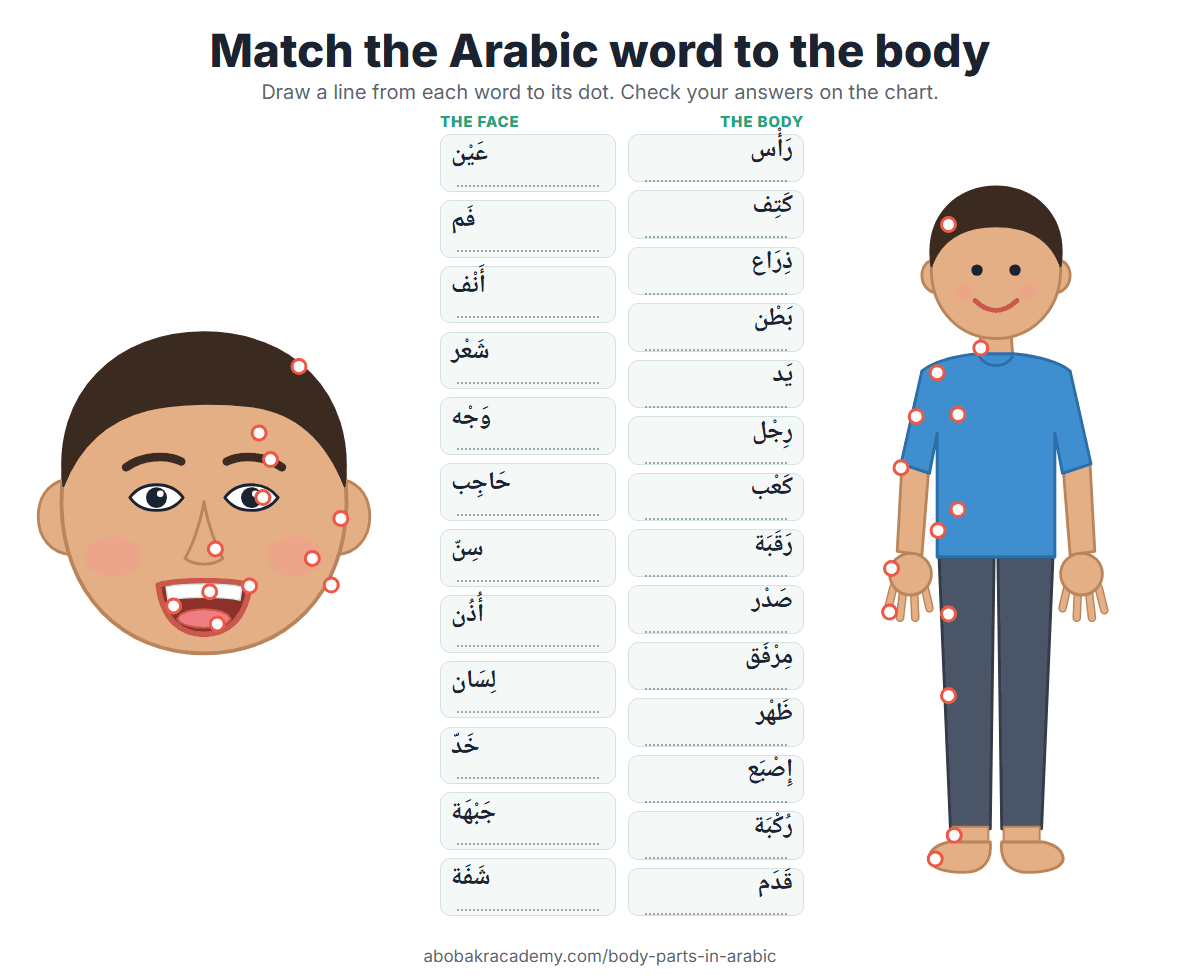
The printable has six pages: the chart, the 26 picture cards on three sheets to cut out, a worksheet where your child draws a line from each Arabic word to its part, and a last page with the masculine or feminine of every word, the form for two, and the words of the wudu verse. There is no email to give.
Download the body parts in Arabic PDF
Common questions about body parts in Arabic
What are the body parts called in Arabic?
The body is جِسْم (jism). The first words children learn are head رَأْس (ra’s), eye عَيْن (‘ayn), ear أُذُن (udhun), nose أَنْف (anf), mouth فَم (fam), hand يَد (yad) and foot قَدَم (qadam). This page has 26 in all, with the vowel marks and a way to say each one.
Are body parts feminine in Arabic?
Most parts that come in pairs are feminine, such as the eye, the hand and the foot. Not all of them: the eyebrow, the elbow and the ankle are masculine. Most parts we have one of are masculine, with the neck, the tooth and the forehead as feminine exceptions.
How do you say two eyes in Arabic?
Two eyes is عَيْنَان (‘aynaan). Arabic has a special form for two of something, made by adding -aan to the word, so two hands is يَدَان (yadaan) and two ears is أُذُنَان (udhunaan).
Which body parts are washed in wudu?
The verse of wudu, Surah Al-Ma’idah 5:6, names the face, the hands and arms up to the elbows, the head, which is wiped, and the feet up to the ankles. The Arabic words from the verse are in the table on this page.
How do you say head, shoulders, knees and toes in Arabic?
Head is رَأْس (ra’s), two shoulders are كَتِفَان (katifaan), two knees are رُكْبَتَان (rukbataan), and toes use the same word as fingers, إِصْبَع (isba’).
Colours, animals, family and the days of the week next
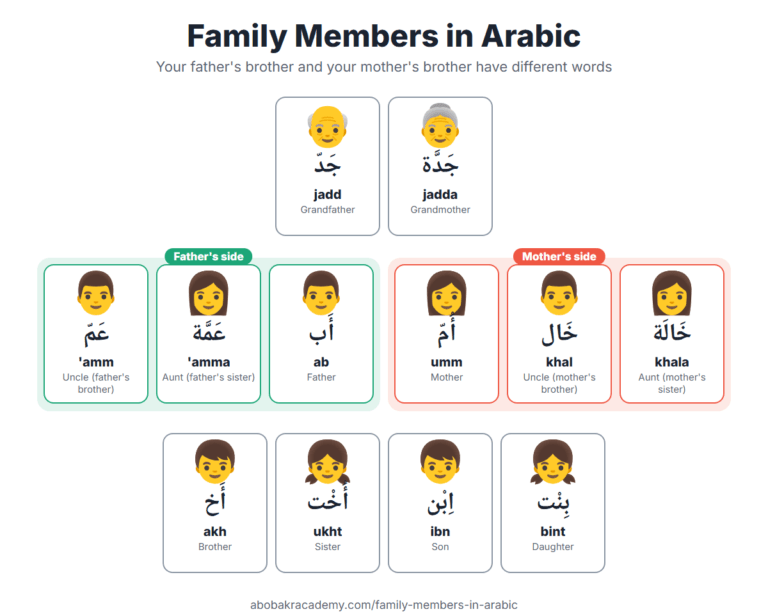
For more first words, see colours in Arabic, animals in Arabic, family members in Arabic and the days of the week in Arabic. If you would like a tutor to teach your child to say every word properly, our online Arabic classes for kids start from age four, and the first class is free.