Children learn animal names before almost anything else, in any language. A cat, a cow and an elephant are easy to point at, easy to act out and easy to remember, which makes animals the natural first vocabulary set in Arabic too.
This page has forty of them, in Arabic with the vowel marks, with a way to say each one and a picture card for every animal. It also has something the usual lists leave out: the animals that are named in the Quran, with the word as it appears in the verse and a link to the verse itself. There is a free printable with flashcards and a worksheet, with no sign-up.
Animal in Arabic is حَيَوَان (hayawaan), and animals is حَيَوَانَات (hayawaanaat). Ten to start with: cat قِطَّة, dog كَلْب, cow بَقَرَة, camel جَمَل, horse حِصَان, sheep خَرُوف, lion أَسَد, elephant فِيل, bird طَائِر and fish سَمَكَة.
Animals in Arabic with pictures
Here are all forty on one chart. The same words are in the tables below, grouped the way children usually meet them: on the farm, at home, in the wild, in the sky, in the grass and in the water.
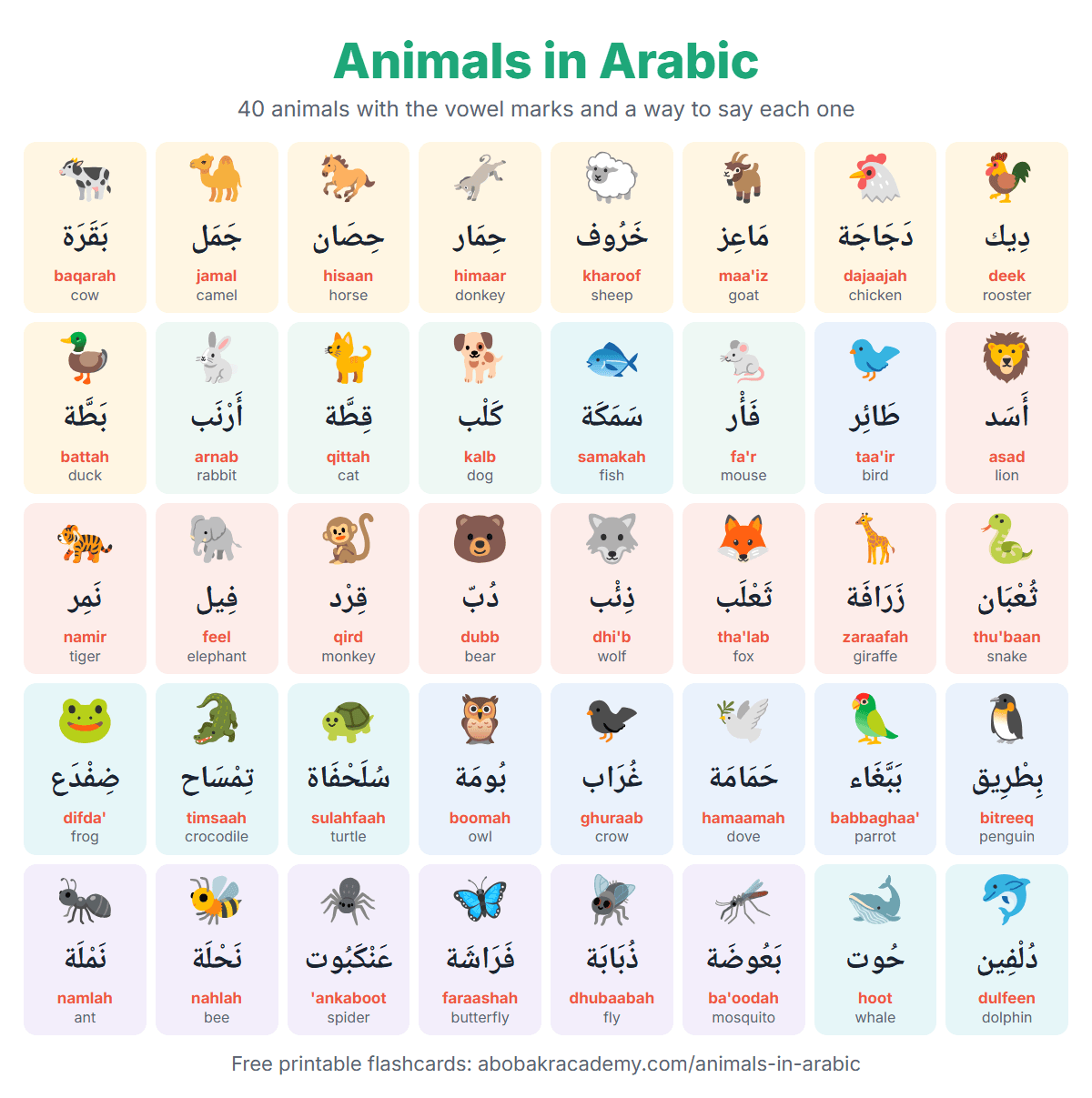
The “say it” spelling doubles long vowels (aa, ee, oo) so a child holds them, and an apostrophe marks a short catch in the throat. Four sounds have no match in English, and they are the ones children skip:
- The h in حِصَان (hisaan). A breathy h from deep in the throat, like breathing on a pair of glasses to clean them.
- The q in قِطَّة (qittah) and قِرْد (qird). A k made further back, where you swallow. It is not the k in kite.
- The kh in خَرُوف (kharoof). The sound at the end of the Scottish “loch”.
- The apostrophe in عَنْكَبُوت (‘ankaboot). The letter ‘ayn, a squeeze in the throat. If it will not come yet, a short pause is closer than leaving it out.
If nobody at home reads Arabic, these are the four sounds to hear from someone who does, whether that is a teacher, a relative or a recording. Everything else on this page a parent can check from the English.
Farm animals in Arabic
The animals most picture books start with. Six of these are named in the Quran, so the last column links straight to the verse.
| Picture | Arabic | Say it | English | In the Quran |
|---|---|---|---|---|
| 🐄 | بَقَرَة | baqarah | cow | 2:67 |
| 🐪 | جَمَل | jamal | camel | 88:17 |
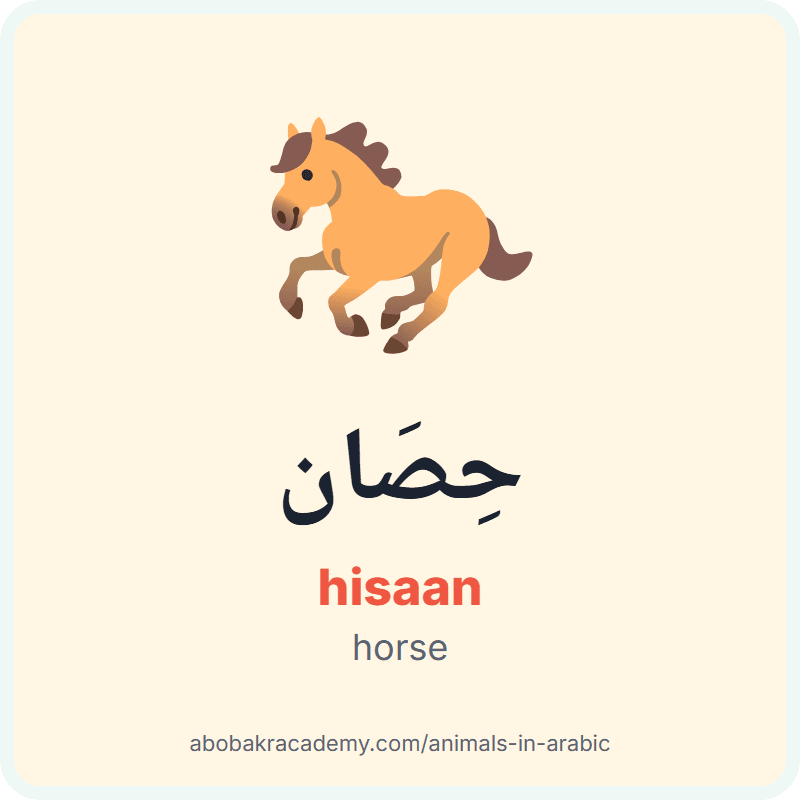
| 🐎 | حِصَان | hisaan | horse | 16:8 |
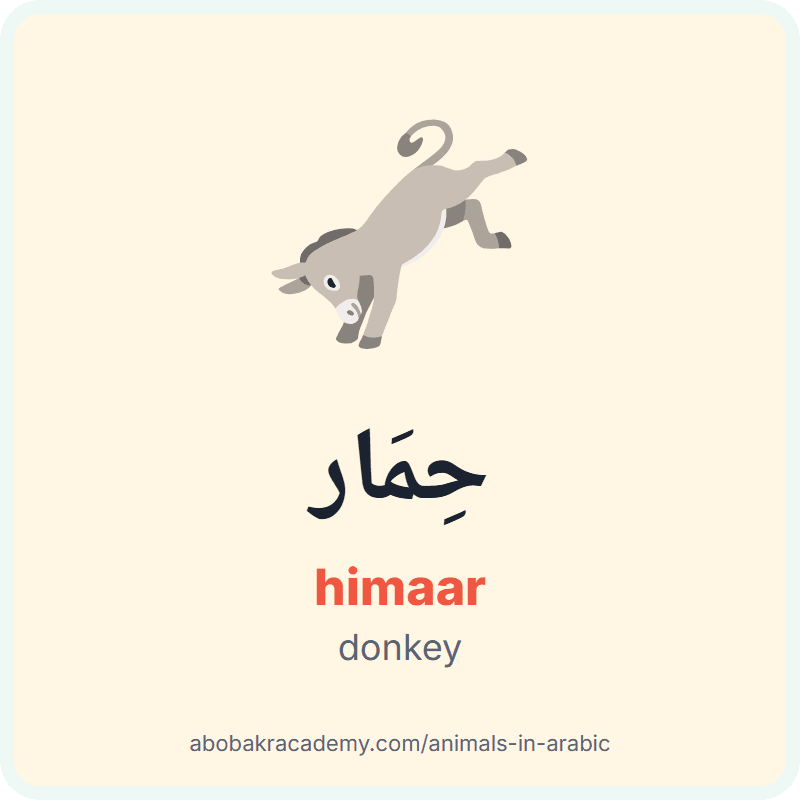
| 🫏 | حِمَار | himaar | donkey | 16:8 |
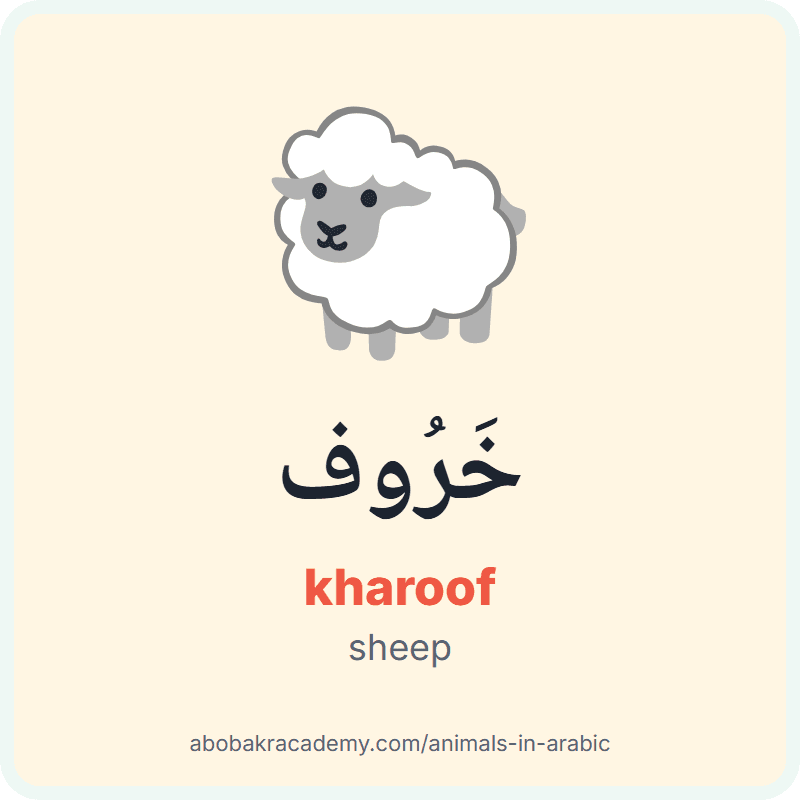
| 🐑 | خَرُوف | kharoof | sheep* | 6:143 |
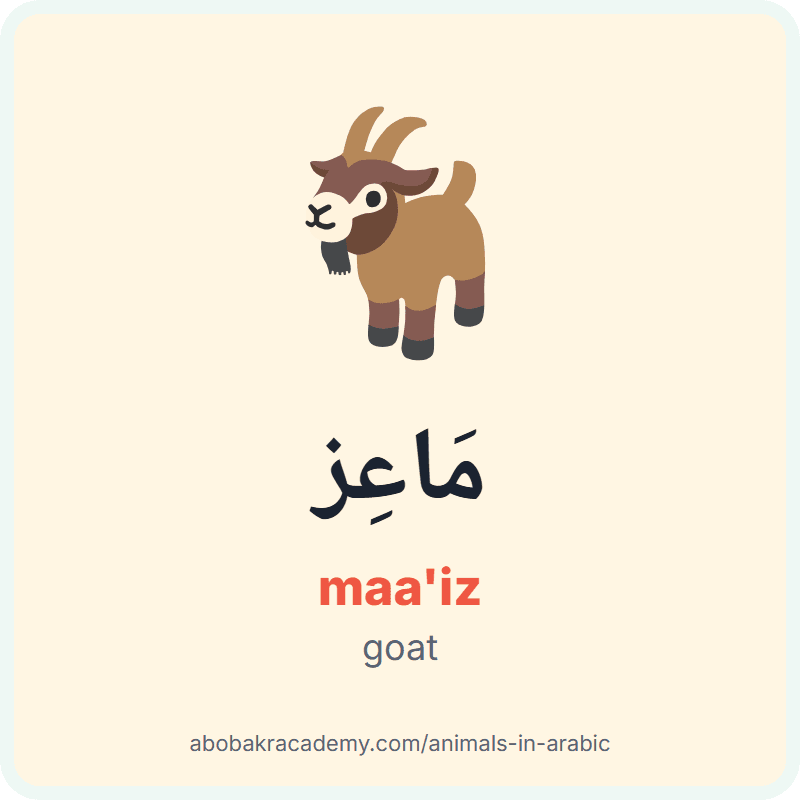
| 🐐 | مَاعِز | maa’iz | goat | 6:143 |
| 🐔 | دَجَاجَة | dajaajah | chicken | |
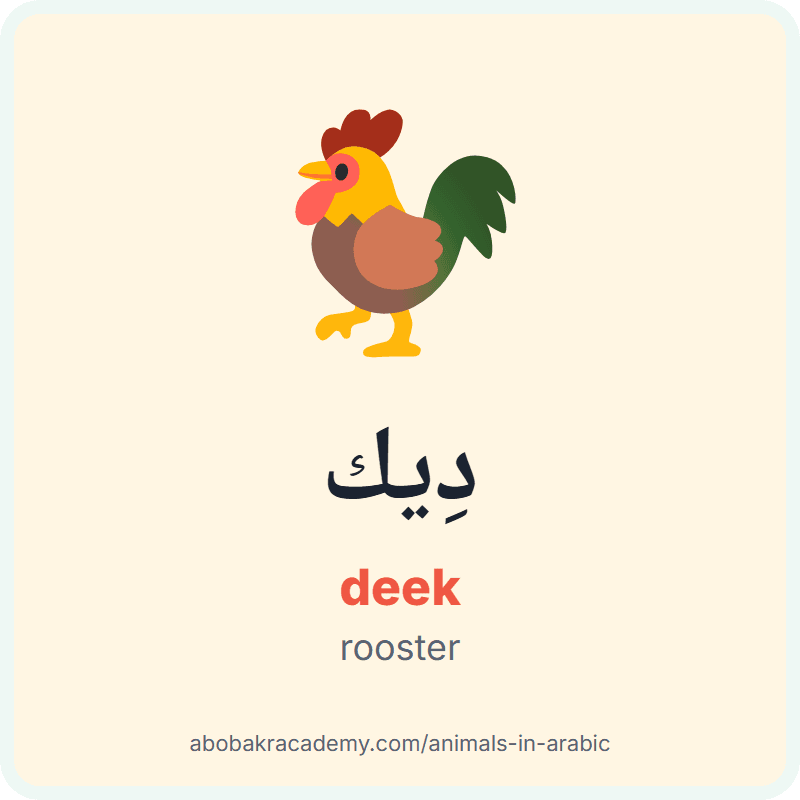
| 🐓 | دِيك | deek | rooster | |
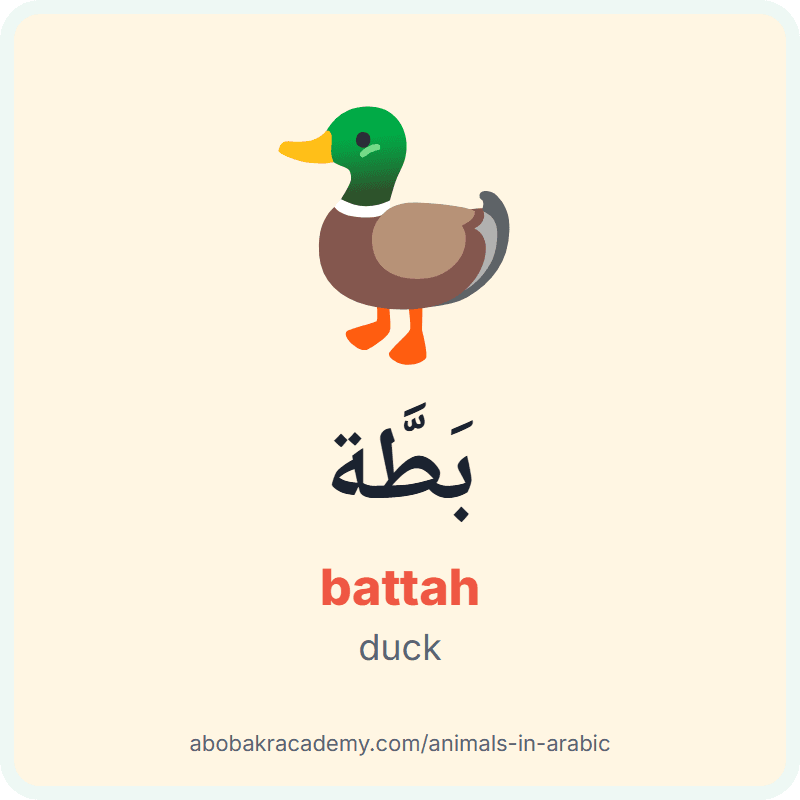
| 🦆 | بَطَّة | battah | duck |
* Children’s books teach kharoof for sheep; strictly it is a young ram or lamb.
Pets and animals at home in Arabic
The animals a child is most likely to have met in real life, which makes them the easiest to practise.
| Picture | Arabic | Say it | English | In the Quran |
|---|---|---|---|---|
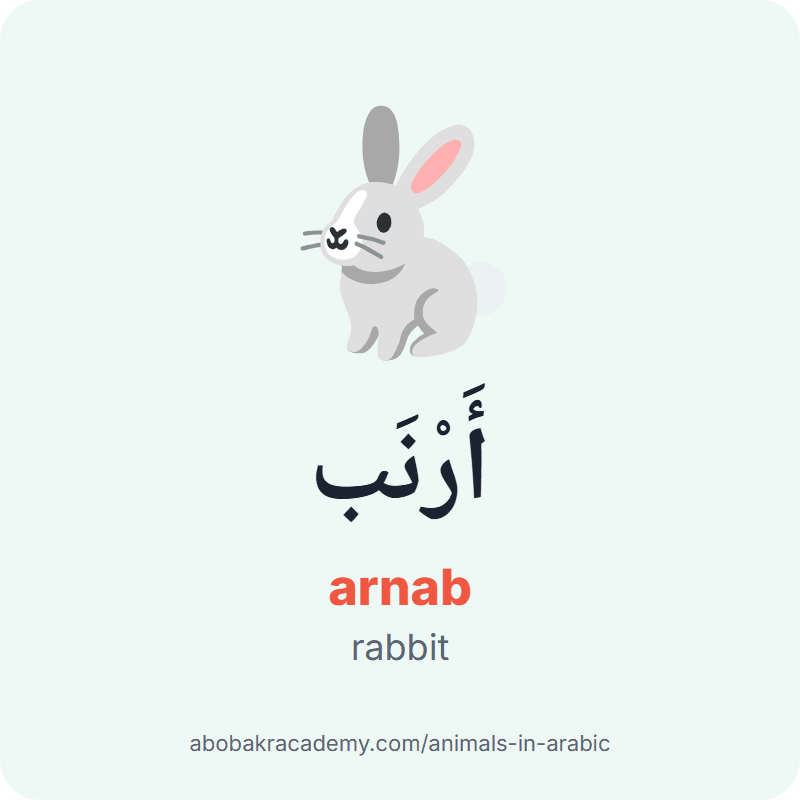
| 🐇 | أَرْنَب | arnab | rabbit | |
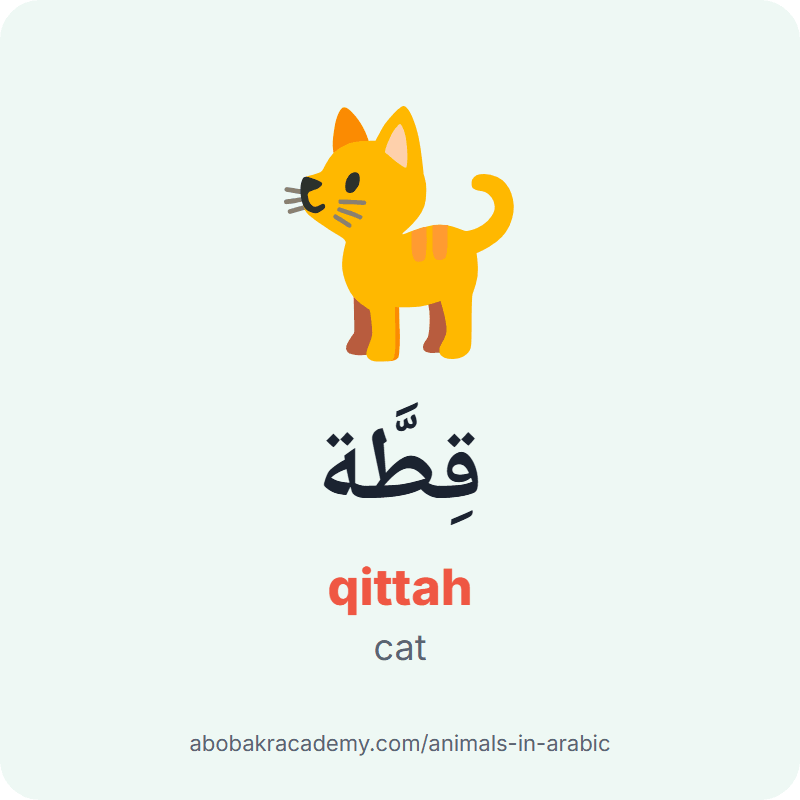
| 🐈 | قِطَّة | qittah | cat | |
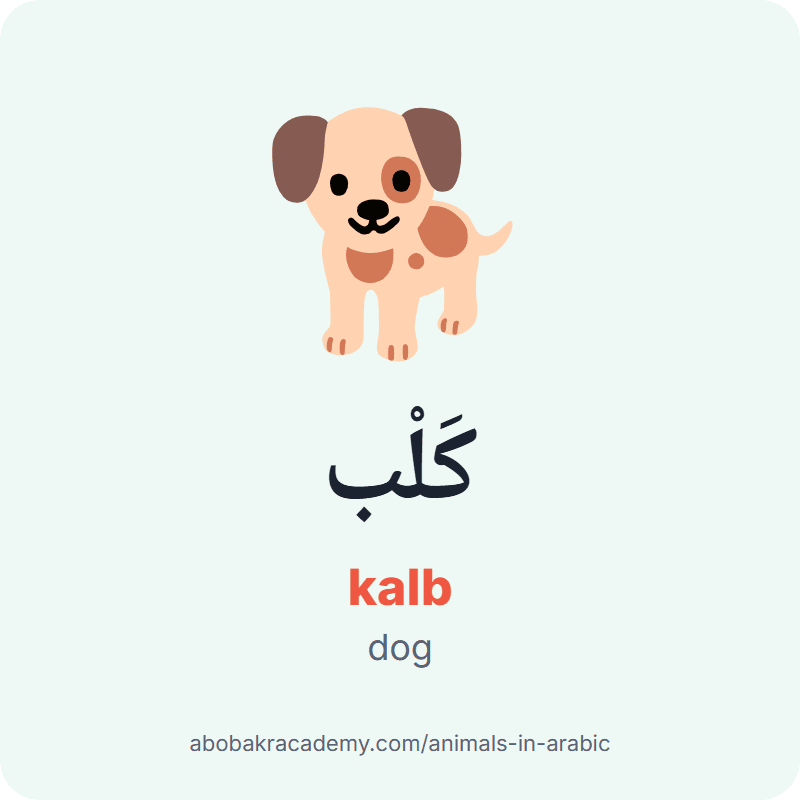
| 🐕 | كَلْب | kalb | dog | 18:18 |
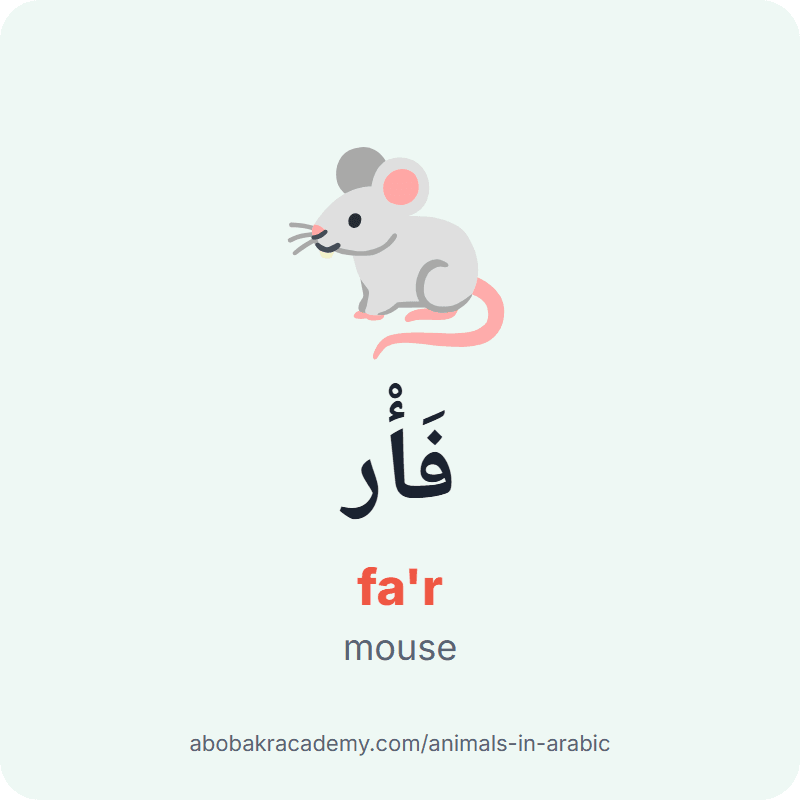
| 🐁 | فَأْر | fa’r | mouse |
Wild animals in Arabic
Zoo and safari animals. The lion is here with its everyday name; the Quran section below explains the word the Quran uses.
| Picture | Arabic | Say it | English | In the Quran |
|---|---|---|---|---|
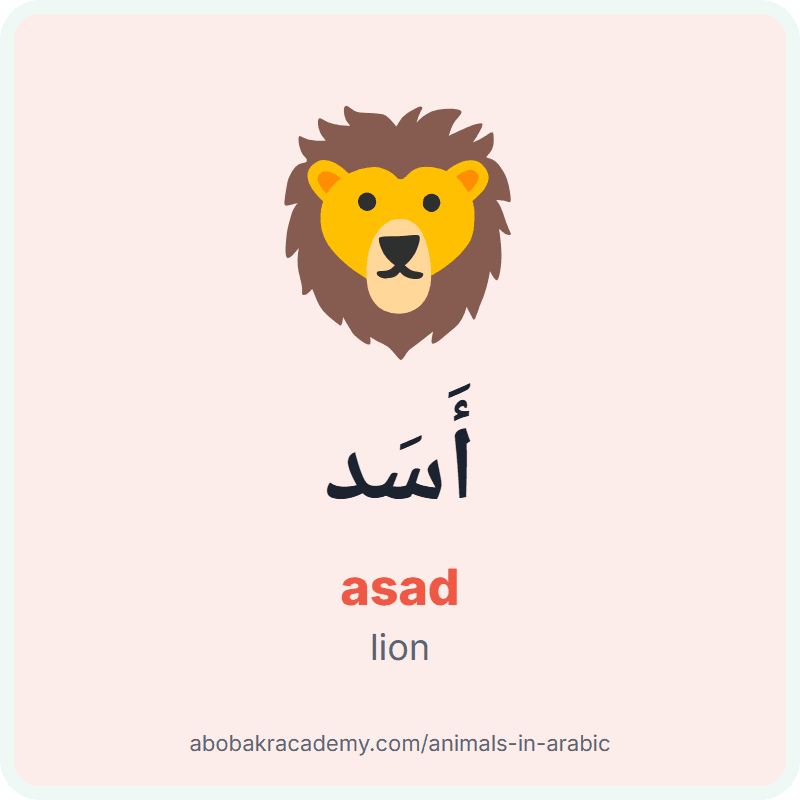
| 🦁 | أَسَد | asad | lion | 74:51 |
| 🐅 | نَمِر | namir | tiger | |
| 🐘 | فِيل | feel | elephant | 105:1 |
| 🐒 | قِرْد | qird | monkey | 2:65 |
| 🐻 | دُبّ | dubb | bear | |
| 🐺 | ذِئْب | dhi’b | wolf | 12:13 |
| 🦊 | ثَعْلَب | tha’lab | fox | |
| 🦒 | زَرَافَة | zaraafah | giraffe | |
| 🐍 | ثُعْبَان | thu’baan | snake | 7:107 |
Birds in Arabic
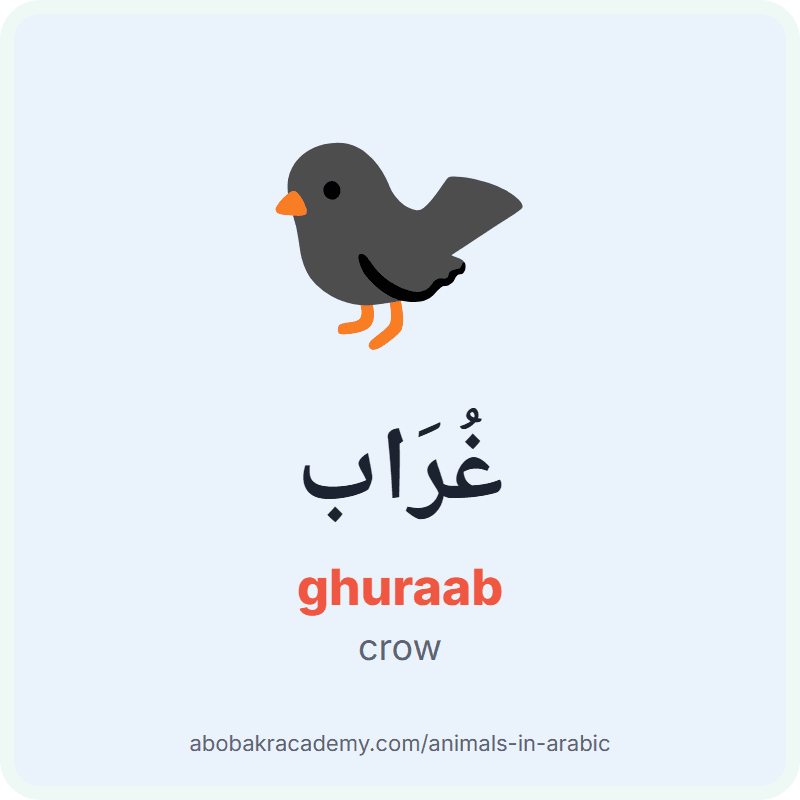
One bird is طَائِر (taa’ir). The crow is the bird Allah sent to teach the son of Adam, and the hoopoe, which has no picture card, is in the Quran section below.
| Picture | Arabic | Say it | English | In the Quran |
|---|---|---|---|---|
| 🐦 | طَائِر | taa’ir | bird | 105:3 |
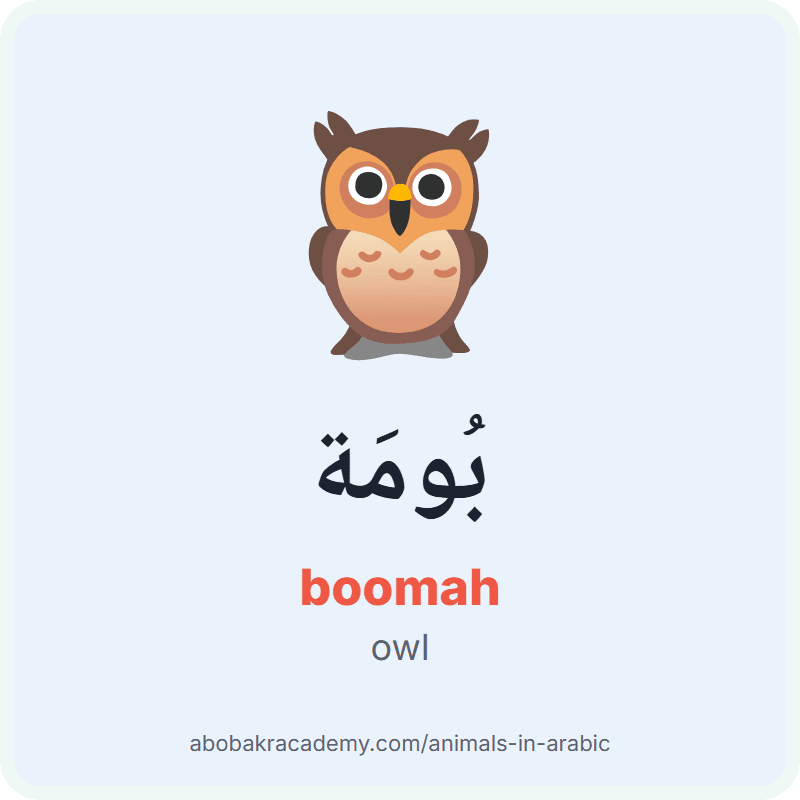
| 🦉 | بُومَة | boomah | owl | |
| 🐦⬛ | غُرَاب | ghuraab | crow | 5:31 |
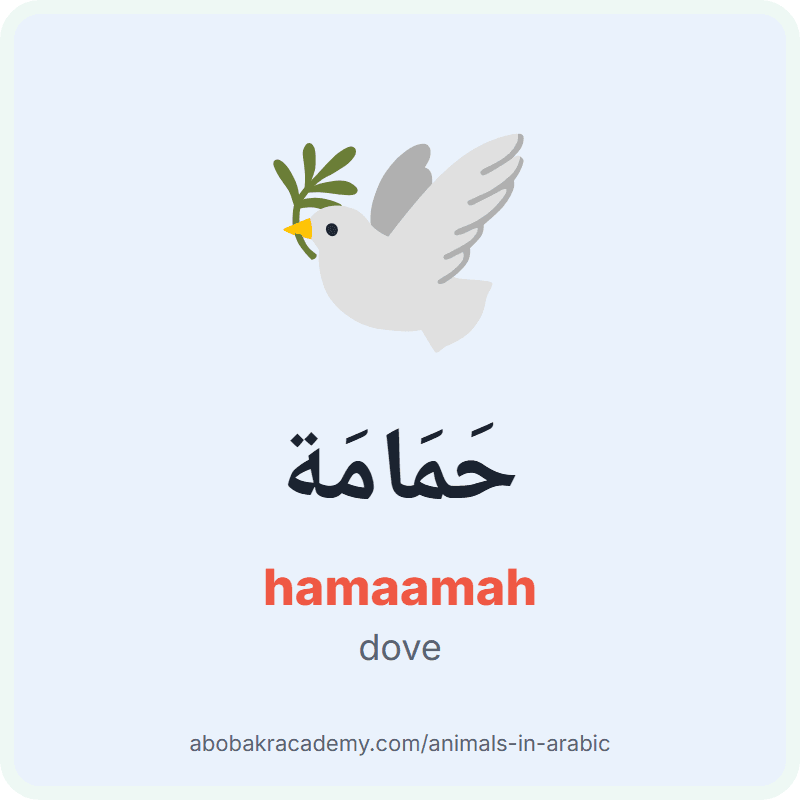
| 🕊️ | حَمَامَة | hamaamah | dove | |
| 🦜 | بَبَّغَاء | babbaghaa’ | parrot | |
| 🐧 | بِطْرِيق | bitreeq | penguin |
Insects and small creatures in Arabic
Small, but three of them have whole surahs named after them: the ant, the bee and the spider.
| Picture | Arabic | Say it | English | In the Quran |
|---|---|---|---|---|
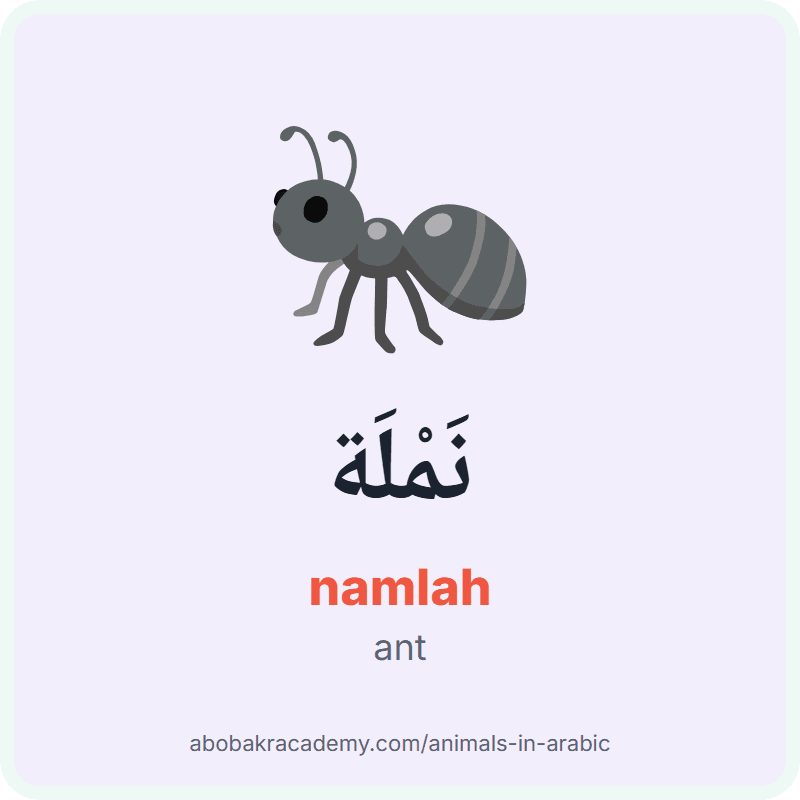
| 🐜 | نَمْلَة | namlah | ant | 27:18 |
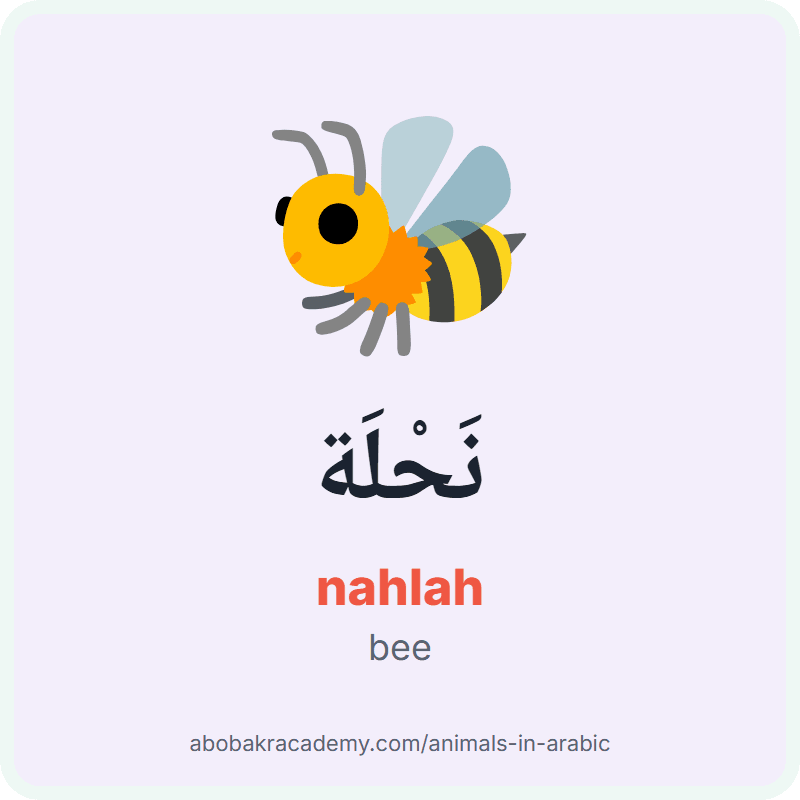
| 🐝 | نَحْلَة | nahlah | bee | 16:68 |
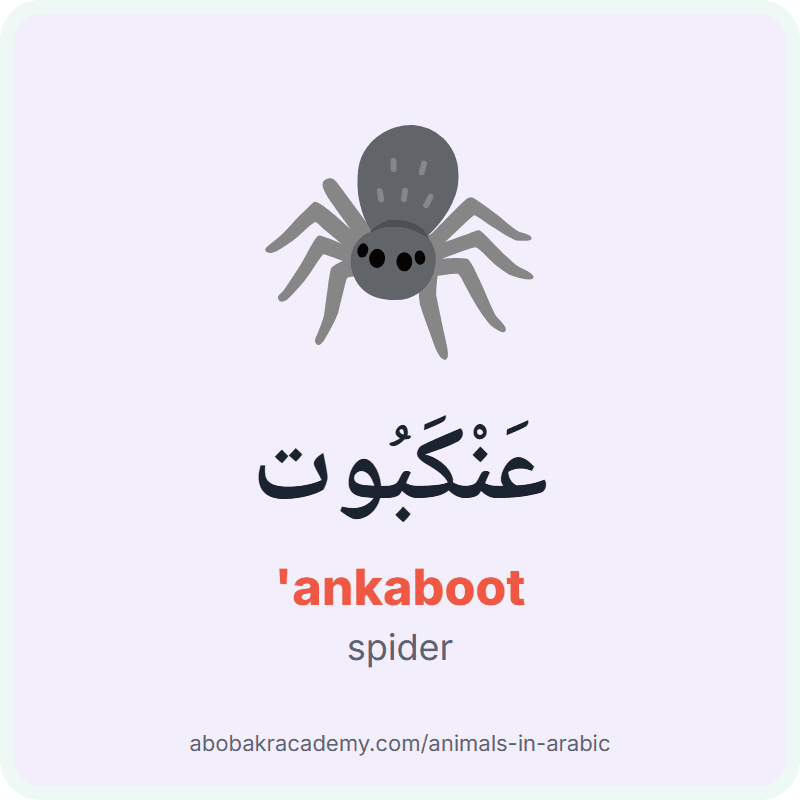
| 🕷️ | عَنْكَبُوت | ‘ankaboot | spider | 29:41 |
| 🦋 | فَرَاشَة | faraashah | butterfly | 101:4 |
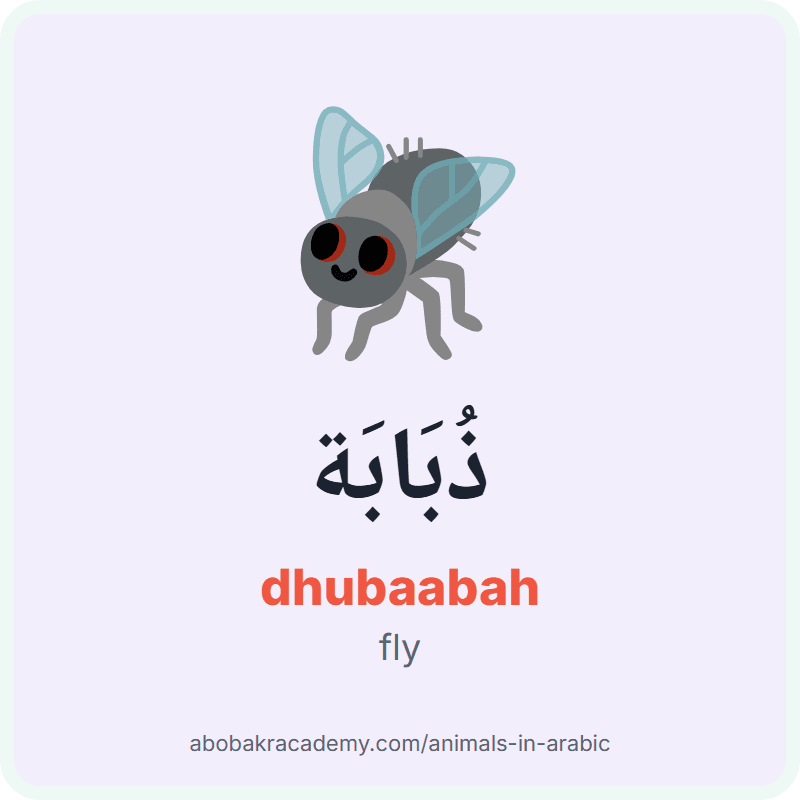
| 🪰 | ذُبَابَة | dhubaabah | fly | 22:73 |
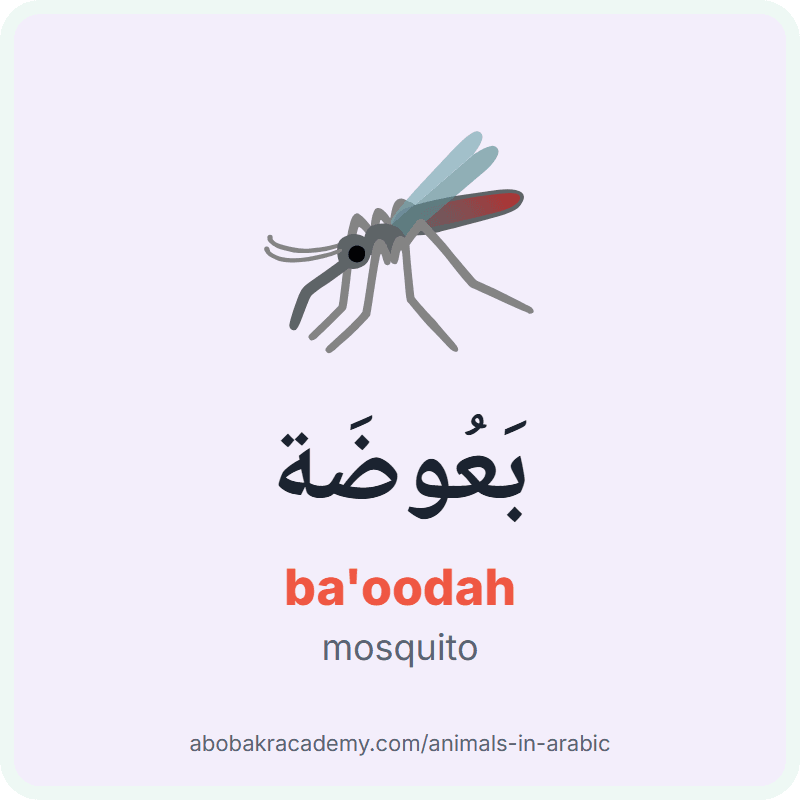
| 🦟 | بَعُوضَة | ba’oodah | mosquito | 2:26 |
Sea and water animals in Arabic
Fish, whales and the animals that live between land and water.
| Picture | Arabic | Say it | English | In the Quran |
|---|---|---|---|---|
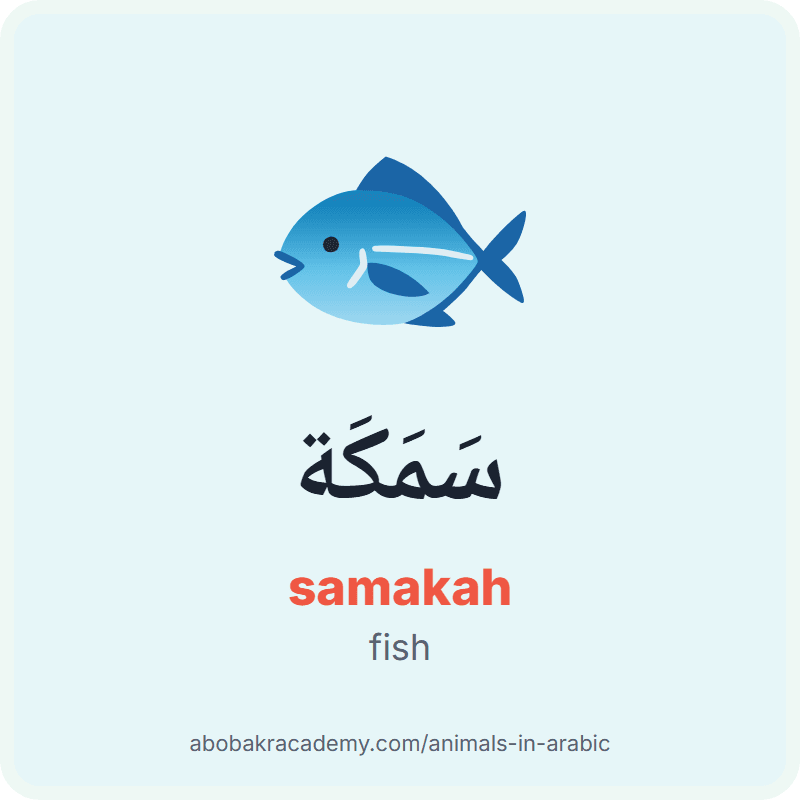
| 🐟 | سَمَكَة | samakah | fish | |
| 🐸 | ضِفْدَع | difda’ | frog | 7:133 |
| 🐊 | تِمْسَاح | timsaah | crocodile | |
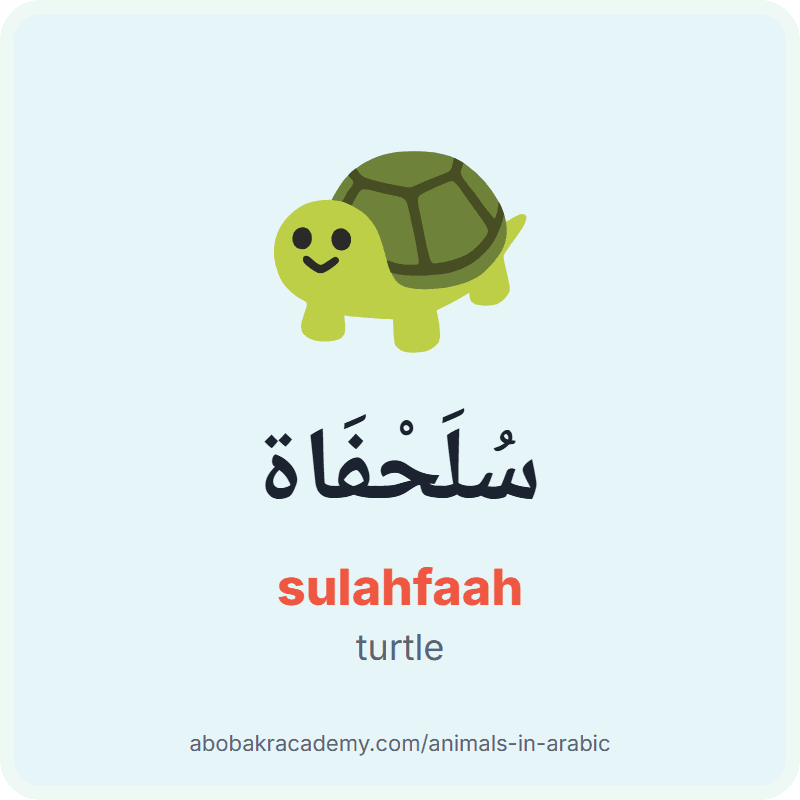
| 🐢 | سُلَحْفَاة | sulahfaah | turtle | |
| 🐋 | حُوت | hoot | whale | 37:142 |
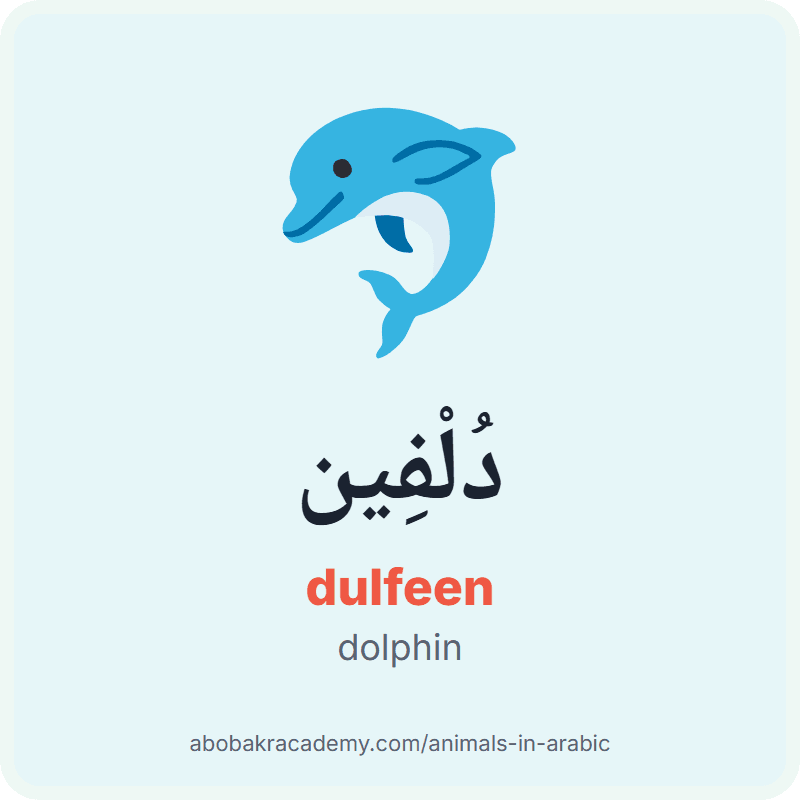
| 🐬 | دُلْفِين | dulfeen | dolphin |
Forty animal picture cards
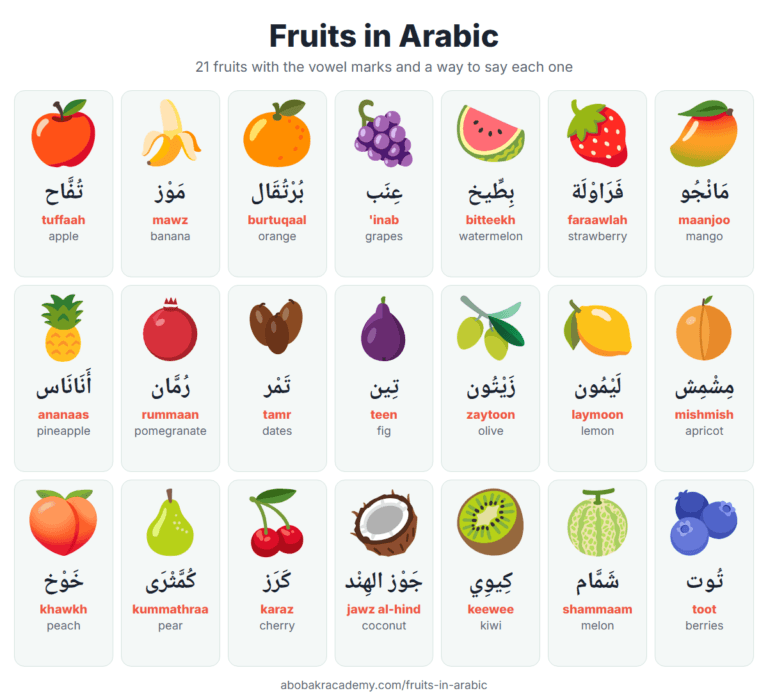
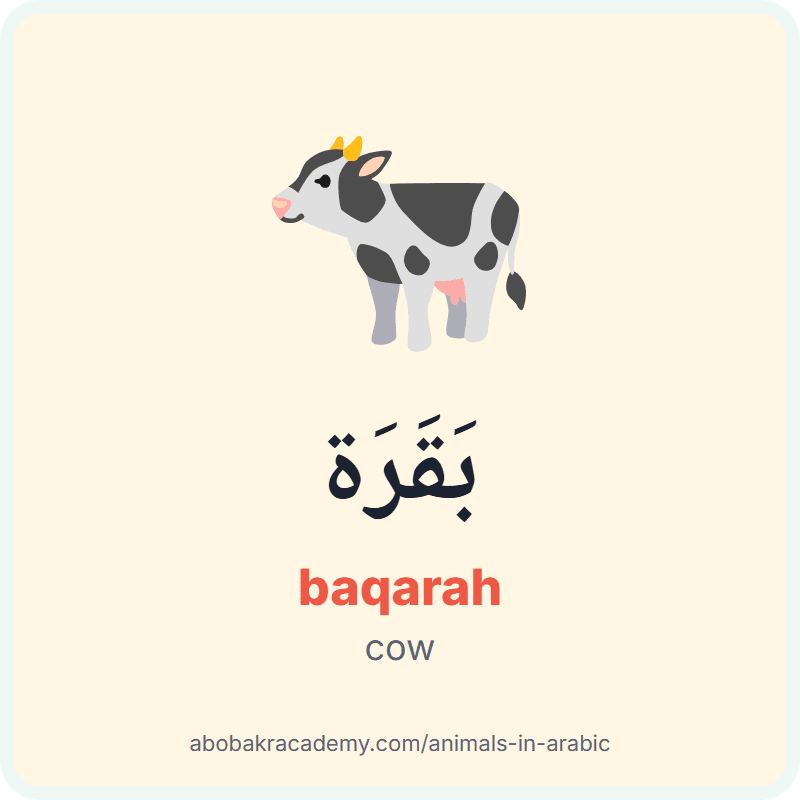
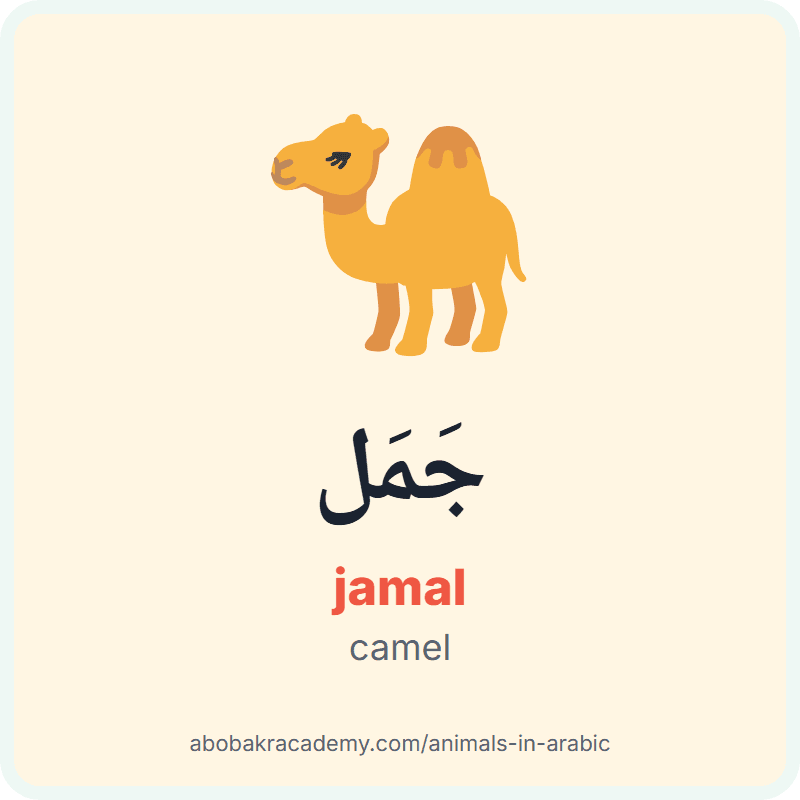
Every animal also has a card of its own. Print one a day, or open them on a tablet and let your child swipe through and say each name before they see the English. The fruit names in Arabic work the same way at snack time, with a card for each of 21 fruits.



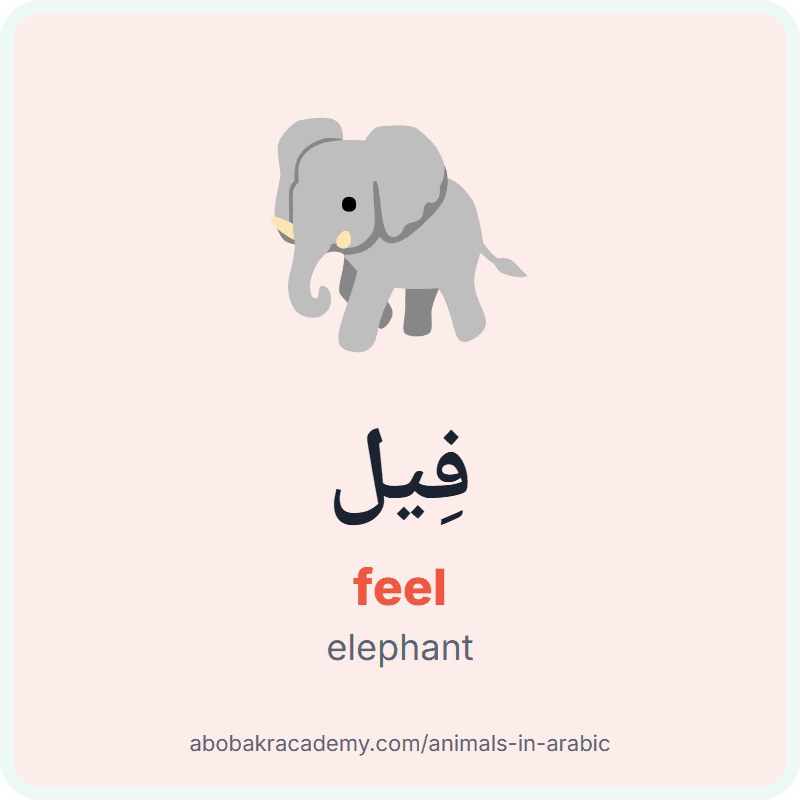
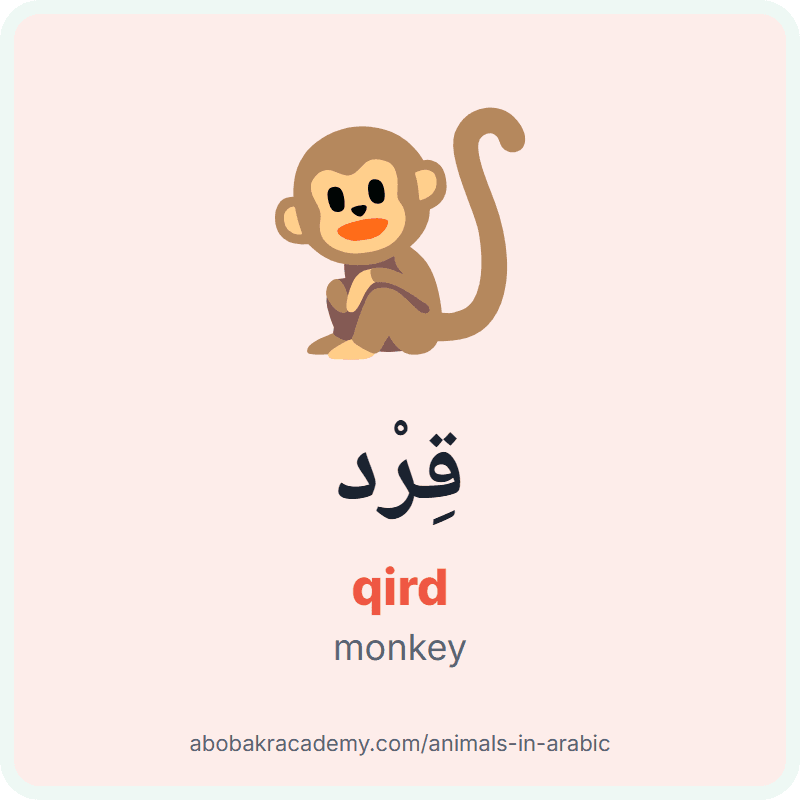

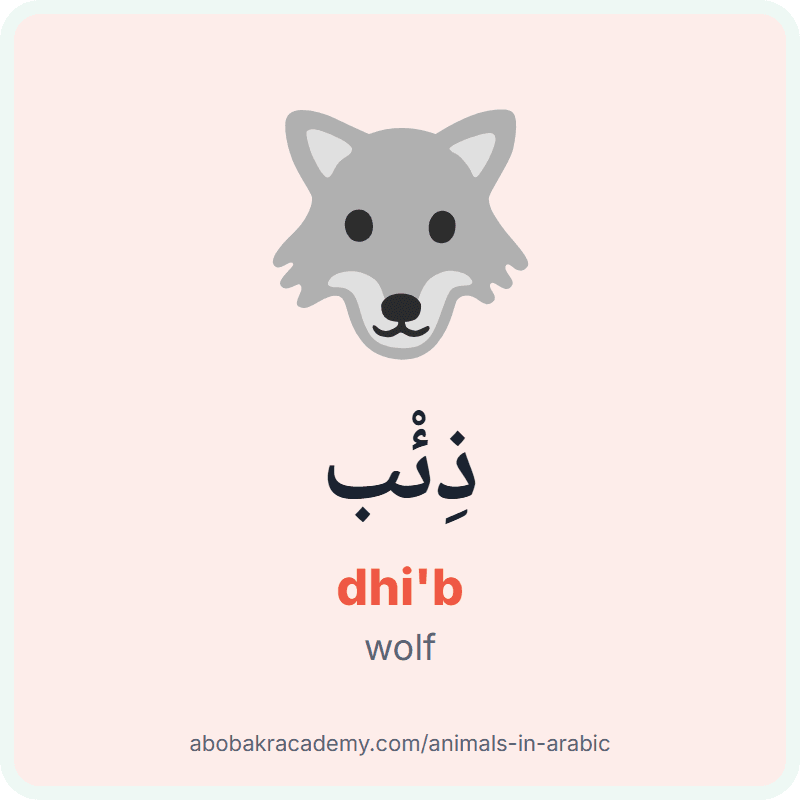
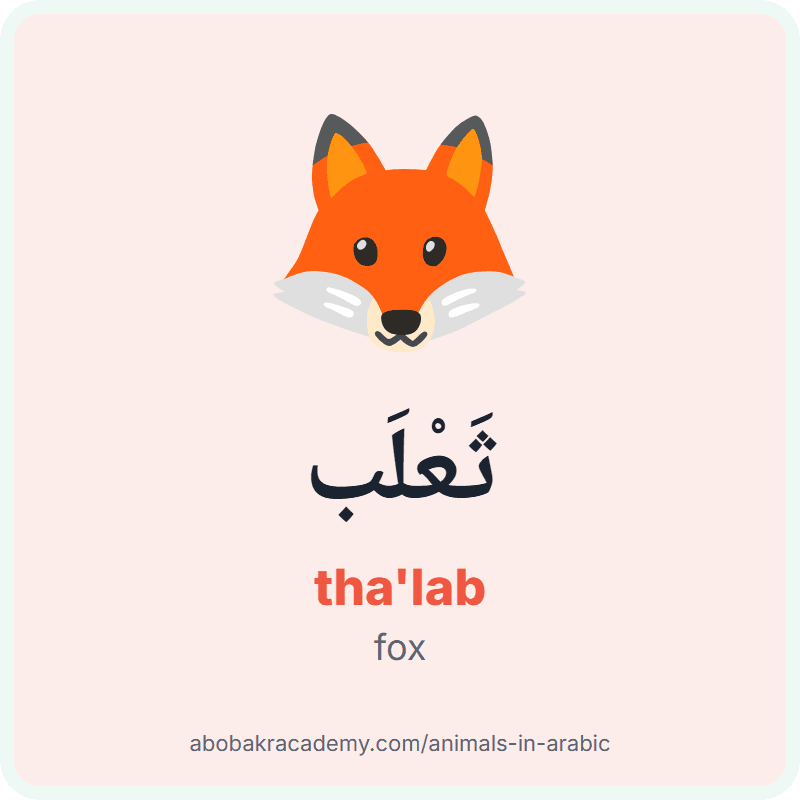
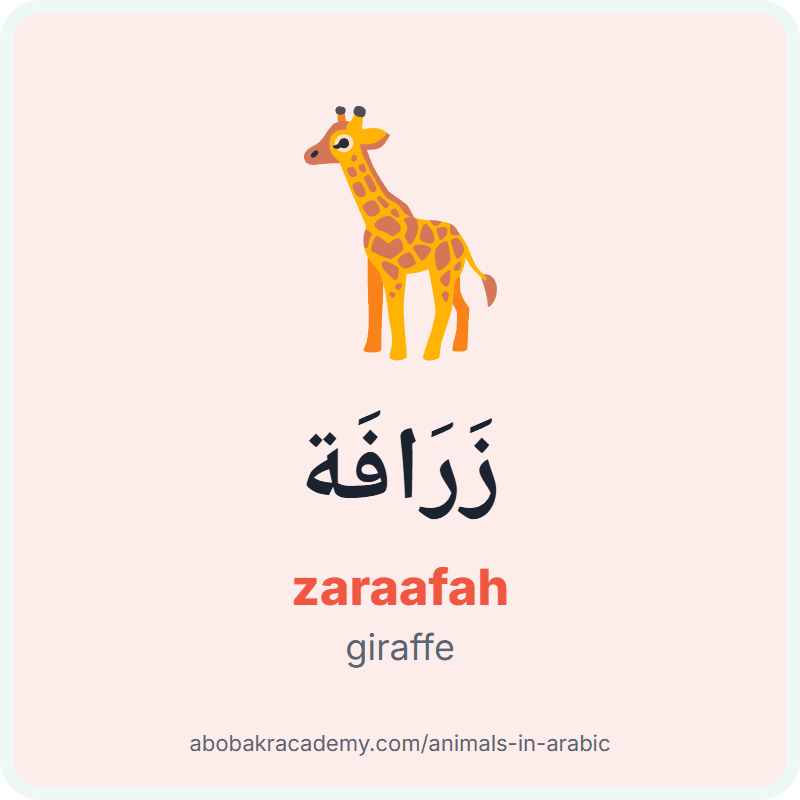
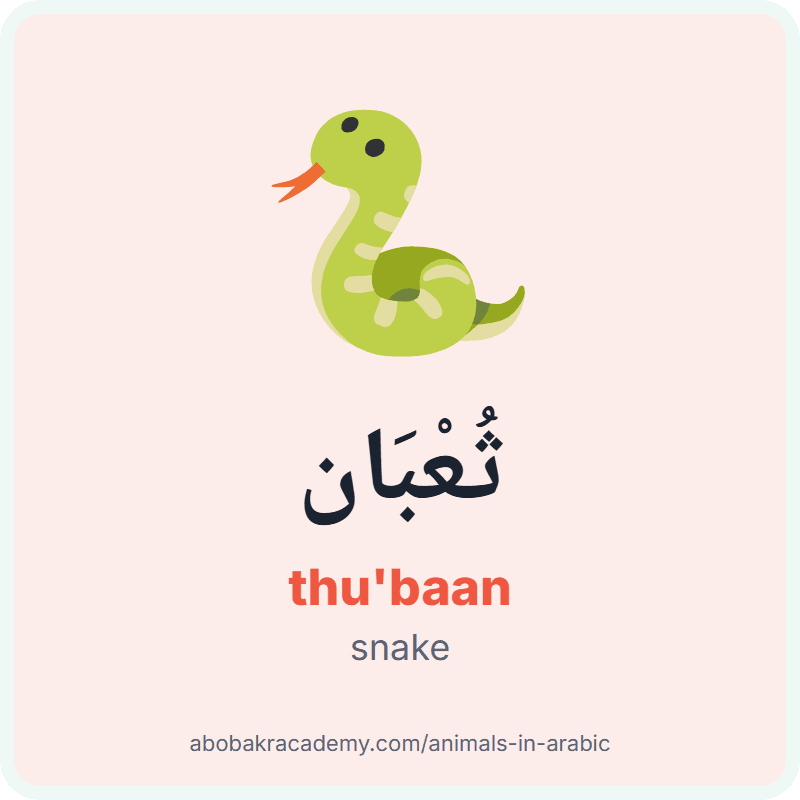
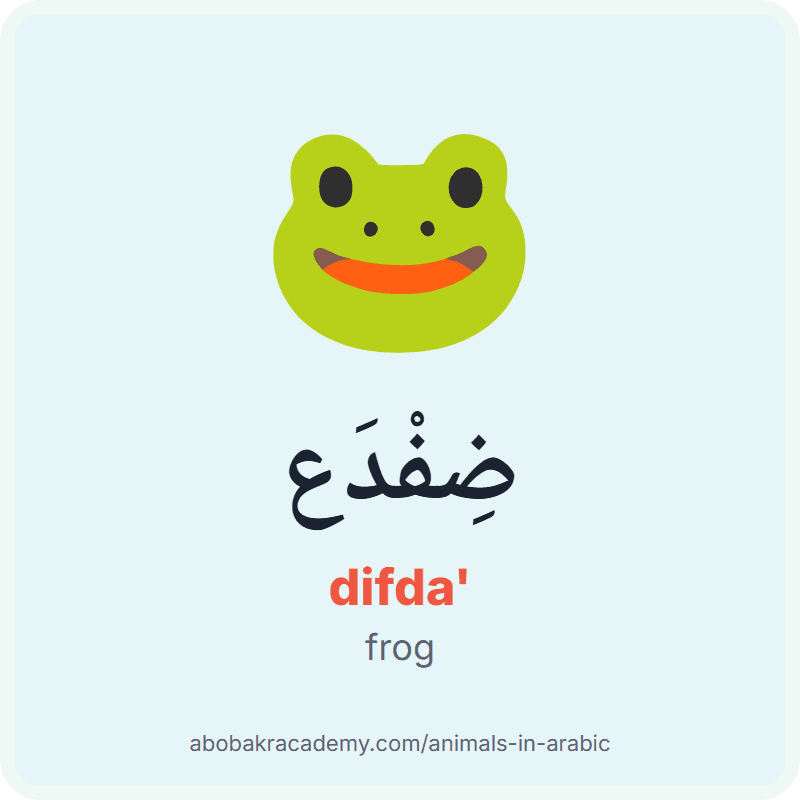
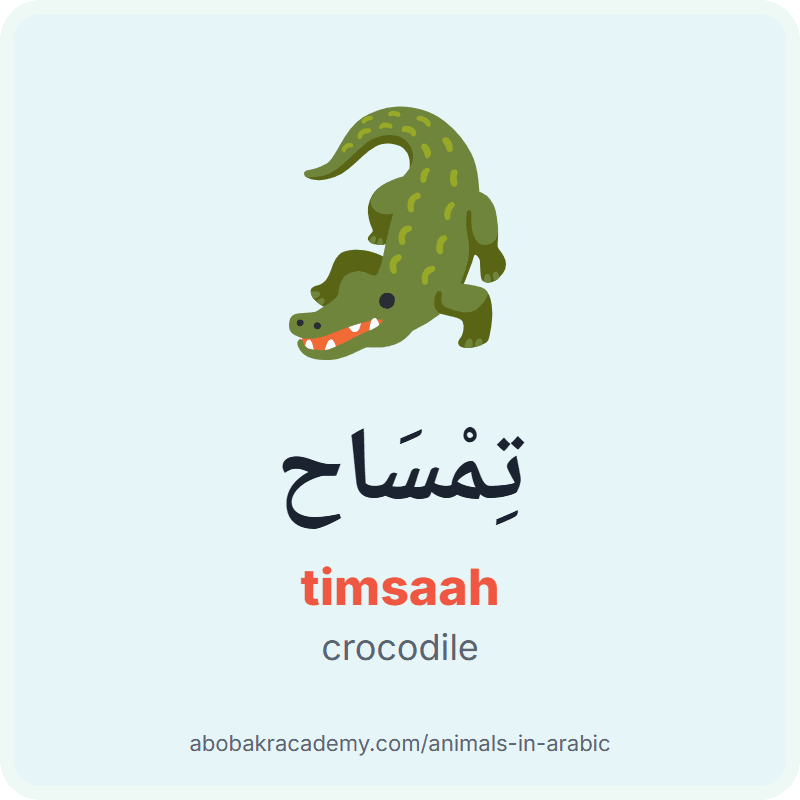




Animals mentioned in the Quran
Thirty animals are named in the Quran in the verses listed below. You will see other counts online, from twenty to thirty-five, because lists count differently: some take cattle or birds as one animal, some add creatures such as the beast of the earth, and some count the lion from a word that not every scholar reads as lion.
The column that matters for a child learning Arabic is the second one. The Quran often uses a different word from the one in a children’s picture book. A book says خَرُوف for sheep, and the Quran says الضَّأْنِ. A book says حِصَان for horse, and the Quran says الْخَيْلَ. Each word below is copied from the verse it comes from.
| Animal | Word in the Quran | Where | What happens |
|---|---|---|---|
| Mosquito | بَعُوضَةً | Al-Baqarah 2:26 | Allah is not shy to give an example of a mosquito, or of something even smaller. |
| Calf | الْعِجْلَ | Al-Baqarah 2:51 | While Musa was away, his people took a calf to worship. |
| Quail | السَّلْوَىٰ | Al-Baqarah 2:57 | The Children of Israel were sent down manna and quails to eat. |
| Monkey | قِرَدَةً | Al-Baqarah 2:65 | The people who broke the Sabbath were told to become apes, despised. |
| Cow | بَقَرَةً | Al-Baqarah 2:67 | Musa tells his people that Allah commands them to sacrifice a cow. Surah Al-Baqarah, the longest surah, is named after it. |
| Pig | الْخِنزِيرِ | Al-Baqarah 2:173 | Named among the foods Muslims do not eat. |
| Crow | غُرَابًا | Al-Ma’idah 5:31 | Allah sent a crow scratching the ground to show the son of Adam how to bury his brother. |
| Sheep | الضَّأْنِ | Al-An’am 6:143 | Sheep and goats are named among the livestock Allah created in pairs. The Quran word for sheep here is da’n. |
| Goat | الْمَعْزِ | Al-An’am 6:143 | Goats are named in the same verse as sheep. The Quran word is ma’z. |
| Snake | ثُعْبَانٌ | Al-A’raf 7:107 | Musa threw down his staff in front of Pharaoh and it became a serpent, plain for all to see. |
| Frog | الضَّفَادِعَ | Al-A’raf 7:133 | Frogs were one of the signs sent on Pharaoh’s people, with the flood, locusts and lice. |
| Locust | الْجَرَادَ | Al-A’raf 7:133 | Locusts were among the signs sent on Pharaoh’s people. |
| Lice | الْقُمَّلَ | Al-A’raf 7:133 | Lice were among the same signs. |
| Wolf | الذِّئْبُ | Yusuf 12:13 | Ya’qub feared a wolf would eat Yusuf, and his brothers later claimed that one had. |
| Horse | الْخَيْلَ | An-Nahl 16:8 | Horses, mules and donkeys are made for us to ride and as a beauty. The Quran uses khayl, the word for horses as a group. |
| Donkey | الْحَمِيرَ | An-Nahl 16:8 | Named in the same verse as horses and mules, as animals made for riding. |
| Mule | الْبِغَالَ | An-Nahl 16:8 | Named with horses and donkeys as animals made for riding. |
| Bee | النَّحْلِ | An-Nahl 16:68 | Allah inspired the bee to build its homes in the mountains and the trees. Surah An-Nahl is named after the bee. |
| Dog | كَلْبُهُم | Al-Kahf 18:18 | The young men who slept in the cave had a dog, stretching out its forelegs at the entrance. |
| Fly | ذُبَابًا | Al-Hajj 22:73 | Everything people worship besides Allah could not create even a fly, even if they all came together to do it. |
| Ant | نَمْلَةٌ | An-Naml 27:18 | An ant warned the other ants to go into their homes so Sulayman’s army would not crush them. Surah An-Naml is named after the ants. |
| Hoopoe | الْهُدْهُدَ | An-Naml 27:20 | Sulayman noticed the hoopoe was missing. It came back with news of the Queen of Sheba. |
| Spider | الْعَنكَبُوتِ | Al-‘Ankabut 29:41 | The weakest of houses is the house of the spider. Surah Al-‘Ankabut is named after it. |
| Whale | الْحُوتُ | As-Saffat 37:142 | The fish swallowed Yunus. Hoot means a large fish, and it is often translated whale. |
| Lion | قَسْوَرَةٍ | Al-Muddaththir 74:51 | People who turn away are compared to frightened donkeys fleeing from a qaswarah. Most translations say lion; some early scholars explained the word as hunters. |
| Camel | الْإِبِلِ | Al-Ghashiyah 88:17 | "Do they not look at the camels, how they were created?" The verse uses ibil, the word for a herd of camels. |
| She-camel | نَاقَةَ | Ash-Shams 91:13 | The she-camel of Allah was a sign for the people of Salih, and they were told to leave her and her drink alone. |
| Butterfly | كَالْفَرَاشِ | Al-Qari’ah 101:4 | On the Day of Judgement people will be like scattered moths. The word, faraash, covers moths and butterflies. |
| Elephant | الْفِيلِ | Al-Fil 105:1 | The companions of the elephant came to attack, and Allah made their plan fail. Surah Al-Fil is named after the elephant. |
| Bird | طَيْرًا | Al-Fil 105:3 | Allah sent birds in flocks against the companions of the elephant. |
Which surahs are named after animals?
Six surahs of the Quran carry the name of an animal:
- Surah Al-Baqarah (البقرة), the Cow, surah 2
- Surah Al-An’am (الأنعام), the Cattle, surah 6
- Surah An-Nahl (النحل), the Bee, surah 16
- Surah An-Naml (النمل), the Ant, surah 27
- Surah Al-‘Ankabut (العنكبوت), the Spider, surah 29
- Surah Al-Fil (الفيل), the Elephant, surah 105
Is the lion mentioned in the Quran?
The everyday word for lion, أَسَد (asad), does not appear in the Quran. The word that is usually translated lion is قَسْوَرَةٍ (qaswarah), in Surah Al-Muddaththir, where people who turn away from the reminder are compared to frightened donkeys fleeing from a qaswarah (74:51). Most translations say lion. Some early scholars explained the word as hunters or archers instead, which is why some lists leave the lion out.
Is the cat mentioned in the Quran?
No. The cat is not named anywhere in the Quran, under any of its Arabic names. The dog is: the young men who slept in the cave had a dog stretched out at its entrance (18:18).
How to teach animal names when you do not read Arabic
You do not need to read the Arabic to run any of these. Each one works from the picture and the “say it” spelling, and each takes five to ten minutes.
- Animal of the day. Put one card on the fridge in the morning. Say the name at breakfast, at dinner and at bedtime. By the weekend, point at the card and wait for your child to say it first.
- What does it say? You say the Arabic name, and your child makes the animal’s sound. Then swap: you make the sound, and they give you the Arabic name. Children who will not sit for a list will happily play this for twenty rounds.
- Sort the cards. Shuffle a dozen cards and ask your child to put them into farm, wild and sea. Sorting makes them look at each card long enough for the word to go in.
- Find it in the Quran. When your child recites or listens to Surah Al-Fil, show them the elephant card. When you reach Surah An-Naml or An-Nahl in your reading, find the ant and the bee. A word they have held in their hand is a word they hear when it is recited.
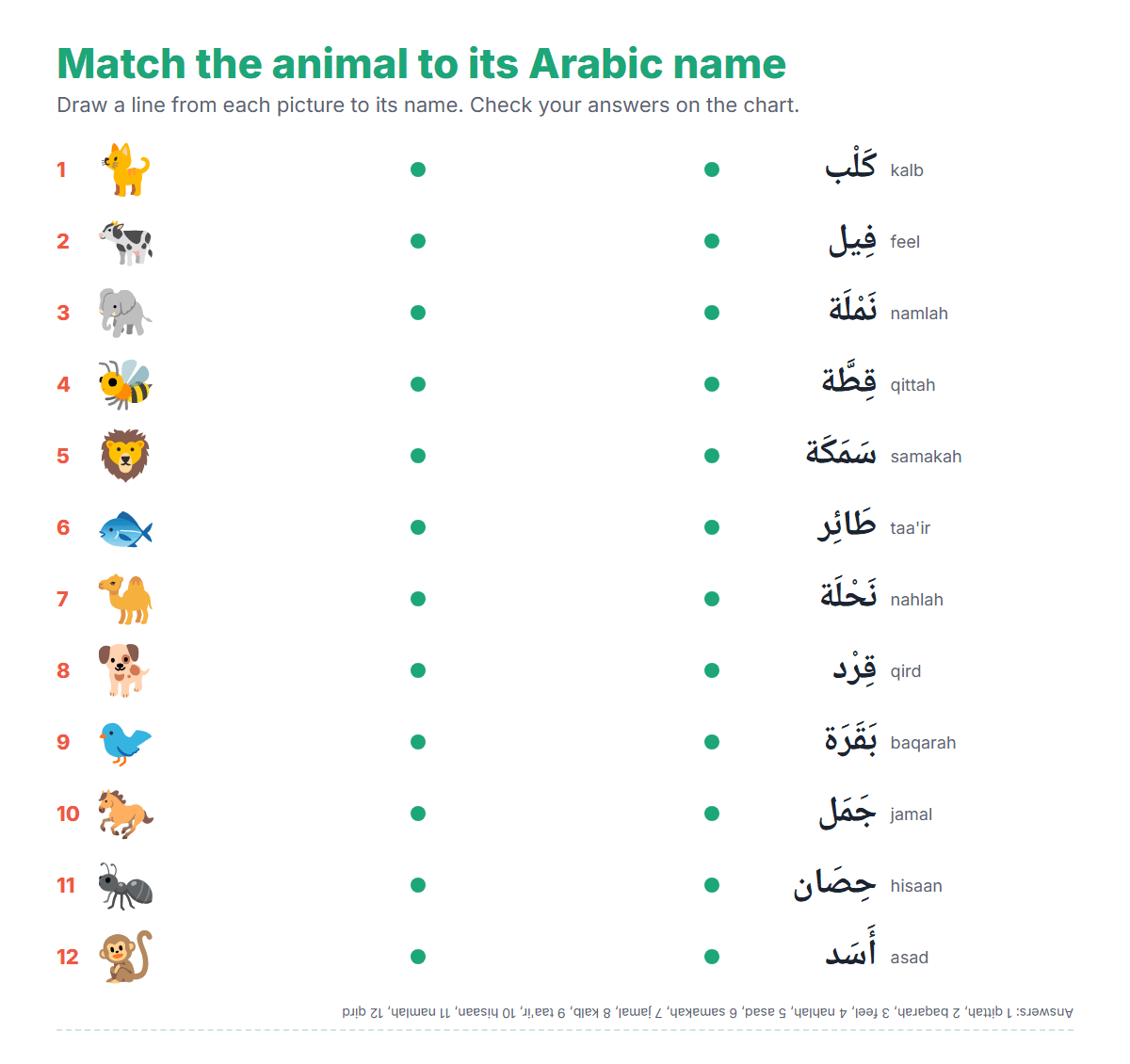
- Match the word. The worksheet in the printable has twelve pictures and twelve Arabic words to join with a line. Your child can check their own answers against the chart without you reading a word of it.
For the bigger picture, our guide on teaching your child Arabic when you do not speak it sets out what a parent can do alone and the one part that needs someone listening.
Free printable: animals in Arabic flashcards (PDF)
Download the animals in Arabic chart, flashcards and worksheet (free PDF). Page one is the chart of all forty animals. Pages two to five are forty flashcards to cut out, with the picture on the card and the Arabic, the “say it” spelling and the English underneath. Page six is a match-the-word worksheet, and page seven is the animals of the Quran with their verses. It is sized for A4 and prints on US Letter if you choose “fit to page”. There is no sign-up.
Common questions about animals in Arabic
What is animal in Arabic?
حَيَوَان (hayawaan). The plural, animals, is حَيَوَانَات (hayawaanaat).
What is cat in Arabic?
قِطَّة (qittah). You will also hear قِطّ (qitt), which is the word for a male cat, and children’s books use both.
How many animals are mentioned in the Quran?
Thirty are named in the verses on this page. Lists online give numbers from twenty to thirty-five, because they count groups such as cattle and birds differently and do not all count the lion.
Is the lion mentioned in the Quran?
Not by its everyday name, asad. The word qaswarah in Surah Al-Muddaththir 74:51 is usually translated lion, though some early scholars explained it as hunters.
Which surahs are named after animals?
Six: Al-Baqarah (the cow), Al-An’am (the cattle), An-Nahl (the bee), An-Naml (the ant), Al-‘Ankabut (the spider) and Al-Fil (the elephant).
When the animals are learned: days, numbers and family
Animals sit well beside the other first word sets. The days of the week in Arabic, Arabic numbers from 1 to 100 and family members in Arabic all use the same “say it” spelling. If your child is still learning the letters, start with the Arabic alphabet chart, and more free sheets are on our free printables page. When you would like a teacher to take the sounds on, our online Arabic lessons for kids start from where your child is. For the next picture set, colors in Arabic has a card for every colour and both forms of each word. And the body parts in Arabic puts 26 words on one drawn child, with audio for every word.