This page has 21 fruits in Arabic, each with the vowel marks, a way to say it and a button to hear it. It also gives the thing most fruit lists leave out: Arabic has one word for apples in general and another for a single apple, and the table shows both. After that come the fruits the Quran names, with the word lifted from each verse, 21 picture cards, and a free printable PDF with no sign-up.
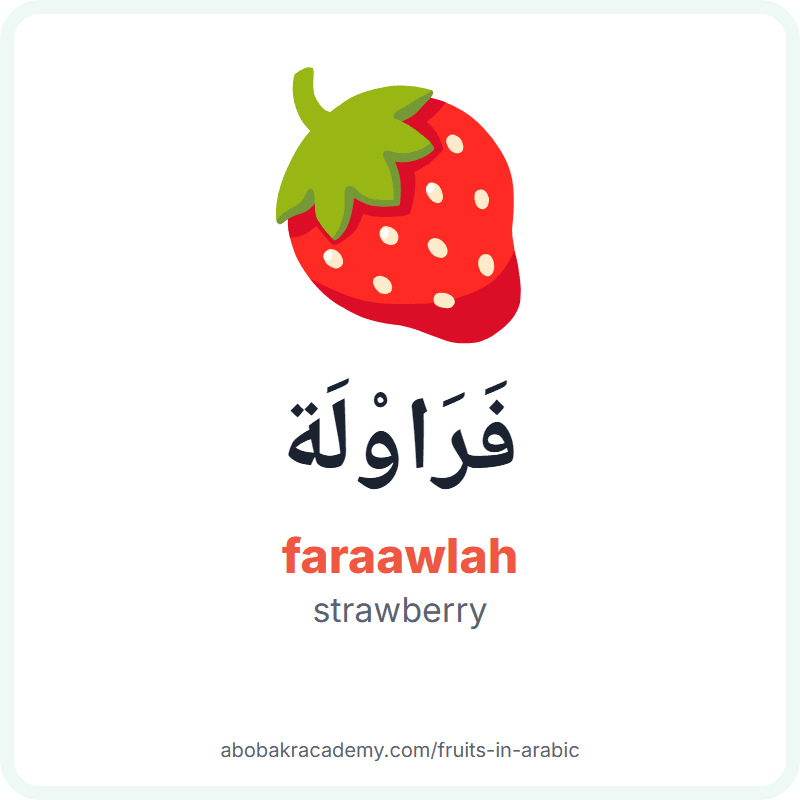
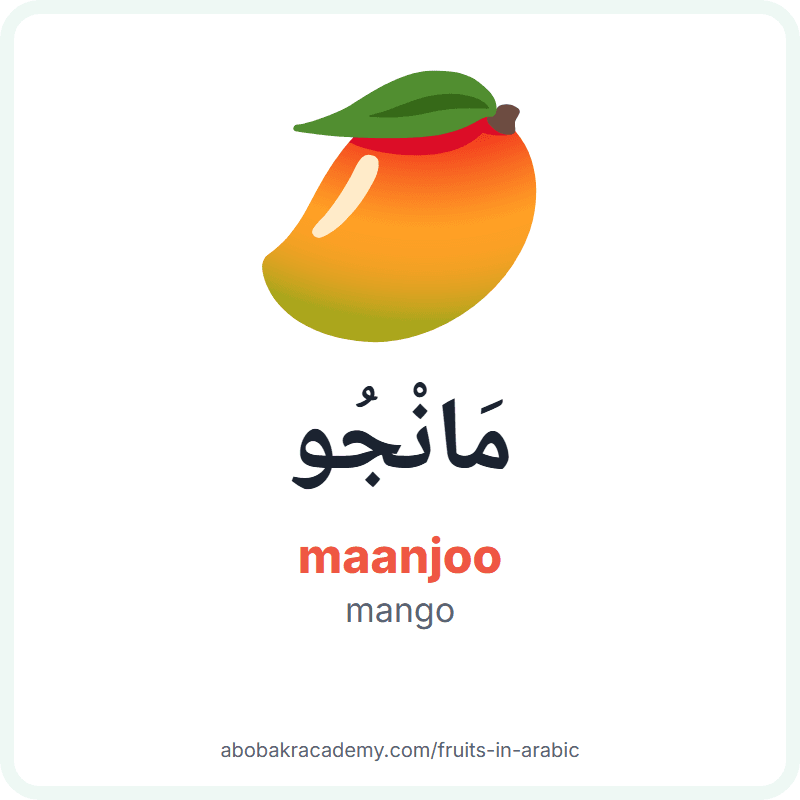
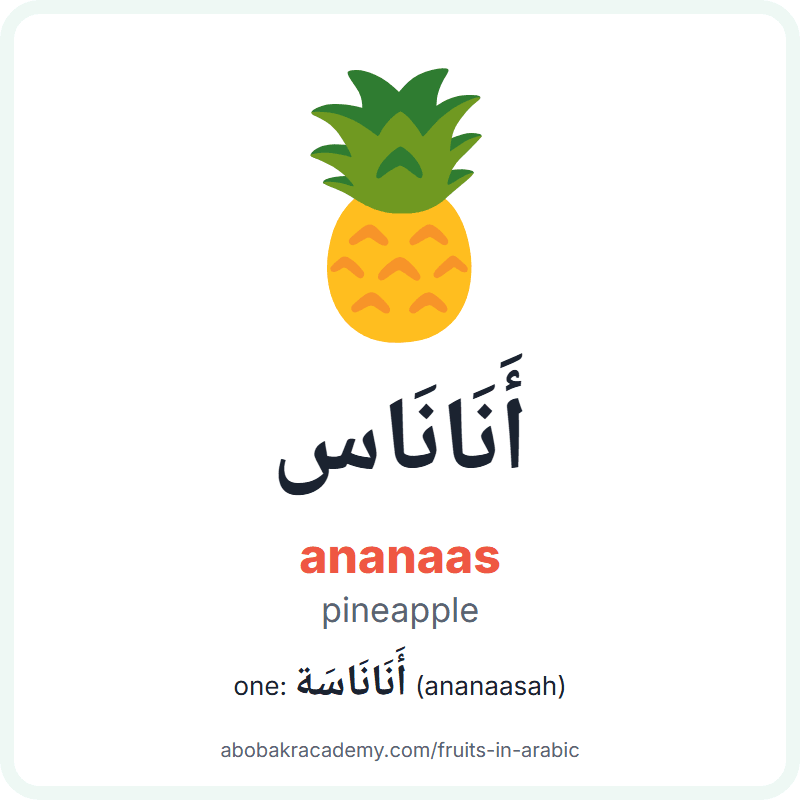
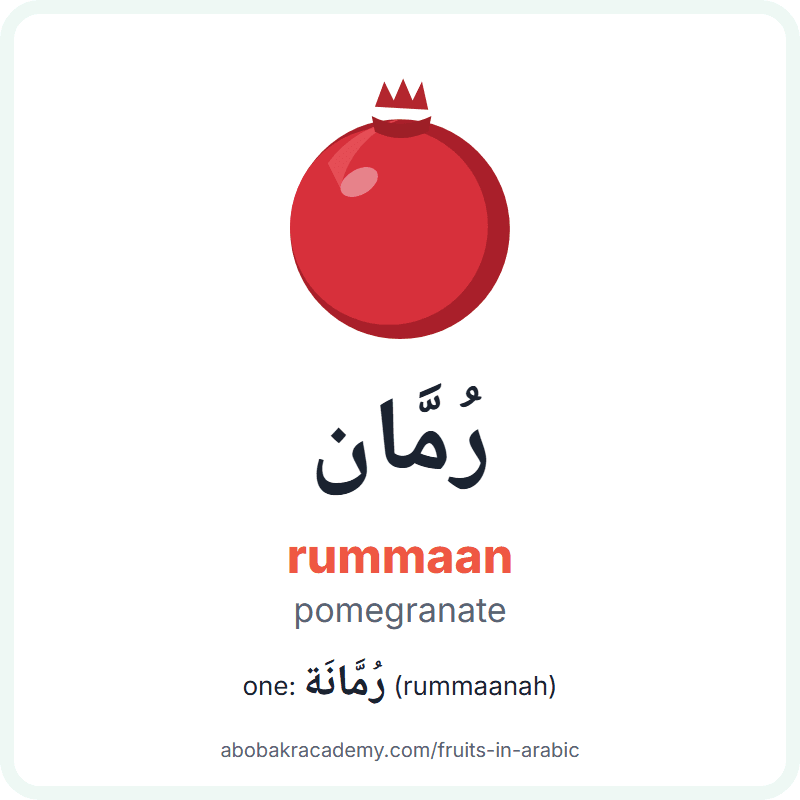
Fruit in Arabic is فَاكِهَة (faakihah), and fruits is فَوَاكِه (fawaakih). Ten to start with: apple تُفَّاح (tuffaah), banana مَوْز (mawz), orange بُرْتُقَال (burtuqaal), grapes عِنَب (‘inab), watermelon بِطِّيخ (bitteekh), strawberry فَرَاوْلَة (faraawlah), mango مَانْجُو (maanjoo), pineapple أَنَانَاس (ananaas), pomegranate رُمَّان (rummaan) and dates تَمْر (tamr).
Fruits in Arabic with pictures
All 21 on one chart, each with its picture, so a child who cannot read yet can point to the fruit and learn the word from you or from the play buttons below.
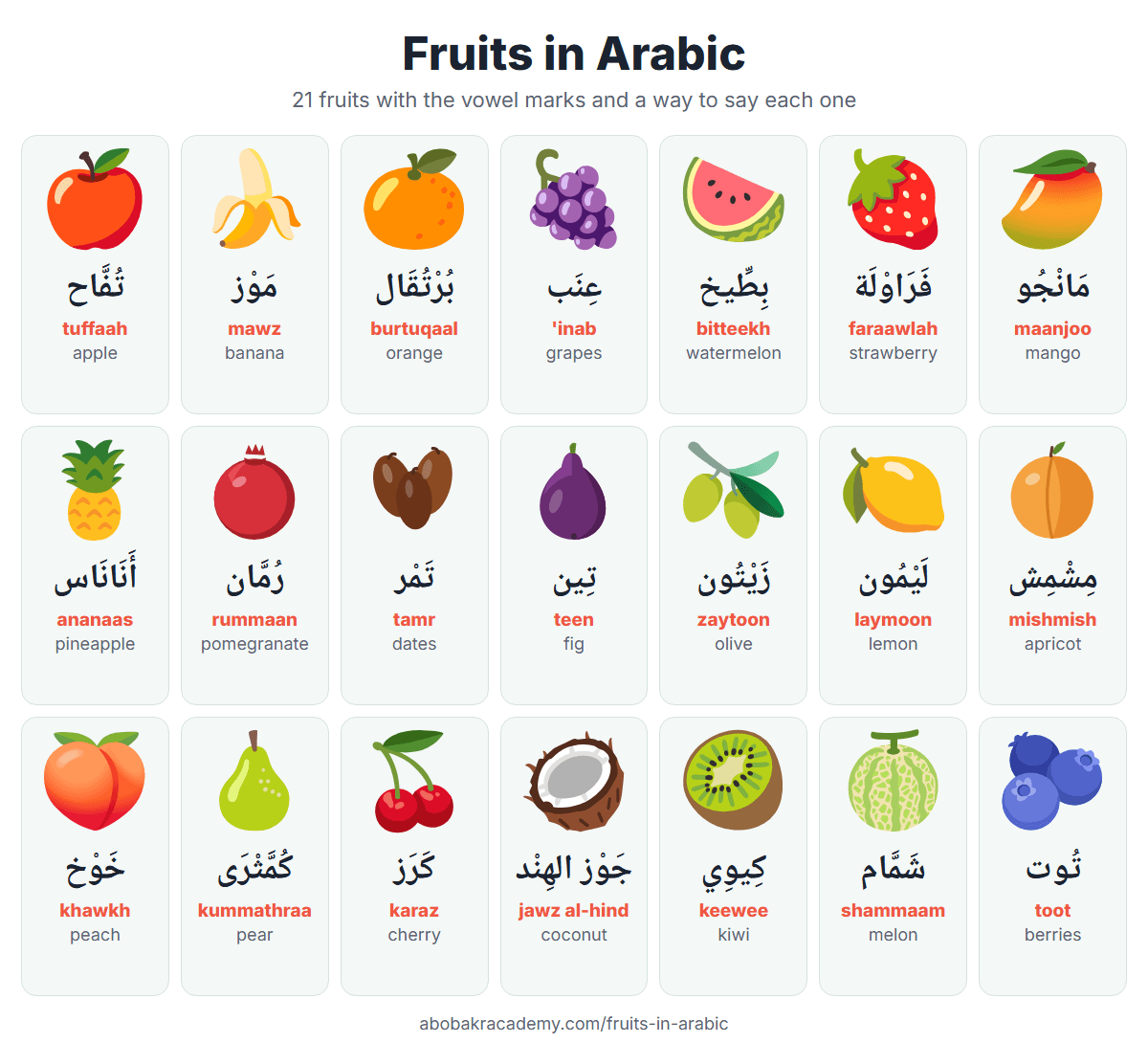
21 fruit names in Arabic
Tap the play button beside any word to hear it. The first column is the word for the fruit in general, the one you use at the market or the table. The last column is the word for a single one of that fruit, which is explained below the table.
| Arabic | English, and how to say it | One of them |
|---|---|---|
| تُفَّاح | apple (tuffaah) | تُفَّاحَة (tuffaahah) |
| مَوْز | banana (mawz) | مَوْزَة (mawzah) |
| بُرْتُقَال | orange (burtuqaal) | بُرْتُقَالَة (burtuqaalah) |
| عِنَب | grapes (‘inab) | عِنَبَة (‘inabah) |
| بِطِّيخ | watermelon (bitteekh) | بِطِّيخَة (bitteekhah) |
| فَرَاوْلَة | strawberry (faraawlah) | the same word |
| مَانْجُو | mango (maanjoo) | the same word |
| أَنَانَاس | pineapple (ananaas) | أَنَانَاسَة (ananaasah) |
| رُمَّان | pomegranate (rummaan) | رُمَّانَة (rummaanah) |
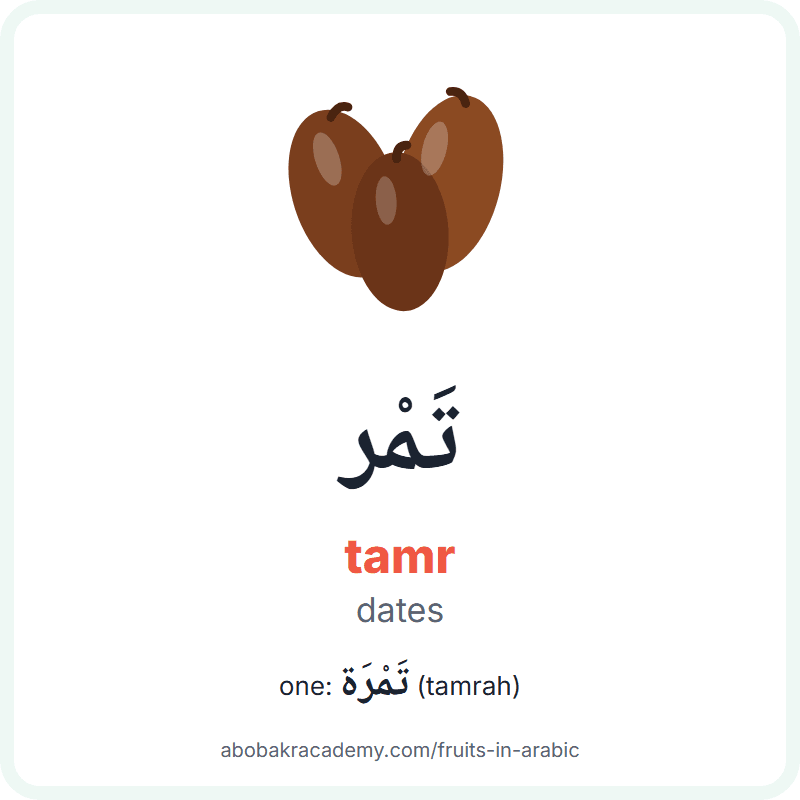
| تَمْر | dates (tamr) | تَمْرَة (tamrah) |
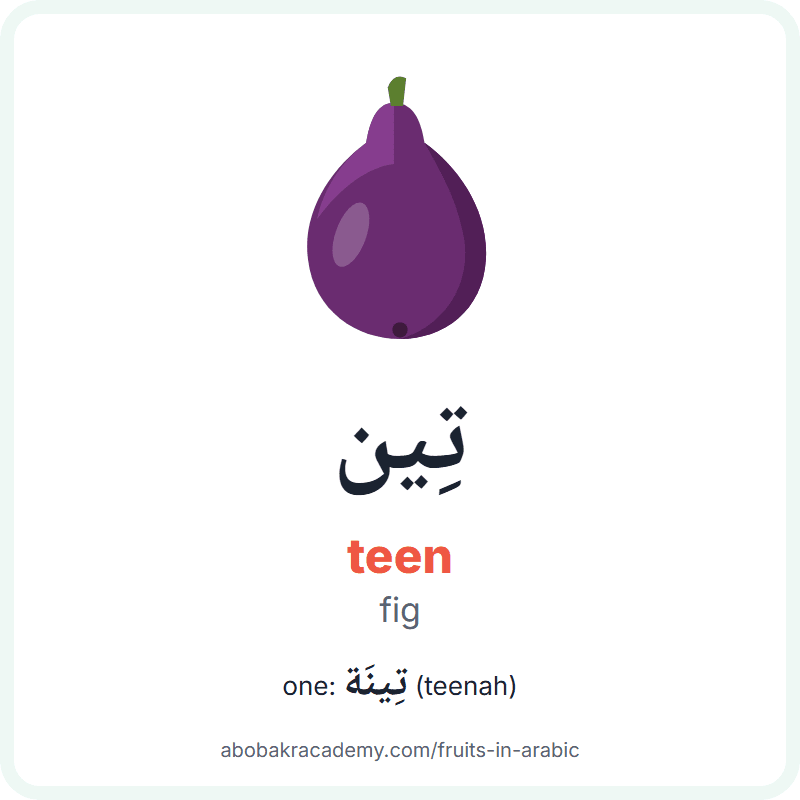
| تِين | fig (teen) | تِينَة (teenah) |
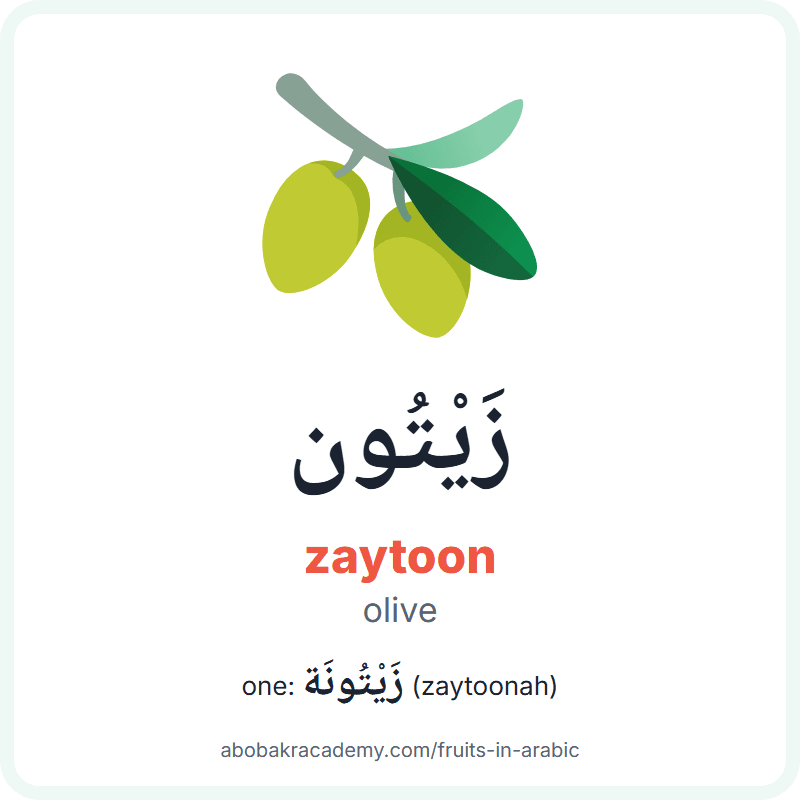
| زَيْتُون | olive (zaytoon) | زَيْتُونَة (zaytoonah) |
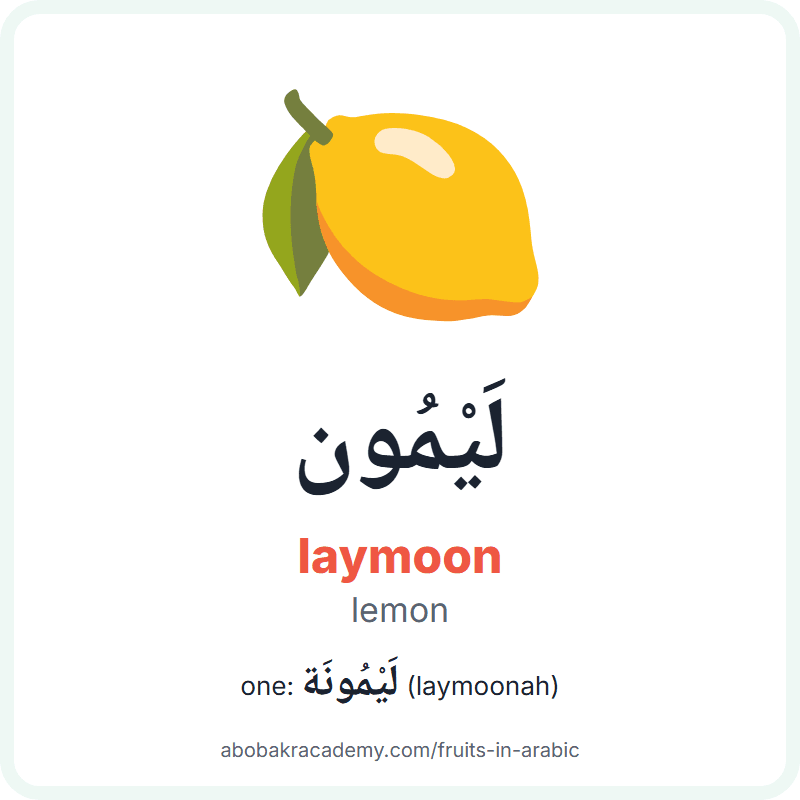
| لَيْمُون | lemon (laymoon) | لَيْمُونَة (laymoonah) |
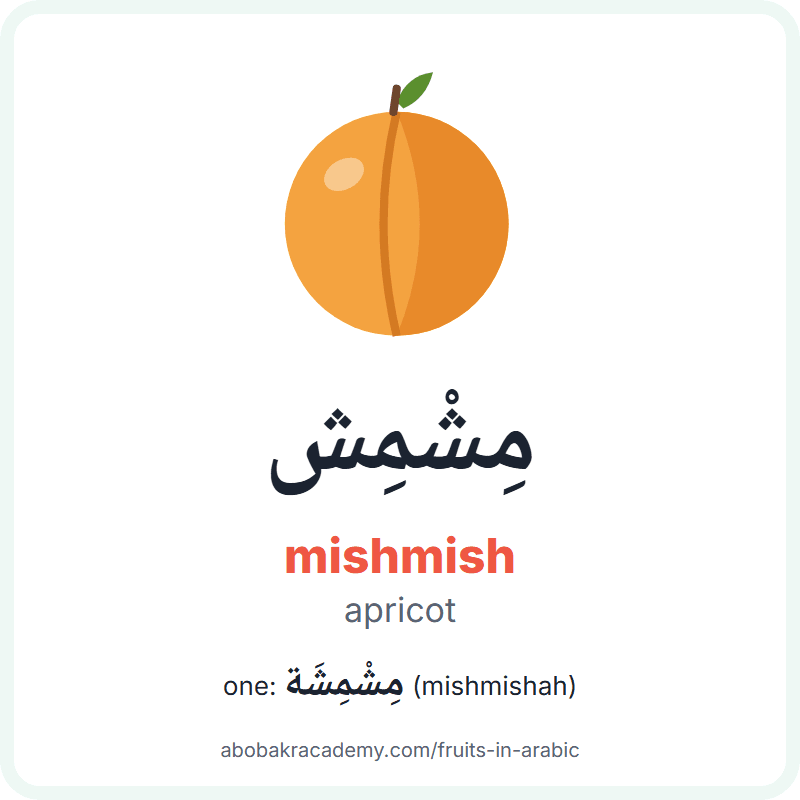
| مِشْمِش | apricot (mishmish) | مِشْمِشَة (mishmishah) |
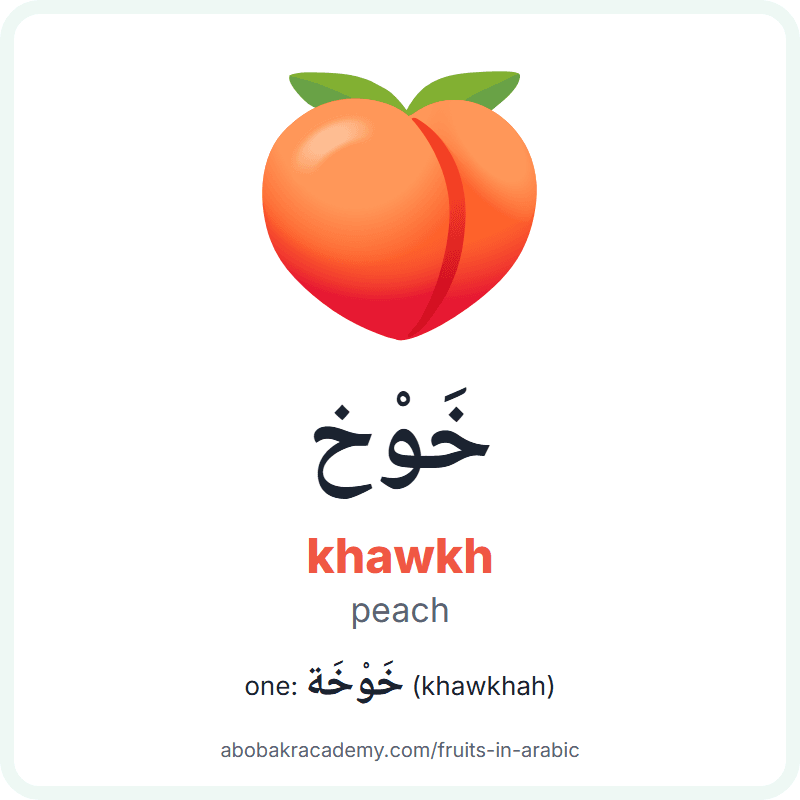
| خَوْخ | peach (khawkh) | خَوْخَة (khawkhah) |
| كُمَّثْرَى | pear (kummathraa) | كُمَّثْرَاة (kummathraah) |
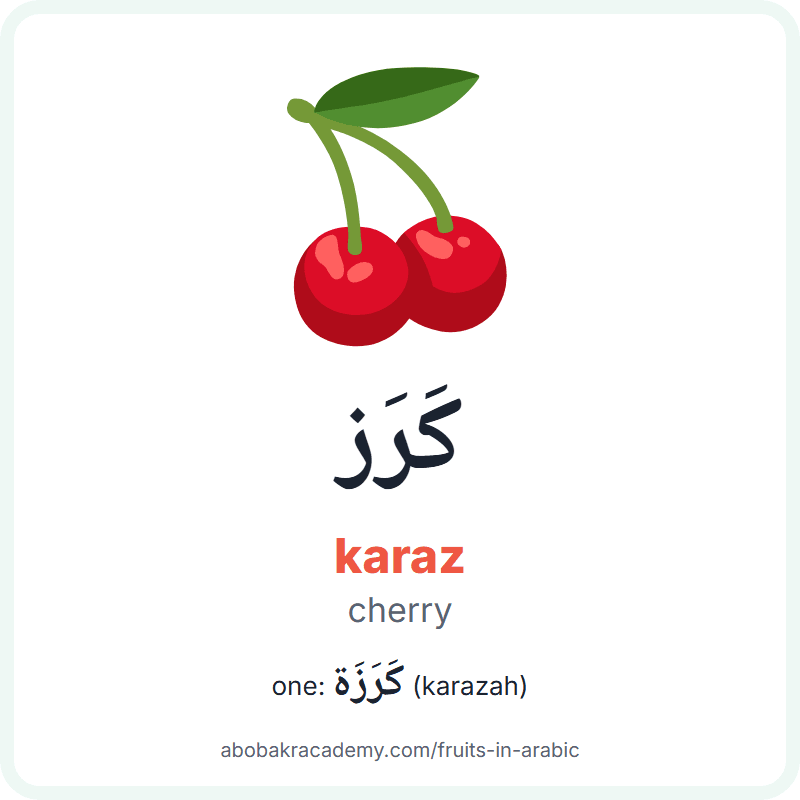
| كَرَز | cherry (karaz) | كَرَزَة (karazah) |
| جَوْز الهِنْد | coconut (jawz al-hind) | جَوْزَة الهِنْد (jawzat al-hind) |
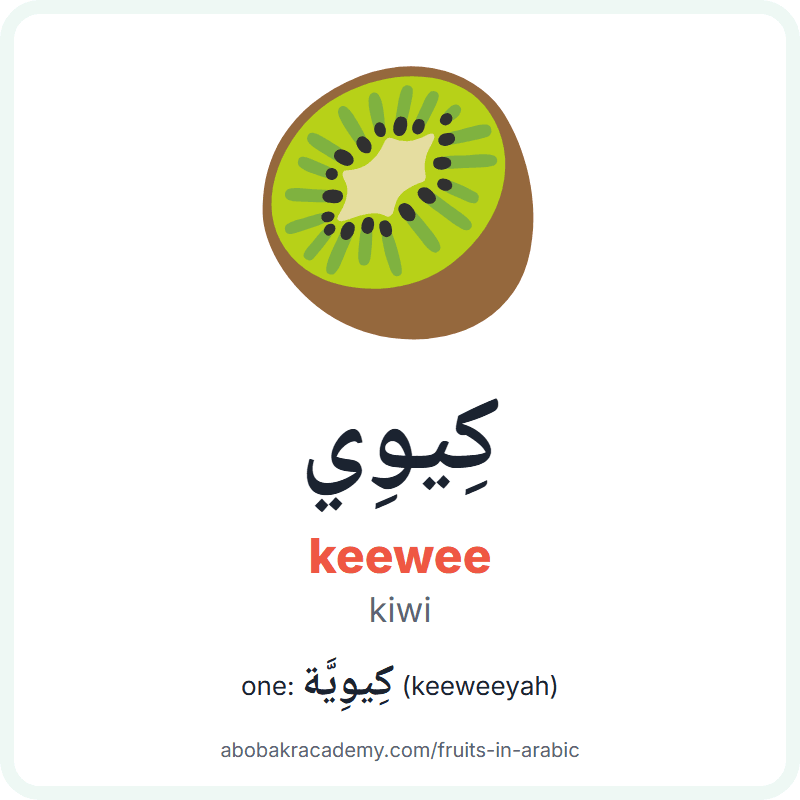
| كِيوِي | kiwi (keewee) | كِيوِيَّة (keeweeyah) |
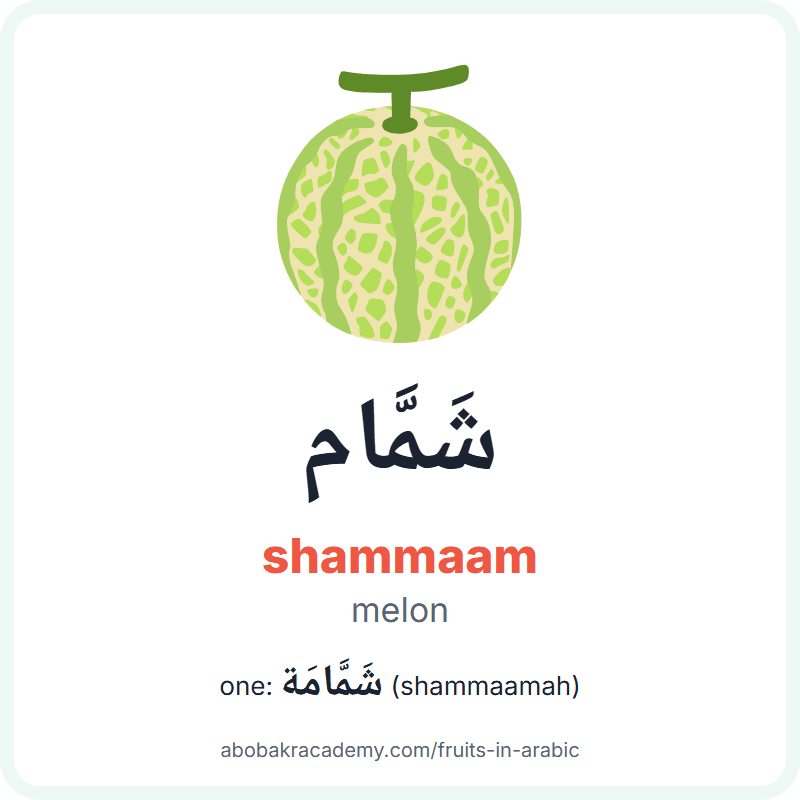
| شَمَّام | melon (shammaam) | شَمَّامَة (shammaamah) |
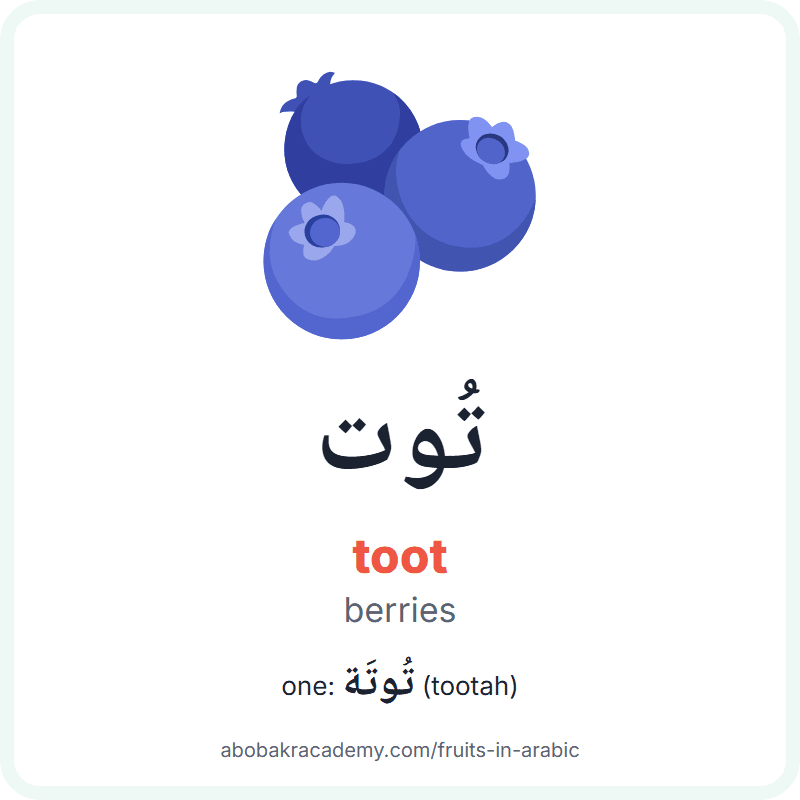
| تُوت | berries (toot) | تُوتَة (tootah) |
One apple, many apples: the word for one fruit
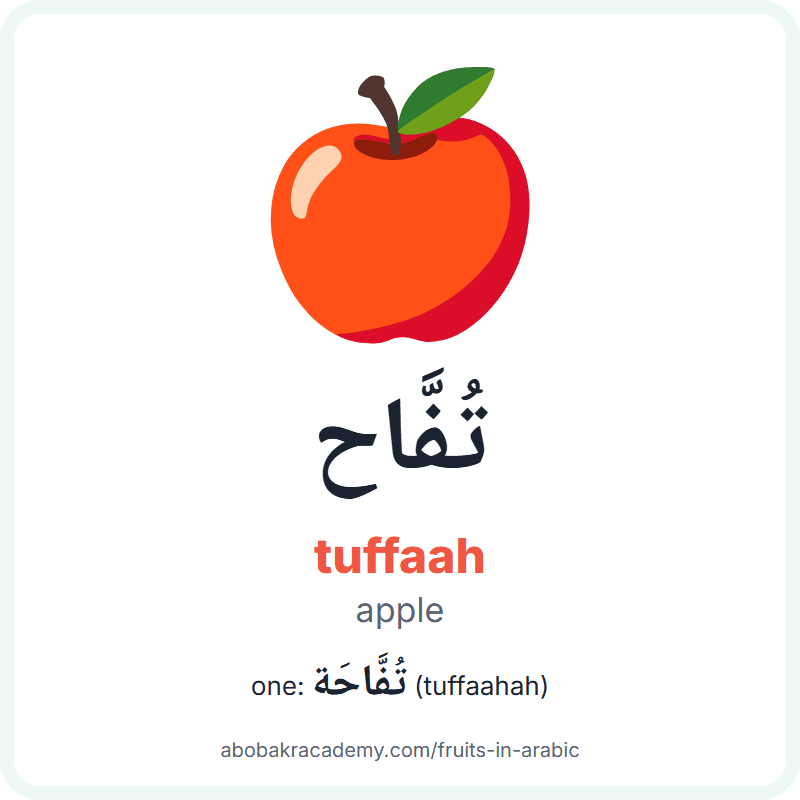
In English you say an apple and apples. Arabic works differently. The ordinary word, تُفَّاح (tuffaah), means apples as a kind of food, however many there are. To talk about one apple, you add -ah to the end: تُفَّاحَة (tuffaahah).
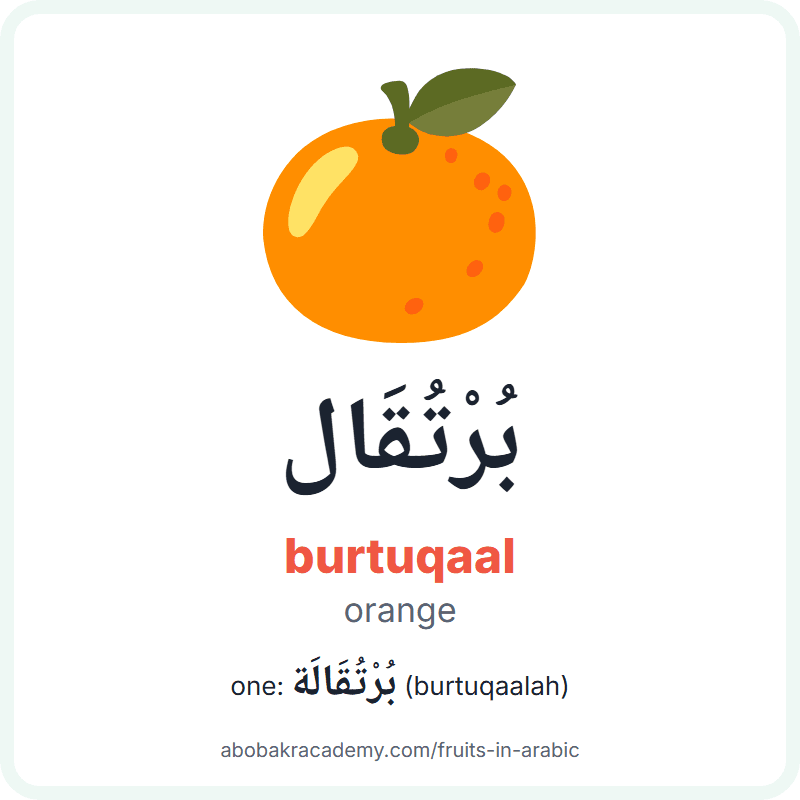
Almost every fruit works like this. One banana is مَوْزَة (mawzah), one orange is بُرْتُقَالَة (burtuqaalah), and one date is تَمْرَة (tamrah). Grammar books call the first word a collective noun and the second a singulative, but a child only needs the pattern: the word on its own for fruit in general, the same word with -ah for one.
Two fruits on this page do not follow it. فَرَاوْلَة (faraawlah) and مَانْجُو (maanjoo) came into Arabic from other languages, and they are used as they are for one or many.
Fruits in the Quran
The Quran names several fruits, and they are often the first Arabic fruit words a Muslim child meets. The table shows each one as it stands in its verse, next to the word on this page. The Quran words are not read aloud here. To hear them recited, follow the link to each verse.
| Word in the verse | Meaning | Our word | Where |
|---|---|---|---|
| التِّينِ | fig | تِين | At-Tin 95:1 |
| الزَّيْتُونِ | olive | زَيْتُون | At-Tin 95:1 |
| عِنَبًا | grapes | عِنَب | ‘Abasa 80:28 |
| فَاكِهَةٌ | fruit | فَاكِهَة | Ar-Rahman 55:68 |
| رُمَّانٌ | pomegranate | رُمَّان | Ar-Rahman 55:68 |
| الزَّيْتُونَ | olive | زَيْتُون | An-Nahl 16:11 |
| الْأَعْنَابَ | grapes (plural) | أَعْنَاب | An-Nahl 16:11 |
| رُطَبًا | fresh ripe dates | رُطَب | Maryam 19:25 |
| زَيْتُونَةٍ | one olive tree | زَيْتُونَة | An-Nur 24:35 |
The fig and the olive
Surah At-Tin, the ninety-fifth surah, takes its name from the fig. It opens with an oath by the fig and the olive: التِّينِ and الزَّيْتُونِ. When a child asks what fruit teen is, this is the verse to show them.
Dates, grapes and pomegranates
When Maryam gave birth beneath the palm tree, she was told to shake its trunk, and fresh ripe dates fell to her: رُطَبًا, the word for dates that are fresh rather than dried. Grapes appear among the food Allah brings out of the earth, and in Surah Ar-Rahman the gardens of Paradise hold fruit, date palms and pomegranates.
One olive tree in the verse of light
The verse of light describes a lamp lit from the oil of a blessed olive tree, زَيْتُونَةٍ. That is the same -ah ending from the section above, used for one olive tree instead of olives in general, so the Quran itself shows the pattern.
Some of the most familiar fruits are not named in the Quran at all. The words for apple, banana and orange do not appear in it, which is worth knowing before a worksheet claims otherwise.
21 fruit picture cards
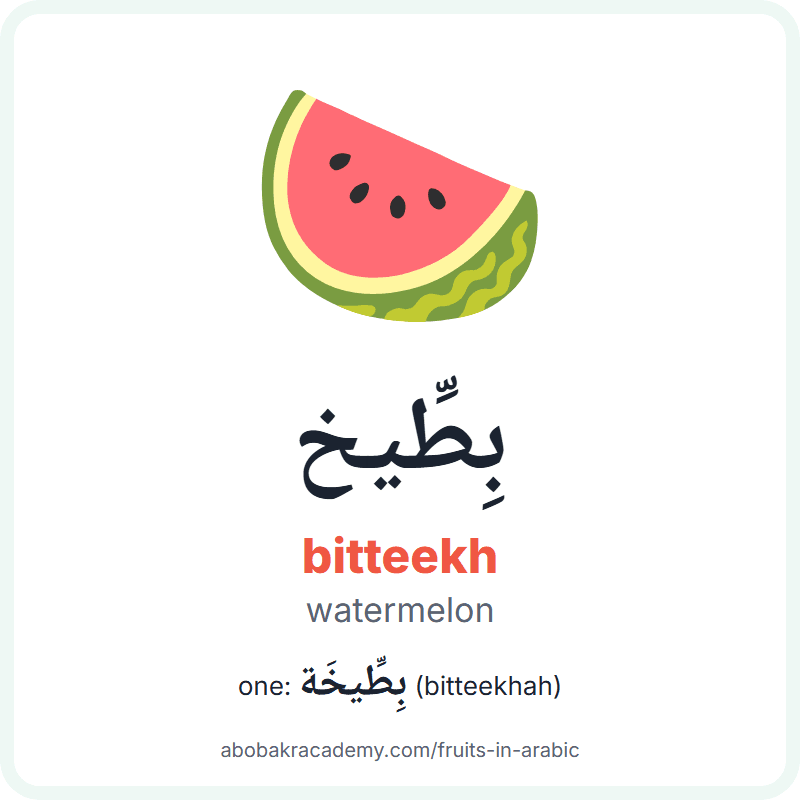
One card for every fruit, with its picture, the Arabic word with the vowel marks, how to say it, and the word for one. All 21 are in the printable.




How to teach fruit names when you do not read Arabic
Fruit is one of the easiest topics to teach without reading Arabic yourself, because the real thing is in your kitchen. Put three fruits on the table, tap the play buttons, and let your child hand you the one they hear. Then swap and let them ask you.
Once a few words are solid, play one or many. Hold up a single banana and wait for مَوْزَة (mawzah); point to the bunch and wait for مَوْز (mawz). It teaches the most useful pattern on this page without a word of grammar. There is more on this in our guide to teaching Arabic to kids when you do not speak it.
Free printable: fruits in Arabic PDF
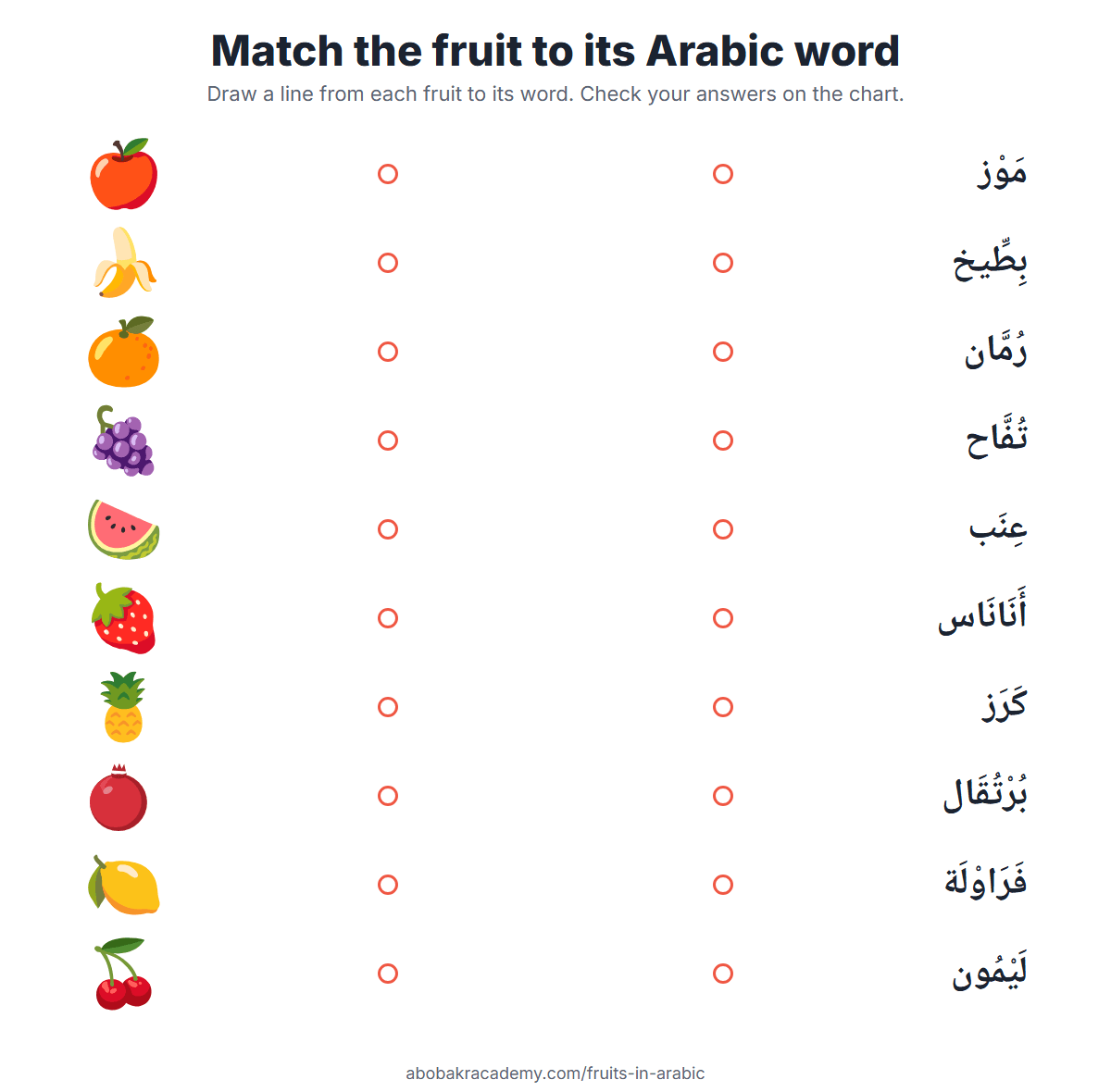
The printable has six pages: the chart, the 21 picture cards on three sheets to cut out, a worksheet where your child draws a line from each fruit to its Arabic word, and a last page with the word for one of every fruit and the fruits of the Quran. There is no email to give. The same goes for our Arabic alphabet chart, for when your child is ready to start reading. Then the Arabic alphabet with words pairs every letter with a word your child already knows.
Download the fruits in Arabic PDF
Common questions about fruits in Arabic
What is fruit called in Arabic?
Fruit is فَاكِهَة (faakihah) and fruits is فَوَاكِه (fawaakih). The word is in the Quran too: in Surah Ar-Rahman 55:68 the gardens of Paradise hold fruit, date palms and pomegranates.
What fruit is teen in Arabic?
Teen is the fig, تِين (teen). It is the fruit Surah At-Tin is named after, and the surah opens with an oath by the fig and the olive.
How do you say one apple in Arabic?
One apple is تُفَّاحَة (tuffaahah). The plain word تُفَّاح (tuffaah) means apples in general, and adding -ah makes it one. The same ending works for most fruits, so one banana is مَوْزَة (mawzah).
Which fruits are mentioned in the Quran?
The Quran names the fig, the olive, grapes, pomegranates and dates, among others. The fig and the olive are in Surah At-Tin 95:1, grapes in Surah Abasa 80:28, pomegranates in Surah Ar-Rahman 55:68, and fresh dates in Surah Maryam 19:25.
Is the banana in the Quran?
The word for banana, مَوْز (mawz), does not appear in the Quran, and neither do the words for apple and orange.
What is the Arabic word for fresh dates?
Fresh ripe dates are رُطَب (rutab), the word used in Surah Maryam 19:25. The everyday word for dates in general is تَمْر (tamr), and one date is تَمْرَة (tamrah).
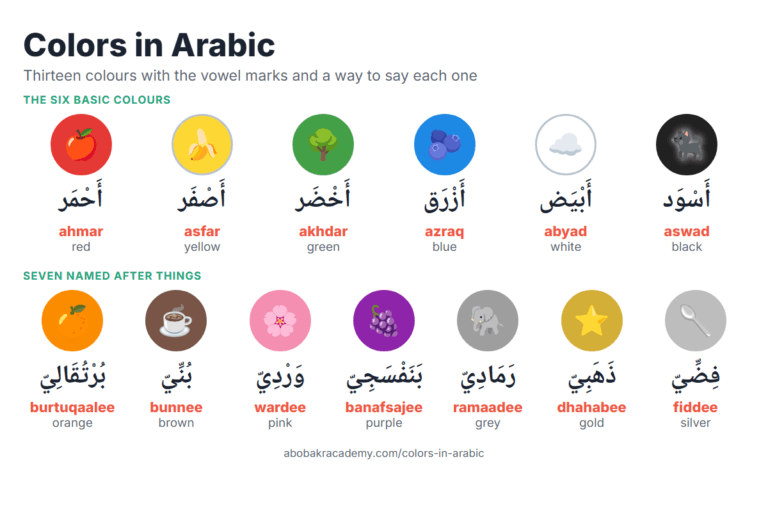
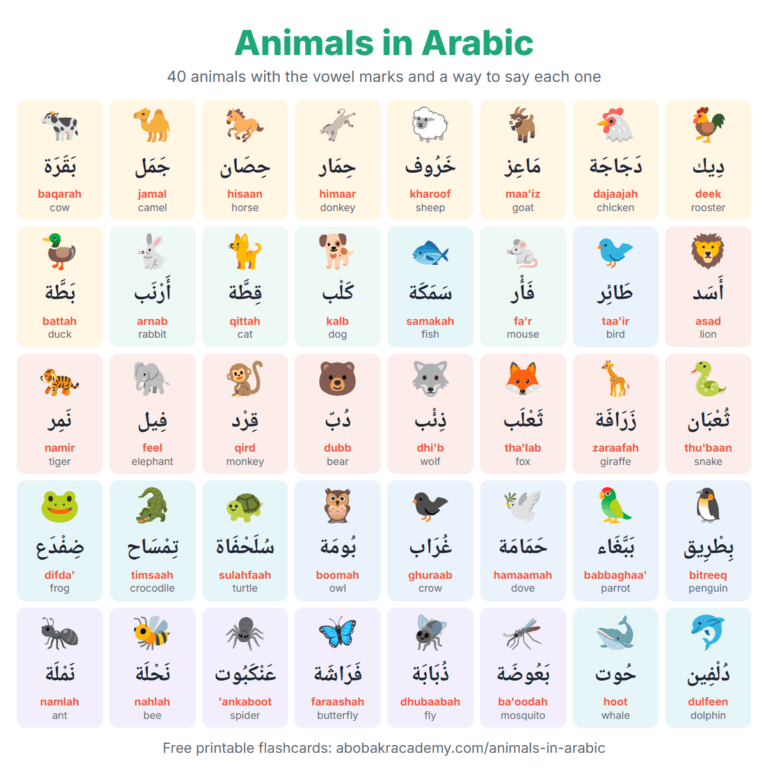
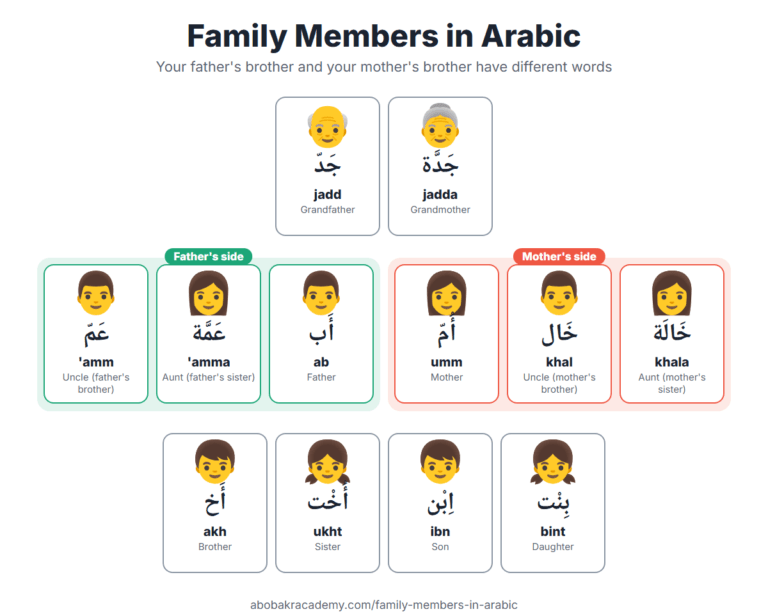
More first words in Arabic: colours, animals, the body
For more first words, see colours in Arabic, which pairs well with fruit, animals in Arabic, body parts in Arabic and family members in Arabic. If you would like a teacher to take your child from these first words to reading, our online Arabic classes for kids start with a free lesson.