Tajweed

6 articles
The rules governing how the Quran is pronounced, explained plainly and arranged in the order teachers actually teach them. Every rule comes with something you can listen for tonight, whether or not you read Arabic yourself.

What Is Ghunnah? The Tajweed Rule Children Raised Abroad Drop First

kids learning arabic quran mushaf

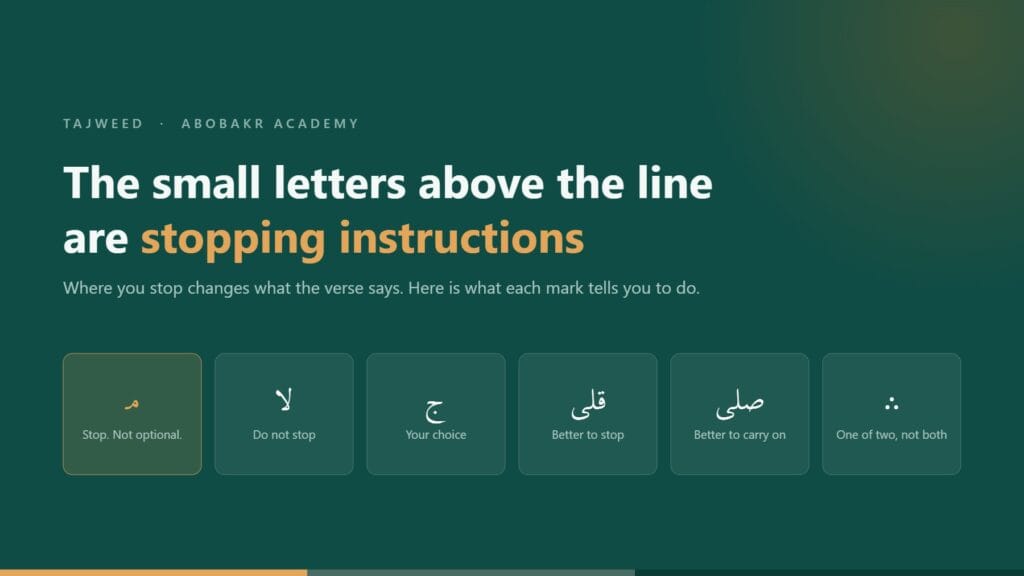
Your child reads the verse and it sounds fine. The letters are right, the pace is steady, nothing makes you stop them. Yet something is missing that a trained ear would catch in the first line. More often than not, what is missing is ghunnah in Tajweed: the nasal sound that should be there and is not. What ghunnah in Tajweed actually is Ghunnah is a nasal sound. It comes through the nose rather than the mouth, and it is held for roughly two counts. A count here means the length of one short vowel, about the time it takes to say “a”. It is required whenever a noon or a meem carries a shaddah: نّ and مّ. That is the entire rule. It is one of the simplest in Tajweed to state and one of the most commonly lost. Four words to test it on You do not need to hunt for examples. These come up constantly: إِنَّ (inna), noon with shaddah ثُمَّ (thumma), meem with shaddah النَّاسِ (an-naas), the word that closes Surah An-Nas مِمَّا (mimma), meem with shaddah Every one of them needs that held nasal sound. If your child rattles through all four without it, the rule is absent rather than inconsistent, which is actually easier to work with. Why children raised outside an Arabic-speaking home skip it English has no equivalent. There is no moment in an English word where you hold a nasal consonant deliberately and count it out. So when a child meets a shaddah on a noon, their mouth does what English trained it to do: it produces the consonant and moves straight on. Here is what makes it stubborn. The word still comes out recognisable. Nobody listening casually thinks anything is wrong, because nothing sounds broken. It sounds slightly hurried at most. So the child is not corrected, and they read it the same way the following week, and the week after that. A year later it is no longer a mistake. It is a habit, and habits take considerably more work to unpick than the rule took to learn in the first place. The two-count test, tonight You do not need to read Arabic to run this. Ask your child to read a verse containing a shaddah on a noon or meem. Surah An-Nas opens with one. Then listen for a single thing: Does any sound carry through the nose, or does it stop dead at the letter? If it stops dead, that is your answer. If there is a nasal sound but it finishes almost instantly, the rule is present and the length is not, which is a smaller fix. One warning before you try it. Do not turn this into an inspection. Ask your child to read something they already know well, listen, and say nothing at all the first time. You are gathering information, not correcting yet. What you will actually hear Parents often ask what the correct version sounds like, since they have no reference point. The closest English comparison is the sound at the end of “hmm” when you say it thoughtfully, held briefly rather than clipped. It resonates behind the nose. If you pinch your nostrils gently while making it, the sound changes noticeably, which is a useful check: pinch your child’s nose while they read one of the four words above, and if nothing changes, no ghunnah is being produced. How ghunnah in Tajweed gets fixed Slowly, and with someone listening. The sequence that works in practice: Exaggerate first. Have your child hold the sound far longer than two counts, four or five, so the body learns what the nasal resonance feels like. Accuracy comes after the sensation is familiar. Then shorten to two. Count it out loud together at first. Most children are surprised by how short two counts actually is once they have overshot it. One rule at a time. Do not correct ghunnah alongside four other things in the same session. A child corrected on everything at once stops volunteering to read. Expect it to slip. It will be correct in practice and vanish in normal reading for a while. That is ordinary progress, not failure. What age this makes sense at Children can produce the sound long before they can name the rule. A five or six year old can copy a held nasal sound accurately by imitation, and that is the right approach at that age: model it, have them echo it, move on. Naming the rule and counting the length suits roughly seven and above, when a child can hold an abstract instruction while reading at the same time. If your child is younger and reading already, do not skip the sound and plan to add it later. Imitation now costs nothing and prevents the habit forming. Where else ghunnah in Tajweed shows up Noon and meem with shaddah are the clearest cases, but the nasal sound also lives inside several other rules. Ikhfa, Iqlab, and Idgham with ghunnah all carry it. In practice this means a child who has lost ghunnah is not missing one rule, they are missing a component of several at once, which is why it is worth catching early rather than treating it as a detail. All of these sit on our free printable Tajweed rules chart, which puts Noon Sakinah, Meem Sakinah, Qalqalah, Ghunnah and the Madd lengths on one page. It is free, there is no signup, and teachers and co-ops are welcome to print it. If ghunnah is already steady, the next thing most children have never been shown is what the stopping marks above the line mean. Those marks decide where a breath is allowed to fall. Mistakes parents make when correcting Three that come up repeatedly, all well intentioned: Correcting mid-verse, every time. Stopping a child on each occurrence turns reading into a test. Let them finish, then go back to one instance. Over-holding it. Enthusiastic correction often produces a four count drone. Too long is

How Long Does It Take to Learn Quran with Tajweed? A Realistic Timeline

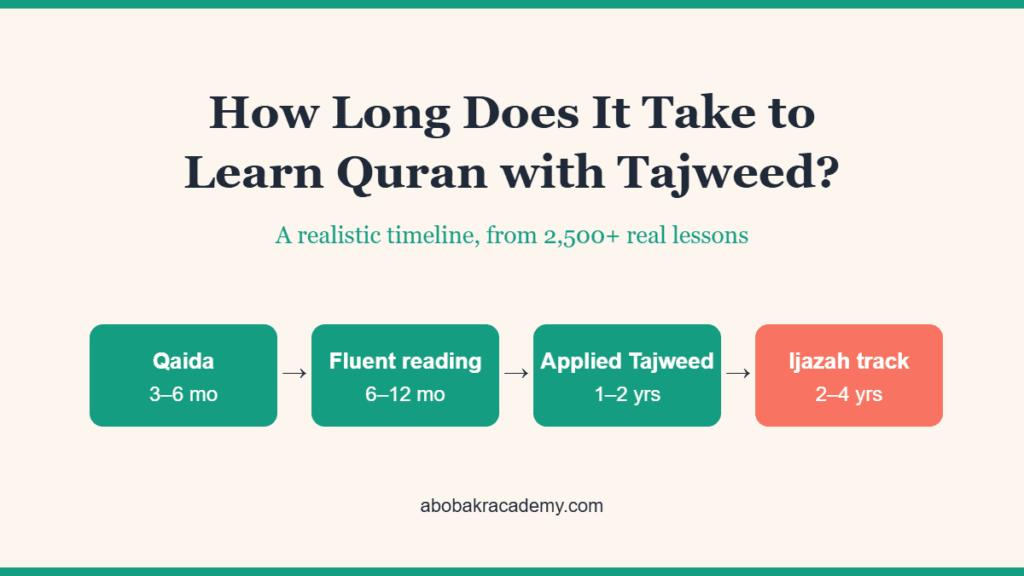
Infographic: how long it takes to learn Quran with Tajweed, four stages from Qaida to Ijazah

“How long will this take?” Every parent asks us this in the first trial class. Fair question. Nobody wants to commit to something open-ended. So here’s the honest answer, based on 2,500+ lessons we’ve taught: most adults learn Quran with Tajweed well enough to read any page correctly in 12 to 18 months, at two or three lessons a week. Kids usually need longer to read on their own, but their pronunciation often ends up better than their parents’. That’s the short version. The longer version depends on what “learning Tajweed” means to you, and that phrase means very different things to different people. Let’s break it down properly. The four stages, at a glance. Feel free to share this, just link back to us. How Long Does It Take to Learn Quran with Tajweed? Stage by Stage Tajweed isn’t one skill. It’s a ladder, and your timeline depends entirely on which rung you’re standing on today. Stage What you can do Typical time (2–3 lessons/week) 1. Foundation (Noorani Qaida) Recognize letters, connect them, read simple words from the right articulation points 3–6 months 2. Fluent reading Read any page of the Mushaf, slowly, but correctly, without the teacher spelling words out 6–12 months 3. Applied Tajweed The main rules. Noon Sakinah, Madd, Qalqalah, happen automatically while you read 12–24 months 4. Mastery / Ijazah track Recite a full narration with precision, ready for Ijazah from a qualified Qari 2–4 years Two things surprise almost everyone. First: you don’t need stage 4 to recite beautifully in your prayers. Stage 3 is plenty. Ijazah is a wonderful goal, but it’s a specialist’s path, not the finish line for ordinary believers. Second: the foundation stage matters more than any other. We’ve re-taught enough students who rushed their Qaida elsewhere to say this with confidence. Articulation mistakes that get repeated for a year become very stubborn. Three careful months at the bottom of the ladder save you a frustrating year near the top. Stage 3 is where most students should aim. Everything after that is optional excellence. What Actually Decides Your Speed Frequency beats duration, every time Three 30-minute lessons a week will beat one 90-minute lesson, and it isn’t close. Pronunciation is muscle memory. Your tongue and throat need frequent correction, not occasional marathons. Our fastest students all share one boring habit: ten minutes of daily practice on exactly what their tutor corrected last lesson. Not an hour. Ten minutes, every day. You can’t hear your own mistakes This is why learning Tajweed from YouTube alone doesn’t work, and we say that as people who recommend listening to great reciters on Quran.com constantly. Listening builds your ear. It just can’t tell you that your ع is coming out as a أ, and every single learner believes their pronunciation is fine until a teacher stops them mid-verse. There’s no way around live correction. There are only detours that cost you months. Where you’re starting from Already read Arabic script? You might skip straight to stage 2 and reach applied Tajweed within a year. Starting from the alphabet? Budget the full timeline, and don’t feel bad about it. That’s the normal path, not the slow one. A structured Noorani Qaida program beats diving into the Mushaf and hoping for the best. Age, but not how you’d expect Here’s something we see weekly: a seven-year-old and her father start together. Dad races ahead in reading. He understands rule logic instantly. Two years later, the daughter’s recitation sounds native and effortless while Dad is still consciously managing his letters. Kids learn slower and end up better, because their speech muscles are still forming. Neither has the advantage overall; they just need different teaching. Our Quran classes for kids run on repetition games and tiny daily wins; adult lessons lean on rule logic and self-correction. Lesson Frequency: Three Honest Scenarios Pick the middle column unless you have a strong reason not to. One lesson a week keeps you moving, barely. Expect roughly double the timelines above. Fine for busy seasons; frustrating as a main plan. Two to three lessons a week is where the table above comes from, and where most families who want to learn Quran with Tajweed properly end up landing. Best retention for the money. Four or five a week is the intensive lane. Adults can hit fluent reading in 4–6 months. It suits people with a deadline: leading Taraweeh, starting Hifz, or a personal Ramadan goal. Five Habits That Quietly Add Months Skipping the Qaida because it feels childish. It isn’t childish. It’s the foundation, and adults who respect it move faster later. Studying rules instead of applying them. Knowing the definition of Ikhfa is trivia. Hearing it corrected in your own recitation is learning. Rules should chase your mistakes, not precede them. Practicing errors. An hour of unsupervised daily recitation can cement the very mistakes you’re paying to fix. Practice what was corrected. Nothing else. Hopping between teachers. Every new tutor spends weeks rediscovering your error patterns. Consistency compounds like interest. Stopping at “good enough” reading, then wondering why long verses feel breathless and uneven years later. How We Teach Quran with Tajweed at Abobakr Academy Every student at our online Quran academy starts with a free assessment. Your tutor. A native Arabic speaker, often Al-Azhar trained, places you on the ladder above and tells you, plainly, what your realistic timeline looks like. Lessons are live and one-to-one over Zoom or Google Meet, with correction in the moment and written notes afterward. If certification is your goal, our dedicated Tajweed course runs all the way through the 17 rule families to the Ijazah pathway (for background on the discipline itself, Wikipedia’s Tajwid entry is a decent primer). Frequently Asked Questions Can I learn Tajweed in 3 months? You can build a real foundation in three months, correct articulation points, clean simple words. Full applied Tajweed in that window isn’t realistic for a beginner, and we’d be suspicious of any program promising

Online Quran Courses for Beginners: What to Look For

Best Quran Courses for Beginners Online

Most “beginner” Quran courses use the label loosely, some just mean the price is cheaper, not that the teaching actually starts from zero. Before picking one, it’s worth checking three things: does the first few lessons cover the Arabic letters and their sounds explicitly, or do they jump straight into short surahs assuming the student can already read? Is there a placement step, or does everyone start on lesson one regardless of background? And can the pace slow down or speed up once the teacher sees how a student is actually doing? A course that answers yes to those three tends to hold a beginner’s interest longer than one built around a fixed weekly syllabus. Our beginner track starts with a short placement conversation, then builds letters, short words, and basic Tajweed at whatever pace fits the student. What an online Quran course for beginners includes Quran courses for beginners are structured educational programs designed to help students learn the Holy Quran through internet-based learning. These courses use video conferencing tools, specialized learning platforms, and interactive online sessions to connect students with experienced Quran teachers. Online Quran courses are virtual classes that teach Quranic studies, recitation (Tajweed), memorization, Arabic language, and the History of Islam (Seerah). Offered by institutions like  Abobakr Academy, these provide flexible, accessible learning from anywhere with internet access. Courses include structured lessons in Noorani Qaida, proper pronunciation, and advanced Tajweed rules, catering to all levels, from beginners to advanced learners. These programs support self-paced or live interactive sessions, fostering consistent spiritual and linguistic growth. Unlike traditional classroom settings, online Quran courses for beginners allow students to study at convenient times while receiving personalized guidance from qualified tutors. Many courses are designed for beginners, children, adults, and new Muslims who want to learn Quran reading, Quran recitation, Quran with Tajweed, and Quran memorization. A typical Quran online academy offers a variety of Quran learning courses, including: Noorani Qaida courses Quran reading programs Quran and Tajweed classes Quran memorization classes Quran Arabic language studies Tafsir and Islamic studies Quran translation and understanding These beginner Quran classes provide flexibility while maintaining the quality of traditional Quranic education. How an online beginner course actually runs Modern these programmes are designed to create an engaging and interactive learning experience. Students connect with their Quran teachers through live video sessions using an online platform to learn Quran effectively. The process is usually simple. Students enroll in a course, select a suitable schedule, and attend live classes online. During lessons, the Quran tutor for beginners guides students through reading, recitation, memorization, and understanding of Quranic teachings. Most a beginner course include: One-to-one live sessions Flexible schedules Personalized learning plans Regular assessments Progress tracking Recorded lessons for review This method of online Quran learning allows students to receive individual attention while progressing at their own pace. What separates a serious beginner course from a cheap one High-quality online Quran courses for beginners offer expert Ijazah-certified tutors, tailored one-to-one sessions, and flexible scheduling to accommodate global time zones. They provide structured curricula ranging from basic Noorani Qaida to Hifz and Tafseer, utilizing interactive multimedia tools for authentic and engaging learning. Not all online Quran courses are the same. The best programs focus on quality education, qualified instructors, and student success. A high-quality online Quran academy offers: Qualified Quran Teachers Experienced and certified Quran teachers are essential. Skilled instructors understand Tajweed rules, Quran Arabic, and effective Quran teaching methods. Personalized Learning Every student learns differently. Effective online Quran courses provide customized plans based on age, experience, and learning goals. Interactive Learning Environment Interactive classes online help students stay engaged through discussion, recitation practice, and real-time feedback. Flexible Scheduling Many students have busy schedules. Flexible online sessions allow learners to balance Quran studies with school, work, and family responsibilities. Progress Monitoring Regular evaluations help students measure improvement in Quran reading, memorization, and recitation skills. Safe Learning Environment Parents often prefer online Quran classes for kids because they provide a secure and supervised educational environment.     The three formats you will be offered Online Quran courses for beginners include foundational Arabic alphabet/reading (Noorani Qaida), basic Tajweed (pronunciation), fundamental memorization (Hifz), Quranic Arabic, and general Islamic studies. These structured one-to-one or group programs allow you to start from scratch and progress at your own pace. The variety of courses of this kind available ensures that every learner can find a suitable program. Quran Reading Courses These courses focus on helping beginners recognize Arabic letters, words, and pronunciation. Quran with Tajweed Courses In Quran with Tajweed courses, students learn proper pronunciation and recitation rules to recite the Quran accurately. Quran Memorization Classes Also known as Hifz programs, these courses help students memorize Quranic surahs and ayat systematically. Quran Translation Courses Students study the meanings and explanations of Quranic verses to improve their understanding. Quran and Arabic Courses Quranic Arabic Courses combine Quran learning with Arabic language studies. Islamic Studies Programs Many online institutes include lessons on Hadith, Sunnah, Islamic history, and character development. The availability of diverse a structured beginner programme makes it possible for learners to pursue their specific educational goals. The syllabus a beginner course should follow Course pages rarely publish their sequence, which makes comparison difficult. A competent beginner programme moves through roughly these stages, and you are entitled to ask where a course would start you. Letter recognition. All twenty-eight letters in isolation, then in their initial, medial and final forms. Most of the early time goes here, and a printable Arabic alphabet chart covering all four forms is worth keeping beside the student. Harakat. Fathah, kasrah and dammah attached to letters you already know, read as sounds rather than named. Sukoon, shaddah and tanween. The point where reading starts to sound like Arabic rather than a list. Connected reading. Words, then phrases. This is the common stall, because letters change shape when joined. Short surahs. Applied reading on familiar text, usually from the end of the mushaf. Introductory tajweed. Introduced alongside reading rather than saved for later. Most structured programmes deliver the first three stages through a graded primer,

Quran Reading with Tajweed: Applying the Rules as You Recite

Quran Reading with Tajweed

Most people who struggle with tajweed do not have a knowledge problem. They can name the rules of nun sakinah, spot a madd, explain what ikhfa means when asked. Then they open the mushaf, begin reciting, and almost none of it survives contact with an actual page. That gap is ordinary, and it is the part of tajweed that reading another rules article will not close. The missing piece is not information. It is the practice method that turns a rule you can recite into a rule you apply without thinking about it. Knowing the rules and reading with them are two different skills Naming a rule and executing it are held differently. One is a fact you can produce on request. The other is closer to a motor habit, and it has to fire while you are also decoding unfamiliar letter shapes, tracking where the sentence ends, managing your breath, and holding some attention on the meaning. Under that much simultaneous load, the newest and least automatic skill drops first. For a student six months into tajweed, that skill is tajweed. It is why a learner can score full marks on a written rules test and then recite a page with flat, ruleless pronunciation ten minutes later. The practical consequence matters more than the explanation. When recitation falls apart, the fix is almost never to learn more rules. It is to apply the few you already have to far more text, far more slowly, out loud, in front of someone who will stop you. Start slower than feels natural Classical recitation recognises three speeds. Tahqiq is deliberate and unhurried, the pace used for teaching and correction. Tadwir sits in the middle. Hadr is quick, and it belongs to reciters who have already made the rules automatic. Nearly every beginner reaches for hadr. It is the speed they hear in the recordings on their phone, so it becomes the target without anyone deciding it should be. At that pace there is no room to choose anything. A madd needs a length decision. An ikhfa needs a decision. If the word has left your mouth before you register it, knowing the rule changes nothing. Reciting at tahqiq feels absurdly slow at the start, close to one word at a time. The slowness is the whole point: it buys the half second in which a rule can be recalled and carried out. Speed comes back on its own once the decisions stop being decisions. A practice loop for one page of the mushaf Working loosely through a whole juz achieves less than working through a single page properly. The loop below takes roughly twenty minutes and is meant to repeat daily. Read the page once without stopping Correct nothing on this pass. It is diagnostic. You want to find where the difficulties actually sit rather than where you assume they sit. Mark the places you stumbled A light pencil mark in the margin works, or a note of the ayah numbers on your phone. Most pages throw up four or five genuine trouble spots, not thirty. Repeat the line, not the page Take one marked line and recite it until it comes out clean three times in a row, then move to the next. Restarting the full page from the top after every mistake spends most of the session on the parts you were already reading well. Record the final pass and listen back Your ears while reciting and your ears while listening are not equally reliable. A clipped ghunnah or a shortened madd is obvious in playback and nearly invisible in the moment. A voice memo on your phone is enough. The loop in full. Step one is for finding problems, not fixing them, which is the step most people skip. Colour-coded mushafs help until they stop helping A mushaf that shades ikhfa in one colour and idgham in another is a reasonable scaffold early on. It shortens the distance between seeing a letter and knowing what to do with it. The risk arrives quietly. After several months some students are no longer applying rules at all, they are reading colours. The knowledge is sitting in the ink rather than in the reader, and it vanishes the moment they pick up a plain mushaf, open an app without shading, or stand in salah reciting from memory. One test settles it. Take a page you have drilled in a colour-coded mushaf, leave it a week, then recite the same page from a plain one. Whatever survives is yours. What breaks first when you speed up Recitation does not degrade evenly. Three things go before anything else, and they go in a fairly predictable order. Ghunnah gets clipped The nasal sound has a duration, and duration is the first casualty of hurry. A ghunnah that should be held turns into a passing consonant. It is the most common fault in otherwise respectable recitation. Madd lengths drift toward each other A student who can cleanly separate a two-count madd from a four or six-count one at slow speed will often flatten all of them to about three counts once moving. Everything sounds vaguely long and nothing is actually measured. Stops land wherever the breath runs out Waqf is a meaning decision. Under speed it quietly becomes a lung decision, and the reciter ends up stopping mid-phrase in places that blur or damage the sense of the ayah. The small marks printed above the line are there to prevent this, and it is worth learning what each one asks you to do before speed becomes the goal. None of these three appear on a written test, which is part of why they persist for years in students who have covered the tajweed rules themselves thoroughly. Three faults, in the order they arrive. Knowing the order means you can listen for them one at a time. How correction actually works in a live lesson Recorded courses teach rules well. They cannot hear you. Correction is

Tajweed Quran Rules Explained Clearly for Beginners

Tajweed quran rules

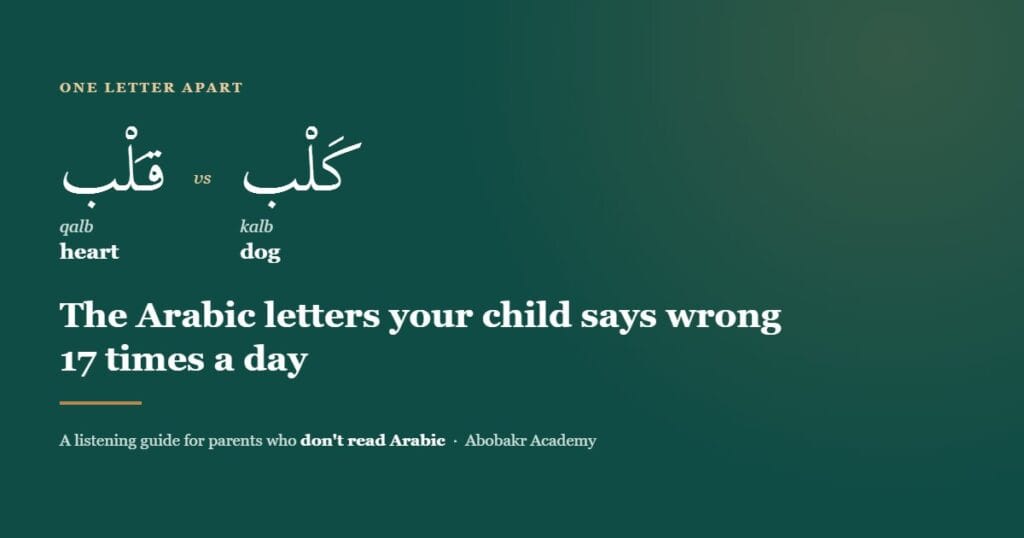
Most people meet the Tajweed Quran rules as a list. Fourteen rules, or nine, or twelve depending on whose article you opened, each with an Arabic name and a definition. You read it, nod, and close the tab no better at reciting than you were before. The list is not the problem. The problem is that a list has no order and no way of telling whether you are doing any of it correctly. This page fixes both. The rules are here, explained plainly, but they are arranged in the order teachers actually teach them, and every one comes with something you can listen for tonight. What Tajweed actually is, and what it is not Tajweed is the set of rules governing how the Quran is pronounced when recited aloud. It covers where each letter is formed in the mouth, how long vowels are held, when sounds merge into one another, and where a reader may stop. The word itself means to do something well. Two things it is not. It is not a style of recitation, so the beautiful melodic reading you have heard is a separate skill layered on top. And it is not optional decoration: applying the rules is what keeps the recitation the same sound it was when it was revealed, and the more serious errors change meaning rather than merely sounding wrong. You do not need to finish learning the rules before you start applying them. Almost nobody learns Tajweed as theory first. You learn a rule, you hunt for it on the page, and it becomes automatic somewhere between the twentieth and the hundredth time. The order to learn the Tajweed Quran rules in This is the part almost every guide leaves out, and it matters more than the definitions. Learned in the wrong order, the rules feel arbitrary. Learned in this order, each one rests on the last. The teaching orderWhat to learn when, and roughly how long each stage takes Stage What you learn Why it comes here Typical time 1. Letters Makharij, the articulation points. Where each of the 28 letters is formed. Every later rule assumes you can already make the letter correctly. Fixing this later means unpicking a habit. 2–6 months 2. Vowels and length Short vowels, then Madd, the elongations, counted in beats. Length is the most audible thing in recitation and the easiest for a listener to check. 1–3 months 3. Ghunnah The nasal sound, and the letters that carry it. It sits inside several later rules. Learn it once here and Ikhfa, Idgham and Iqlab become variations rather than new material. 2–4 weeks 4. Noon and Meem Sakinah The four cases of noon sakinah and tanween, then the three of meem sakinah. The largest single block of rules, and the one that most changes how a page sounds. 2–4 months 5. Qalqalah and letter weight Qalqalah, then Tafkhim and Tarqiq. Refinements. Audible, but they do not change meaning, so they can wait. 1–2 months 6. Stopping Waqf and Ibtida, where to pause and where to resume. Needs enough fluency that you are reading phrases rather than words. 1–2 months Stages overlap in practice. A student is usually polishing stage 2 while starting stage 4. Two things surprise people about this table. The first is how much of it is stage 1: the letters take longer than everything else and are the part most self-taught readers skip. The second is that stopping comes last, even though it is the rule most visible on the page. Our guide to how long tajweed usually takes sets the same ground out against a full learning timeline. The Tajweed Quran rules, one by one The rule families, grouped the way they are taught rather than alphabetically. Makharij, where each letter is formed The 28 Arabic letters are produced at seventeen points spread across the throat, the tongue, the palate and the lips. Several pairs sit close enough together that an English-speaking mouth defaults to the wrong one: ق and ك, the two h sounds ح and ه, س and ص, د and ض. Getting these right is the whole of stage one, and it is why the letters children raised abroad say wrong is worth reading before anything else here. Sifaat, what each letter does Where makharij is the place, sifaat are the qualities: whether the sound is whispered or voiced, held or stopped, heavy or light. In practice you learn these through the letters rather than as a separate list, which is why they rarely appear as a lesson of their own. Madd, holding the vowel Madd is elongation, measured in beats called harakat. The natural madd runs two beats and appears constantly. The longer ones, four or six beats, are triggered by a hamzah or a sukoon following the vowel. The common fault is not getting these wrong individually but flattening all of them to roughly three beats once you speed up, so nothing is actually measured. Ghunnah, the nasal sound A sound made through the nose rather than the mouth, held about two beats. It belongs to ن and م, most obviously when they carry a shaddah, and it lives inside several of the rules below. A reader who has lost ghunnah is not missing one rule, they are missing a component of several at once, which is why the nasal sound children raised abroad drop first is worth catching early. Noon Sakinah and Tanween, the four cases When a noon carries no vowel, or a word ends in tanween, what happens next depends entirely on the letter that follows: The four casesDecided by the letter after the noon IzharSay it clearly. Before the six throat letters, the noon is pronounced plainly with no nasal hold. IdghamMerge it. Before the letters of yarmaloon, the noon merges into the next letter, with ghunnah for most of them and without for ل and ر. IqlabTurn it into a meem. Before ب only, the noon becomes a meem sound held

Book a free class