Sayyidul istighfar means “the master of asking forgiveness”. It is the dua the Prophet ﷺ called the best way to ask Allah to forgive you, reported in Sahih al-Bukhari 6306. It begins Allahumma anta rabbi, “O Allah, You are my Lord.”
Hear the whole dua, about 37 seconds.
A long dua is hard to learn from one block if you don’t read Arabic, so here it is split into its eight natural lines. Each one plays on its own, so you can repeat it until it sticks. A seven-day plan and a sheet to print are further down.
Sayyidul istighfar in Arabic, English and transliteration
Tap the box to select the Arabic, then copy it.
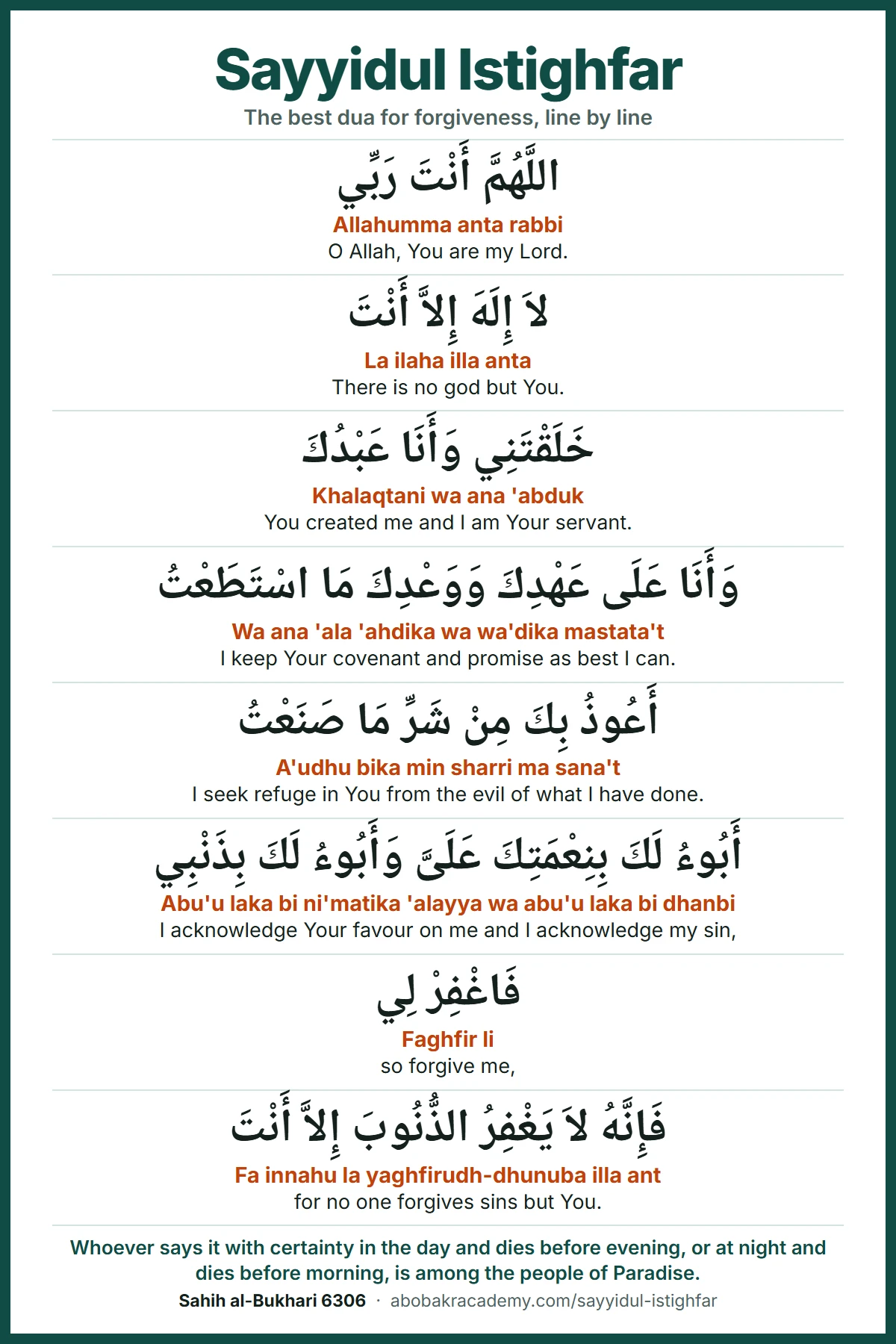
اللَّهُمَّ أَنْتَ رَبِّي، لاَ إِلَهَ إِلاَّ أَنْتَ، خَلَقْتَنِي وَأَنَا عَبْدُكَ، وَأَنَا عَلَى عَهْدِكَ وَوَعْدِكَ مَا اسْتَطَعْتُ، أَعُوذُ بِكَ مِنْ شَرِّ مَا صَنَعْتُ، أَبُوءُ لَكَ بِنِعْمَتِكَ عَلَىَّ وَأَبُوءُ لَكَ بِذَنْبِي، فَاغْفِرْ لِي، فَإِنَّهُ لاَ يَغْفِرُ الذُّنُوبَ إِلاَّ أَنْتَ
Transliteration: Allahumma anta rabbi, la ilaha illa anta, khalaqtani wa ana ‘abduk, wa ana ‘ala ‘ahdika wa wa’dika mastata’t, a’udhu bika min sharri ma sana’t, abu’u laka bi ni’matika ‘alayya wa abu’u laka bi dhanbi, faghfir li, fa innahu la yaghfirudh-dhunuba illa ant.
English: "O Allah, You are my Lord. There is no god but You. You created me and I am Your servant. I keep Your covenant and promise as best I can. I seek refuge in You from the evil of what I have done. I acknowledge Your favour on me and I acknowledge my sin, so forgive me, for no one forgives sins but You."
Learn it line by line
Press play, say the line back, and press play again. The note under each line tells you what that line is doing, because a dua is much easier to remember once you can follow it.
Line 1
Allahumma anta rabbi
O Allah, You are my Lord.
You start by naming who you are speaking to.
Line 2
La ilaha illa anta
There is no god but You.
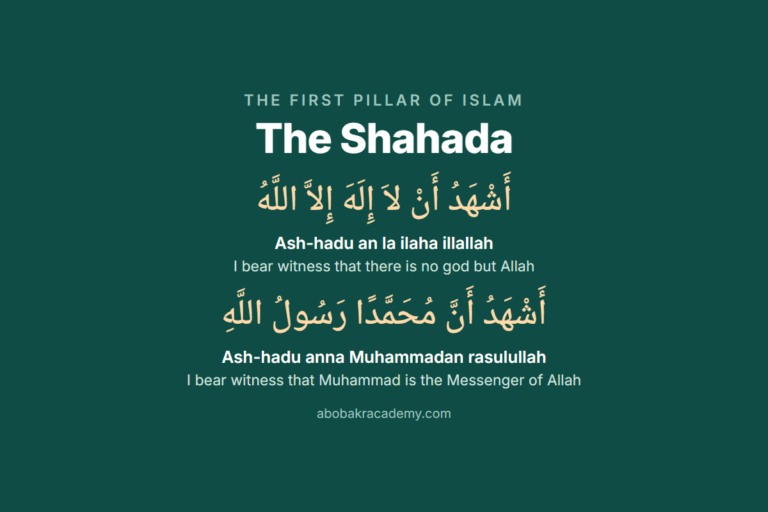
The same belief as the shahada, said directly to Allah.
Line 3
Khalaqtani wa ana ‘abduk
You created me and I am Your servant.
You say what you are before you ask for anything.
Line 4
Wa ana ‘ala ‘ahdika wa wa’dika mastata’t
I keep Your covenant and promise as best I can.
An honest limit: as best I can, not perfectly.
Line 5
A’udhu bika min sharri ma sana’t
I seek refuge in You from the evil of what I have done.
You ask for protection from the harm of your own actions.
Line 6
Abu’u laka bi ni’matika ‘alayya wa abu’u laka bi dhanbi
I acknowledge Your favour on me and I acknowledge my sin,
Abu’u means I admit and come back with it. The blessing is named before the sin.
Line 7
Faghfir li
so forgive me,
The request itself, two words, and only now.
Line 8
Fa innahu la yaghfirudh-dhunuba illa ant
for no one forgives sins but You.
It closes on the same words as line two: illa ant, but You.
The hadith behind it
Shaddad ibn Aws reported that the Prophet ﷺ gave this dua the title sayyid al-istighfar and then said what it earns. Whoever says it during the day with certainty in it and dies that day before evening is one of the people of Paradise. Whoever says it at night with certainty in it and dies before morning is one of the people of Paradise (Sahih al-Bukhari 6306).
Its last line, that no one forgives sins but Allah, is also said in the Quran: “and who forgives sins except Allah?” (Surah Al Imran 3:135).
The condition is in the wording. The hadith says muqinan biha, “with certainty in it”. The promise is for someone who means what they are saying, and that is a good reason to learn what each line says rather than only the sounds.
When to say it, and how many times
| Question | Answer | Basis |
|---|---|---|
| When? | Once in the day and once at night | The two times named in Bukhari 6306 |
| Which part of the day? | The hadith names no hour. Most people add it to their morning and evening remembrance so they don’t forget it | Common practice |
| How many times? | The hadith gives no number | Bukhari 6306 |
| Can I repeat it? | Yes. Asking forgiveness has no upper limit, and the Prophet ﷺ himself did so a hundred times a day | Muslim 2702a, and Bukhari 6307 for more than seventy |
Sayyidul istighfar or astaghfirullah?
Astaghfirullah is the short form: one phrase, “I ask Allah’s forgiveness”, said after every prayer and at any moment in the day. Sayyidul istighfar is the full dua, and you set a moment aside for it. You don’t have to choose.
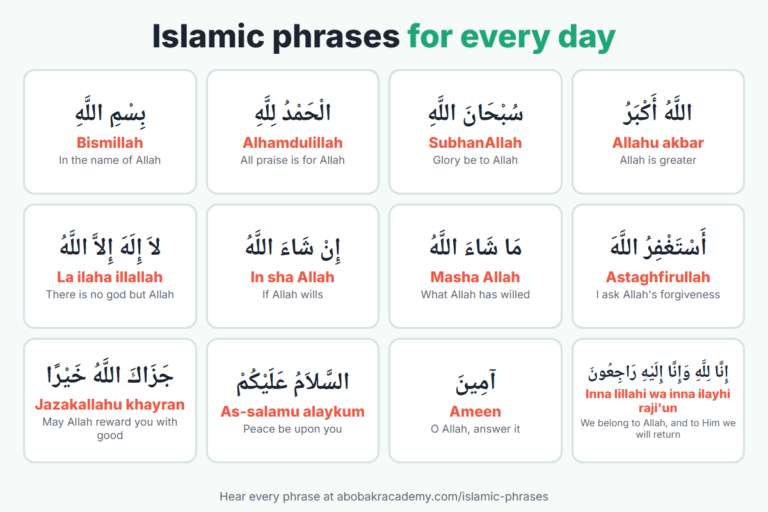
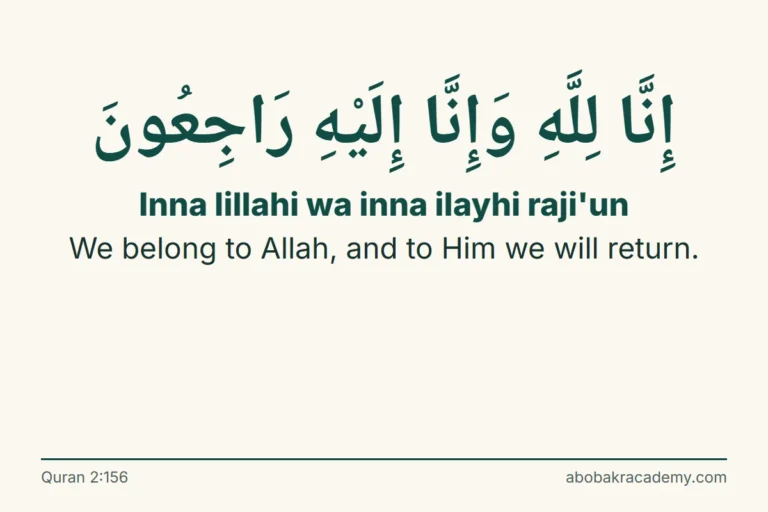
Keep the short one on your tongue through the day, and say the long one morning and evening. It sits alongside the other everyday words on our Islamic phrases page. For a loss, the words to know are inna lillahi wa inna ilayhi raji’un.
Learn it in seven days
One short sitting a day is enough. Start each day by playing what you already know, then add the new line. Five minutes after Fajr or before bed works well, and it’s the same plan for a child or an adult.
| Day | New | Say by the end |
|---|---|---|
| 1 | Lines 1 and 2 | Allahumma anta rabbi, la ilaha illa ant |
| 2 | Line 3 | Lines 1 to 3 |
| 3 | Line 4, the longest so far | Lines 1 to 4 |
| 4 | Line 5 | Lines 1 to 5 |
| 5 | Line 6, in its two halves | Lines 1 to 6 |
| 6 | Lines 7 and 8 | The whole dua, reading along |
| 7 | Nothing new | The whole dua with your eyes closed |
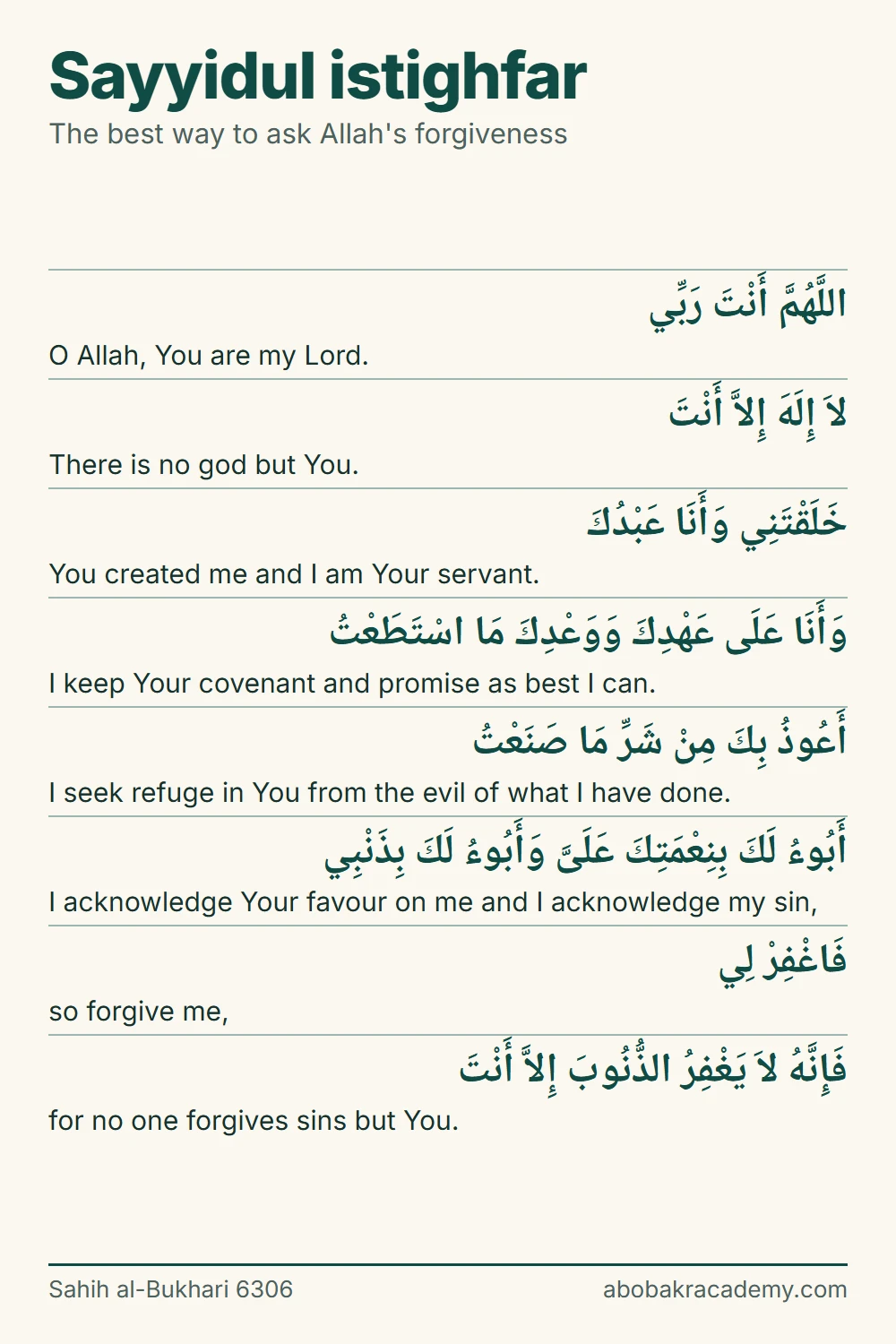
Download sayyidul istighfar as a one-page PDF. It has the eight lines, their meaning and the seven-day plan with boxes to tick.
Teaching it to a child
This dua is long for a young child, so don’t begin with all of it. Lines one and two are short, and a child of six or seven can have them within a few days. Say a line and let them say it back, then leave off the last word for them to finish.
Explain line seven, faghfir li, in their words: “please forgive me”. It is the part they will understand first, and it gives them something to say after a bad day. The shorter daily duas for kids are a better place to start if this is your child’s first dua.
Questions about sayyidul istighfar
What is sayyidul istighfar?
It is the dua beginning Allahumma anta rabbi, which the Prophet ﷺ called the best way of asking forgiveness (Sahih al-Bukhari 6306). Sayyid means master or chief, and istighfar means asking forgiveness.
Can I read sayyidul istighfar 100 times?
Yes. Nothing stops you repeating it, but 100 is not a number from this hadith, which names no count. The hundred comes from the Prophet’s ﷺ own asking of forgiveness through the day (Sahih Muslim 2702a). Saying it once with attention in the day and once at night is what the hadith describes.
When should I recite sayyidul istighfar?
Once during the day and once at night. Most people put it with their morning and evening remembrance, after Fajr and in the evening, so that neither is missed.
How do you read sayyidul istighfar if you can’t read Arabic?
Learn it by ear. Play one line at a time from the list above, follow the transliteration and say it back. Transliteration only gets you close, so let the recording correct you.
Does sayyidul istighfar guarantee Paradise?
The hadith says the person who says it with certainty and dies before the day or night ends is of the people of Paradise. It is a promise from the Prophet ﷺ tied to a condition, and asking forgiveness sincerely means meaning the words, not treating them as a charm.
How do you spell it?
The Arabic is one spelling; the English has many. Sayyidul istighfar, sayyid al-istighfar and syed ul istighfar are the same dua.
Nobody at home reads Arabic? You can still say this dua properly.
Our tutors teach adults and children one to one and online, from the sounds of the letters up to reading the Quran, and they will correct your pronunciation line by line. See Quran classes for adults or Quran classes for kids, or message us and the first lesson is free.
Lessons in this subject: Online Islamic Studies