
Free Arabic Alphabet Tracing Worksheets
Twenty eight tracing sheets, one for every letter of the Arabic alphabet, written for the parent who cannot read Arabic and is sitting down with a child anyway. There is no signup, no email box and no account. Press print, or save the page as a PDF, and you have the set.
What is actually on the sheets?
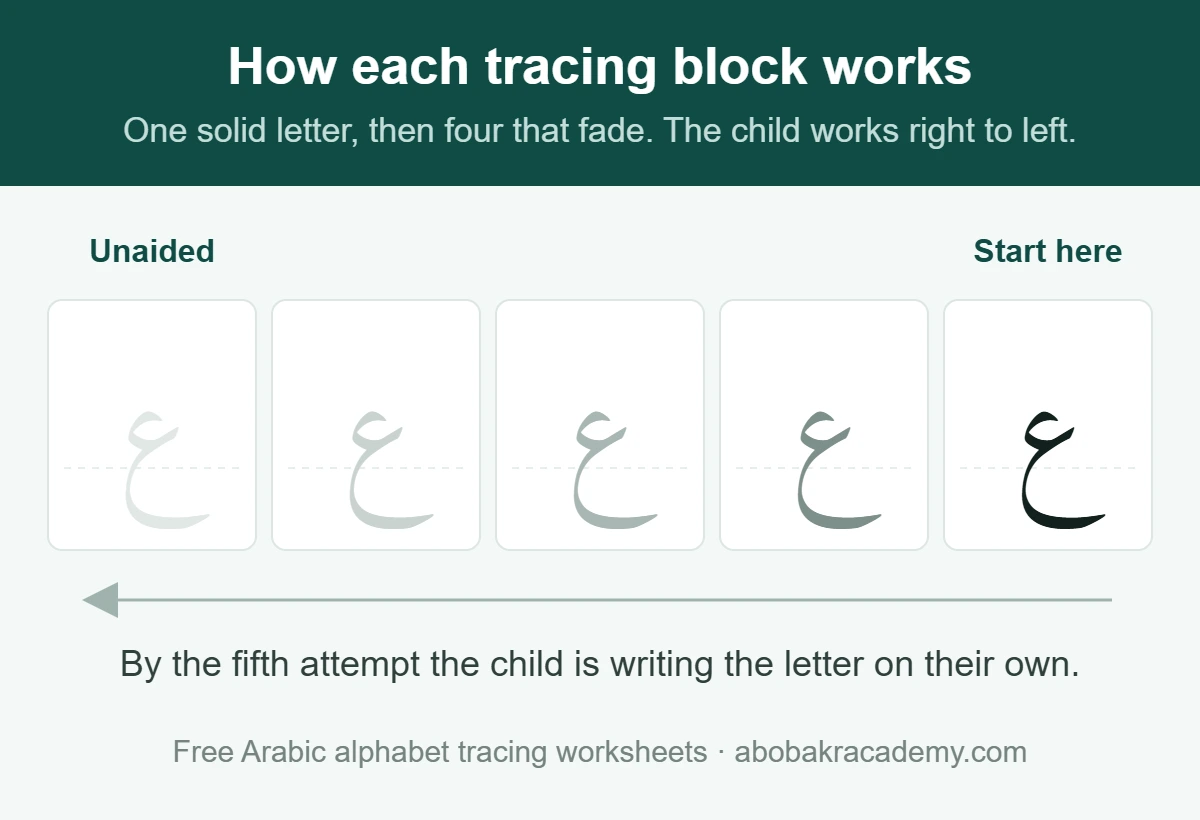
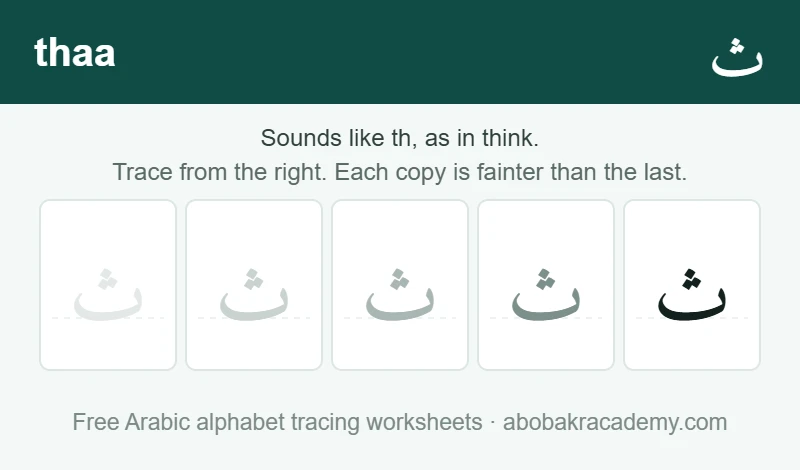
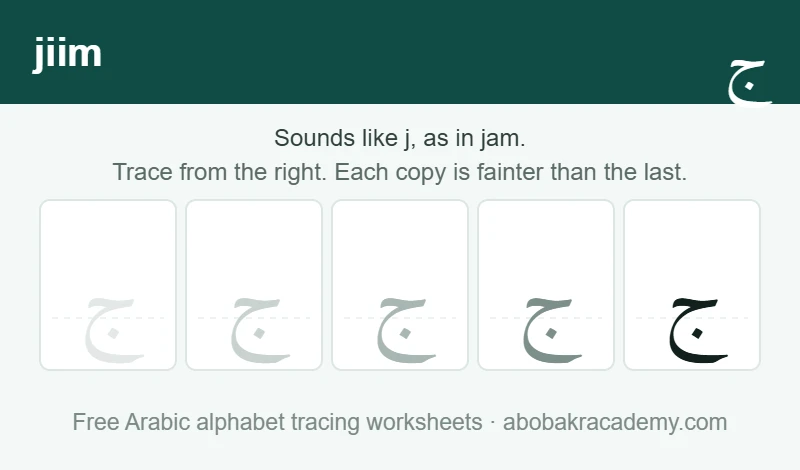
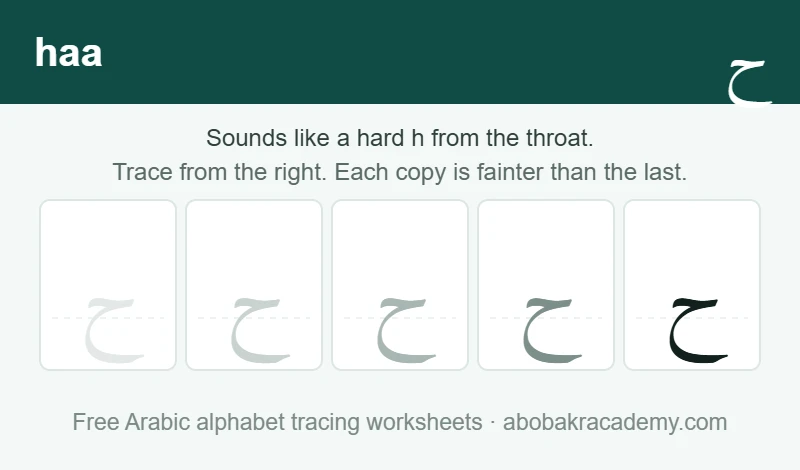
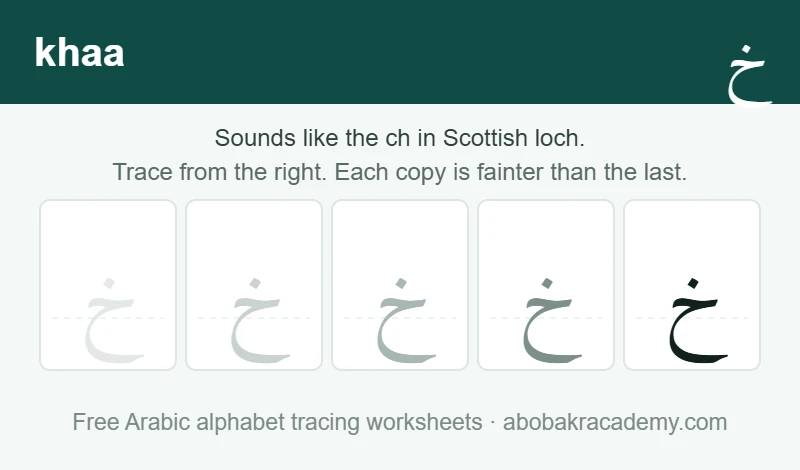
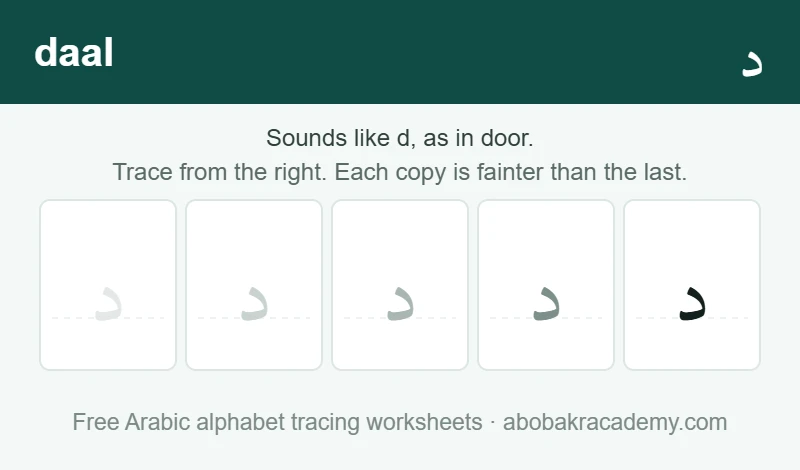
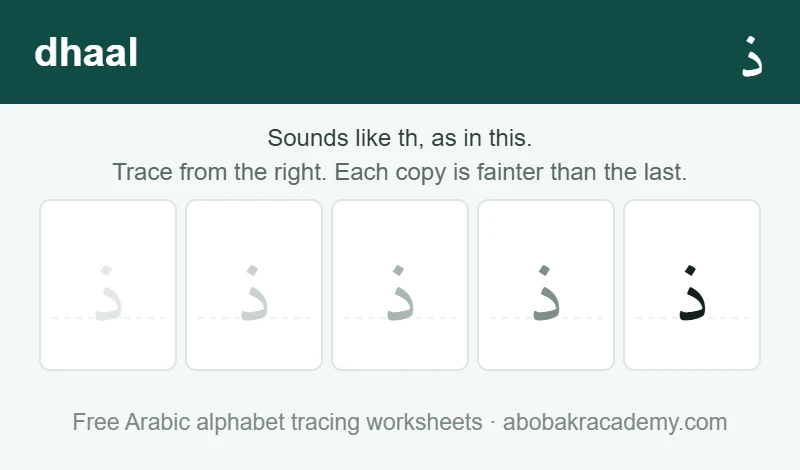
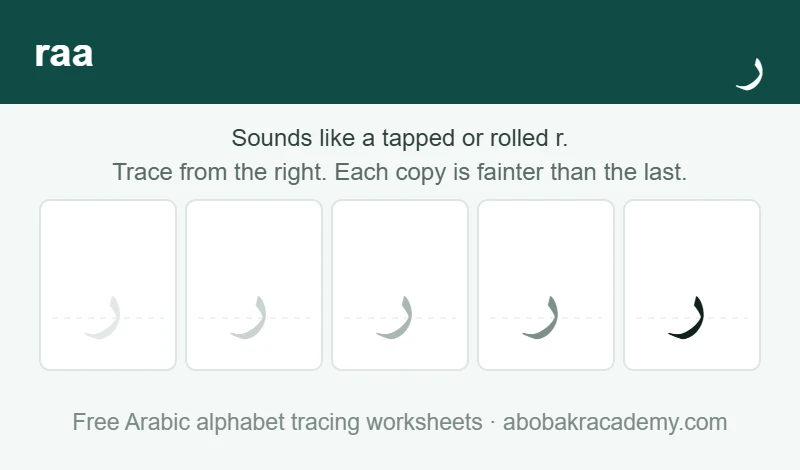
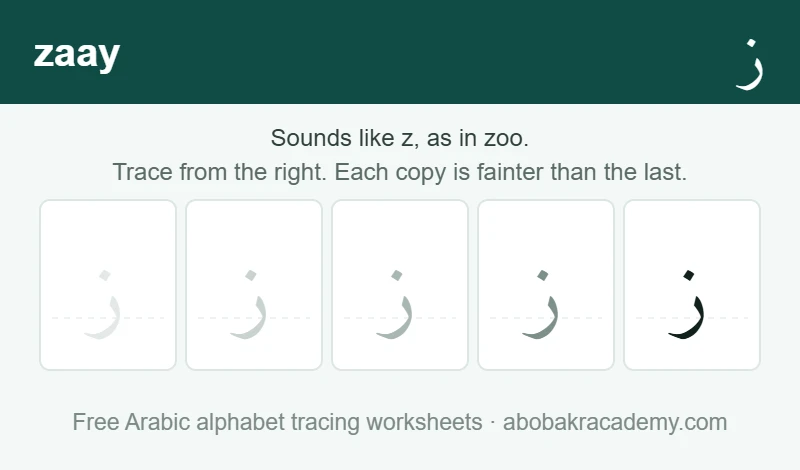
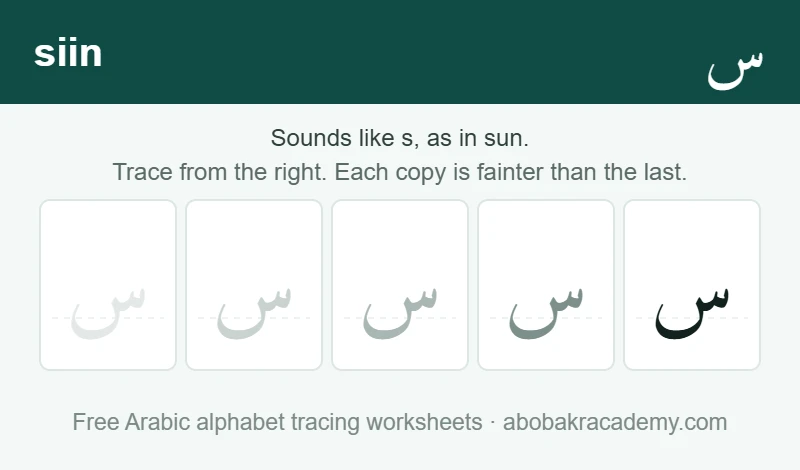
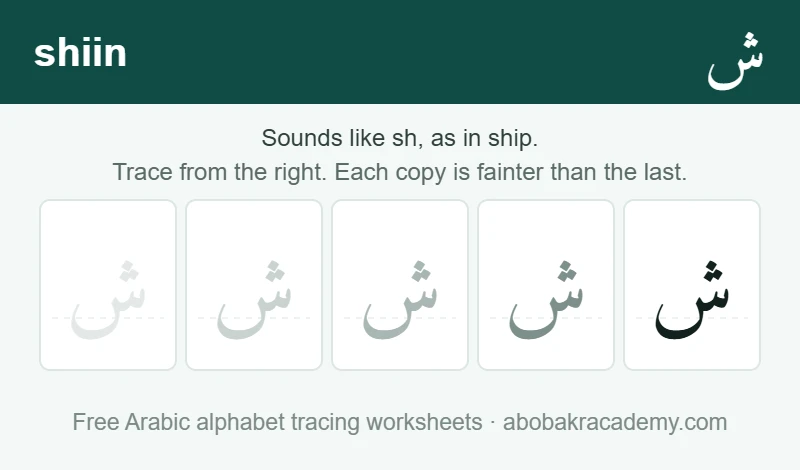
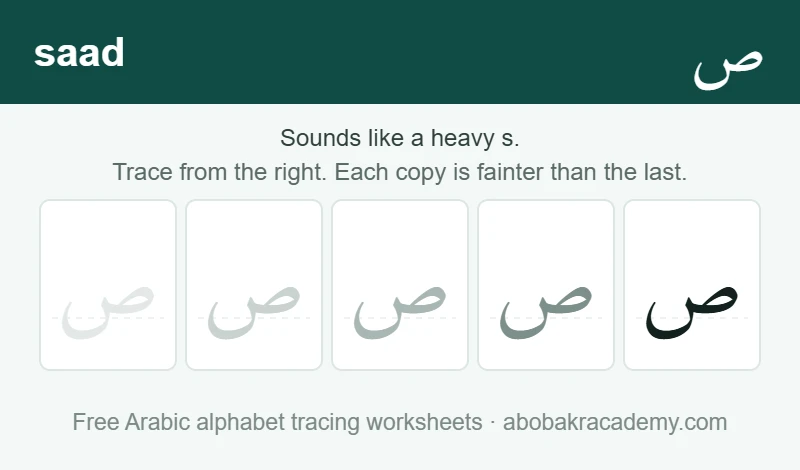
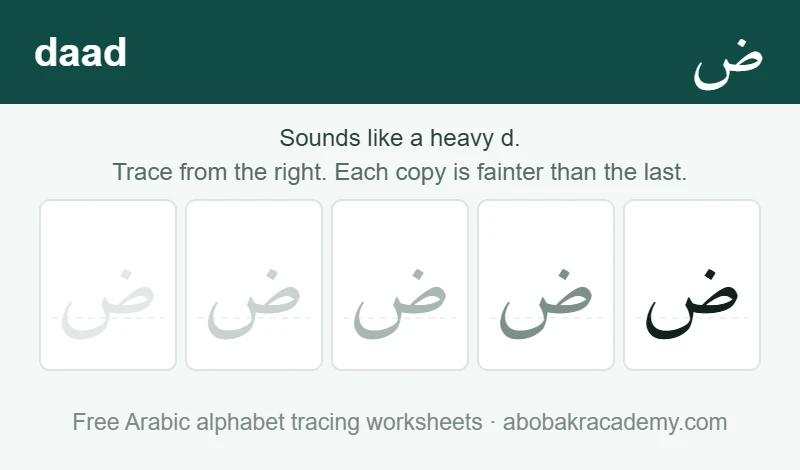
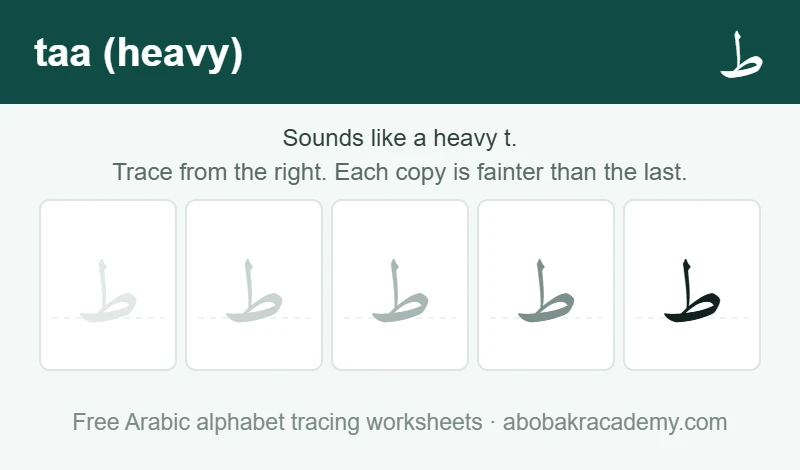
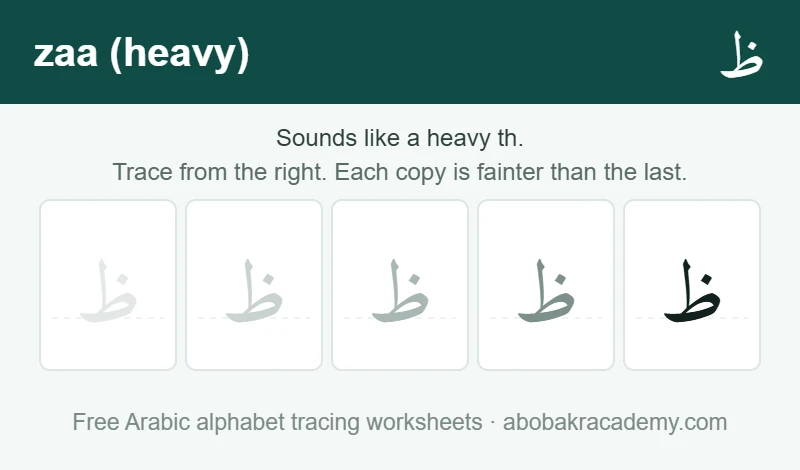
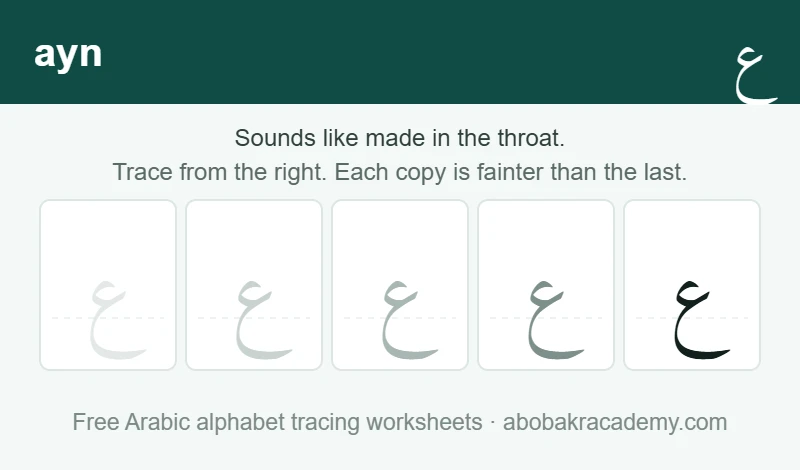
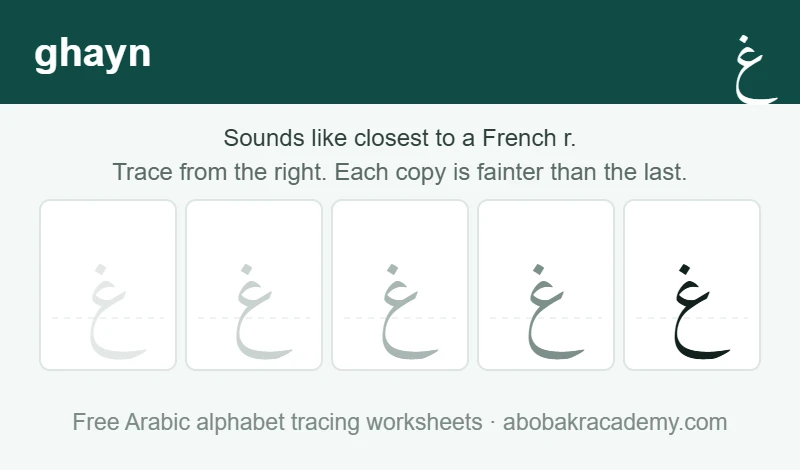
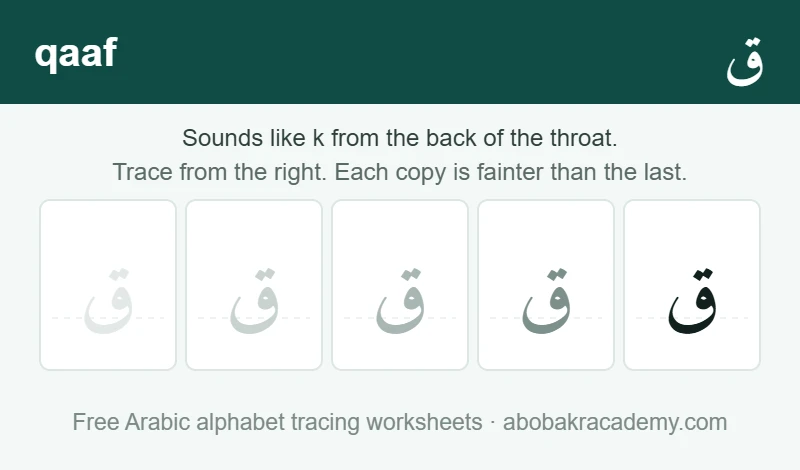
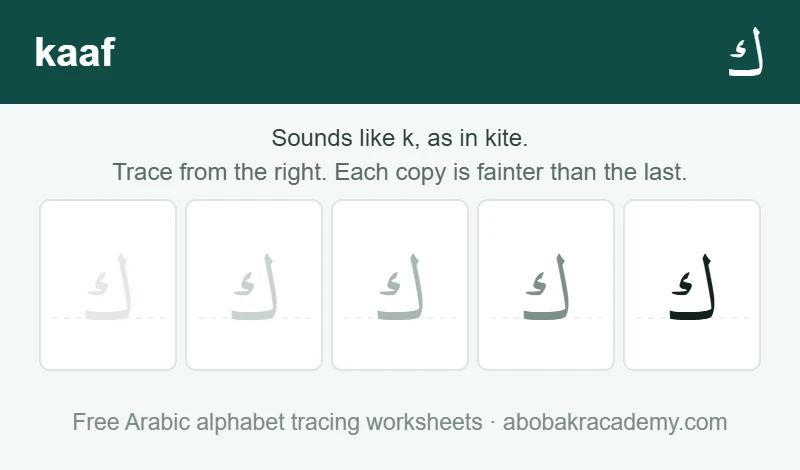
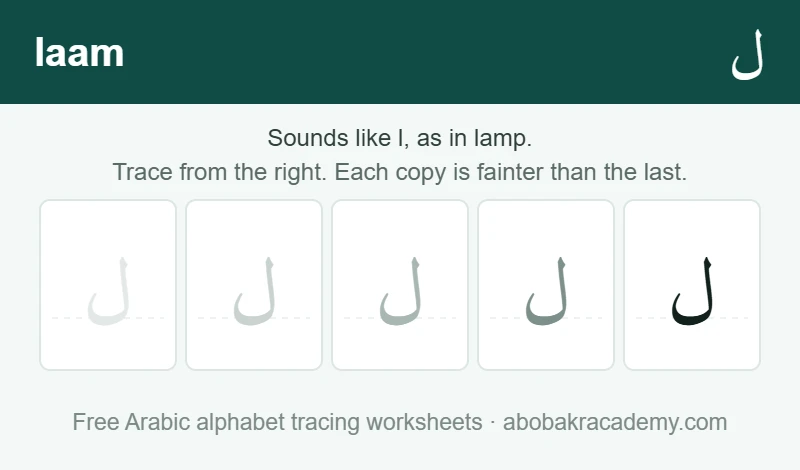
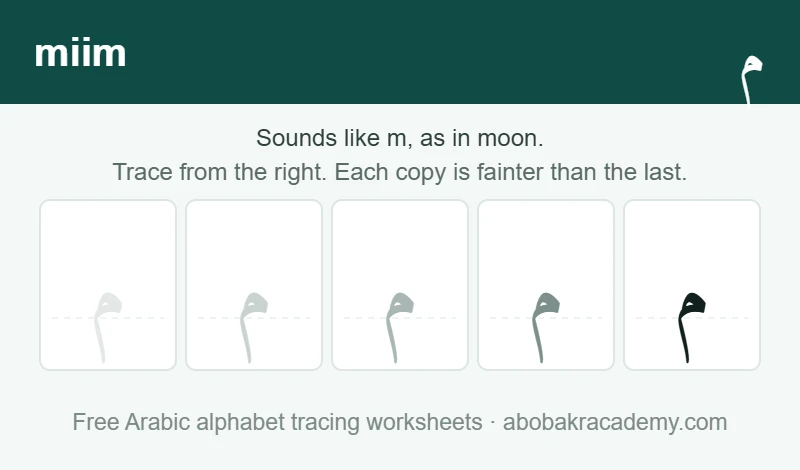
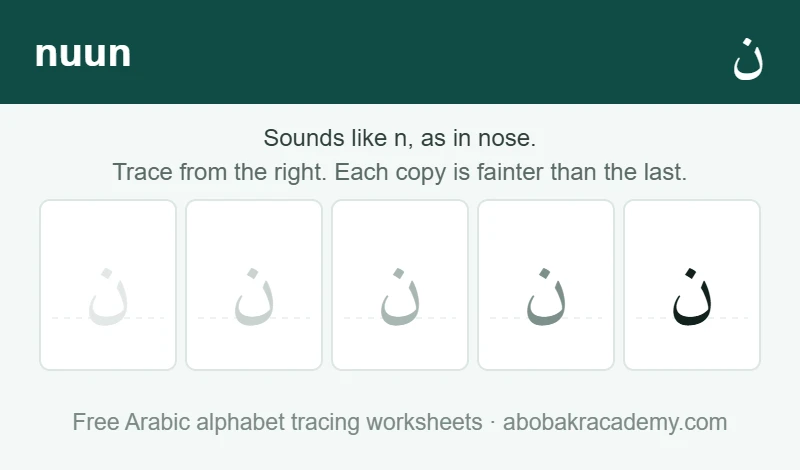
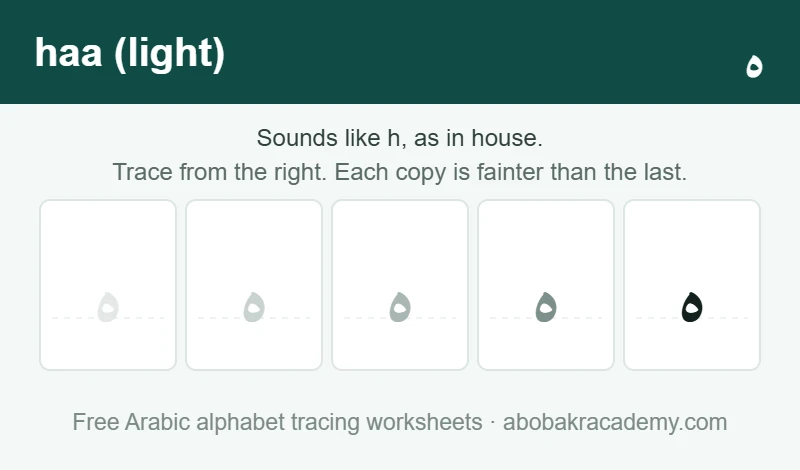
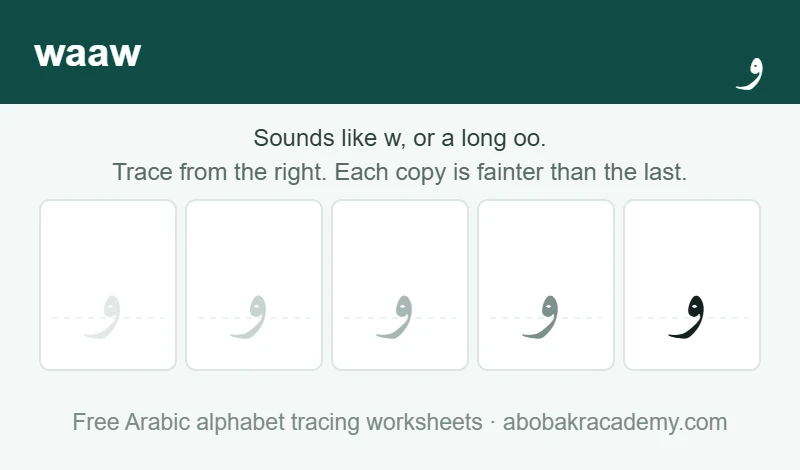
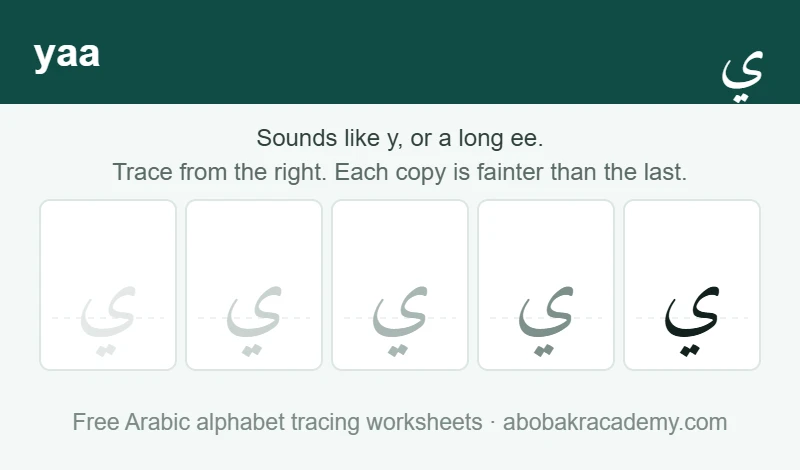
Each letter gets its own block. The first character is printed solid, in full colour, and the four that follow it are faint. A child copies over the faint ones, right to left, and by the fifth attempt is writing the letter unaided. That is the whole method, and it is old, and it works.
The letters are shown in their standalone form, which is the form a child should learn first. Arabic letters change shape depending on where they sit in a word, and that comes later. A beginner who can write all twenty eight standalone letters has done the hard part.
How do you use these if you cannot read Arabic yourself?
You do not need to read Arabic to run this. You need to know three things.
Arabic is written right to left. The pen starts on the right side of the block and moves left. If your child starts on the left, the letter will come out mirrored and it is worth catching early.
The name of the letter is not the sound it makes. The table below gives both. Say the sound when your child is writing, not the name, for the same reason English children are taught “ssss” rather than “ess”.
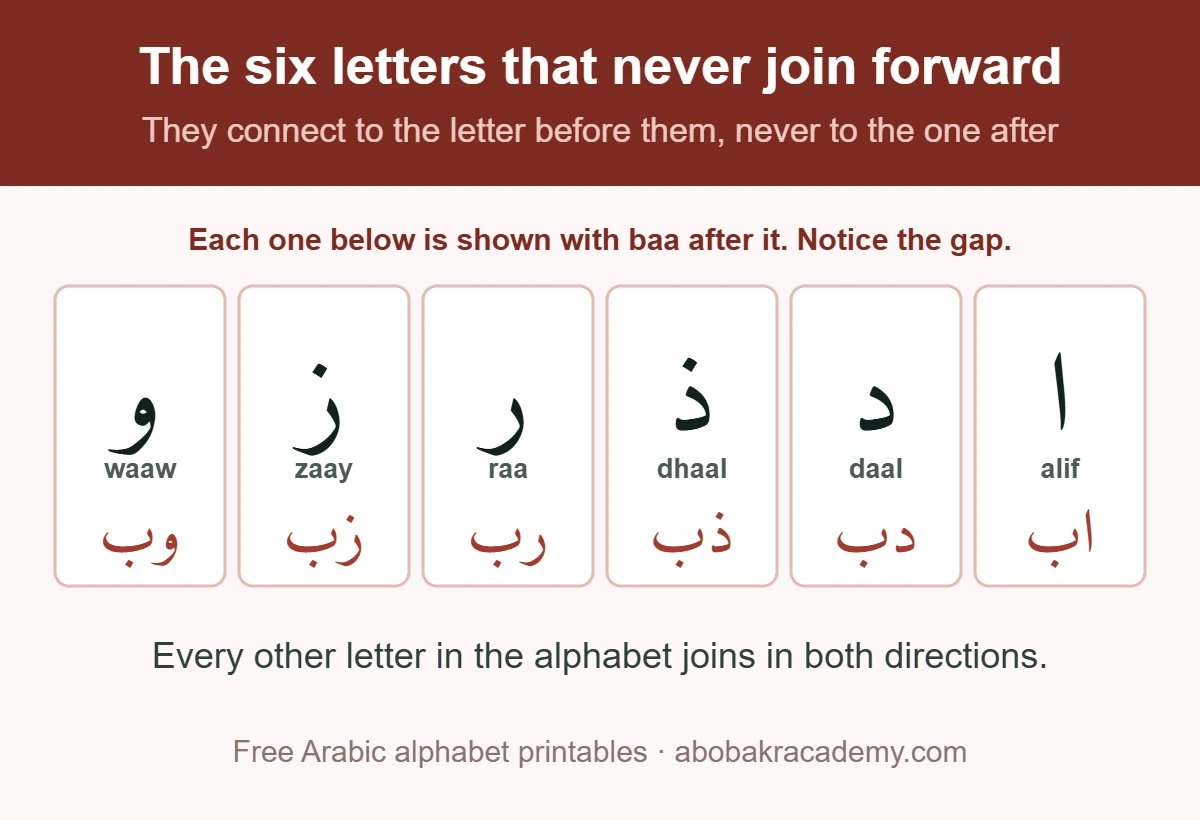
Six letters never join to the letter after them. They are the ones that make Arabic handwriting look broken up rather than continuous, and a child who knows which six they are stops trying to force joins that do not exist.
Which six letters never join forward?
These are the six. Everything else joins to whatever follows it.
| Letter | Name | Sound in English |
|---|---|---|
| ا | alif | long a, as in father |
| د | daal | d, as in door |
| ذ | dhaal | th, as in this |
| ر | raa | a light tapped r, as in Spanish |
| ز | zayn | z, as in zoo |
| و | waaw | w, or a long oo |
All twenty eight letters, with the sound each one makes
Print this table alongside the sheets if you want something to check against while your child writes.
| Letter | Name | Sound in English | Joins to the next letter? |
|---|---|---|---|
| ا | alif | long a, as in father | No |
| ب | baa | b, as in book | Yes |
| ت | taa | t, as in table | Yes |
| ث | thaa | th, as in think | Yes |
| ج | jeem | j, as in jam | Yes |
| ح | haa | a breathy h from low in the throat | Yes |
| خ | khaa | kh, as in the Scottish loch | Yes |
| د | daal | d, as in door | No |
| ذ | dhaal | th, as in this | No |
| ر | raa | a light tapped r, as in Spanish | No |
| ز | zayn | z, as in zoo | No |
| س | seen | s, as in sun | Yes |
| ش | sheen | sh, as in shoe | Yes |
| ص | saad | a heavy s, mouth wide and full | Yes |
| ض | daad | a heavy d, tongue pressed flat | Yes |
| ط | taa (heavy) | a heavy t, fuller than taa | Yes |
| ظ | dhaa (heavy) | a heavy version of th in this | Yes |
| ع | ayn | from deep in the throat, no English equal | Yes |
| غ | ghayn | close to a gargled French r | Yes |
| ف | faa | f, as in fish | Yes |
| ق | qaaf | a k made further back in the mouth | Yes |
| ك | kaaf | k, as in kite | Yes |
| ل | laam | l, as in leaf | Yes |
| م | meem | m, as in moon | Yes |
| ن | noon | n, as in night | Yes |
| ه | haa (light) | h, as in house | Yes |
| و | waaw | w, or a long oo | No |
| ي | yaa | y, or a long ee | Yes |
Every tracing block in the set
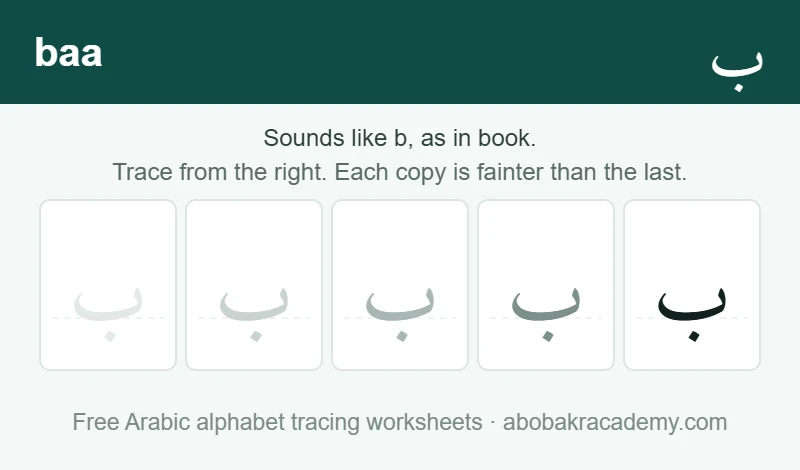
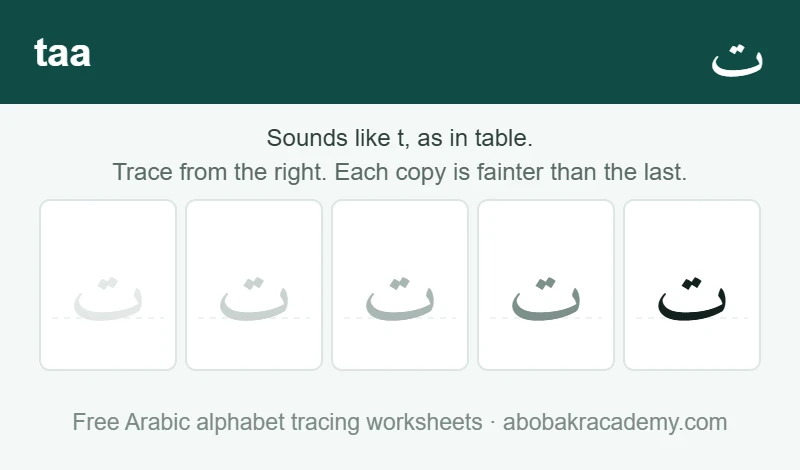
This is all twenty eight blocks, one per letter, exactly as they print. The solid copy on the right is the model and each copy to its left is fainter, so the last one is almost gone and the child is writing unaided.


What to use alongside the sheets, and where the letterforms come from
Tracing on its own gets a child writing shapes without necessarily reading them. The sheets do more when two or three of the other free printables are running beside them. For the sounds, which no sheet can check, there are Arabic lessons for kids with a teacher listening.
Keep the free Arabic alphabet chart somewhere visible, so the child can check a shape without asking. Use the Arabic alphabet flashcards for recognition on the days when writing is a fight, because recognition and handwriting improve separately and a bad handwriting day is not a bad Arabic day. Once the tracing is steady, the alphabet with a word for each letter turns shapes into reading.
The part of this that catches people out is joining. A letter traced on its own looks nothing like the same letter inside a word, and how Arabic letters change at the beginning, middle and end of a word is the explanation worth reading before your child asks. If nobody at home reads Arabic, teaching Arabic to your child when you do not speak it sets out what you can and cannot do without the language, and the letters children most often say wrong covers the sounds. Everything else is on the free printables page.
The letterforms and letter names on these sheets follow the Unicode Standard’s Arabic code chart, and the transliteration follows the Library of Congress Arabic romanization table. We cite them because a parent who cannot read Arabic has no other way to check that a worksheet is correct.
Paper sizes, single letters, and when copying is not reading
Are these really free?
Yes. No email address, no account, no watermark and no trial. If it is easier for you to host the printed sheets on your own school or co-op site, please do.
Will they print properly on A4 and Letter?
Yes. The sheets are laid out two to a row and the page breaks fall between letters, so no letter is ever cut in half. Everything except the letters themselves is hidden when it prints. If you would rather have a file than print from this page, the same twenty eight letters are in a three page tracing PDF, laid out ten letters to a page.
Why are the letters shown on their own rather than in words?
Because a beginner writing their first letters needs the standalone shape, and joining forms are a separate skill built on top of it. When your child is ready for words, the Arabic alphabet with words page gives one example word per letter.
My child can copy the shapes but cannot recognise them. What now?
That is normal and it means the writing is ahead of the reading, which is the right way round. Put the free alphabet chart on the wall and point at letters out of order for one minute a day. Recognition catches up quickly once it is separated from writing.
Do the sheets include the vowel marks?
No, deliberately. Harakat sit above and below the letter, and adding them to a tracing sheet gives a beginner two things to get wrong at once. Learn the shape first.